
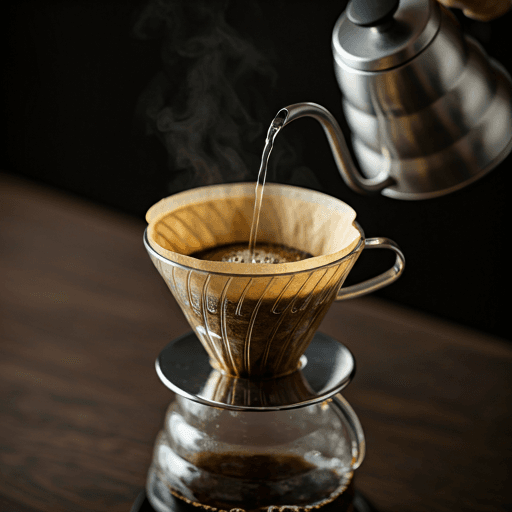
Swiss Water decaf coffee is coffee that has had its caffeine removed using only water — no chemical solvents. The Swiss Water Process draws caffeine out of green (unroasted) beans with a caffeine-saturated water solution and activated-carbon filters, so the caffeine leaves while the coffee's flavour compounds stay behind. The result is a bean that is certified 99.9% caffeine-free with a clean, natural taste, which is why decaf Swiss Water coffee has become the benchmark for anyone who wants the ritual of coffee without the buzz.
This guide explains how the method actually works, why so many roasters and drinkers choose it, and how it compares with the solvent and CO2 alternatives. For what decaf means in general, see our decaf coffee explainer — here we zoom in on this one water-based approach.
What Swiss Water Process decaf actually is
The Swiss Water Process is a solvent-free way of decaffeinating green coffee using nothing but water, temperature, time and filtration. The idea was developed in Switzerland in the mid-20th century and has been commercially processed in Canada since the late 1980s, where a dedicated facility near Vancouver decaffeinates beans for roasters around the world. When you see a brand called "Swiss Water" on a bag, that is the certification mark of that process and its independent testing standard.
Because no additives touch the bean, it is often marketed as "chemical free decaf coffee." That phrase is a friendly simplification — water and caffeine are, strictly speaking, chemicals too — but it captures the real point: no methylene chloride, no ethyl acetate, no compressed gas. Just water does the work.
How Swiss Water decaf works, step by step
The clever ingredient at the heart of the process is Green Coffee Extract (GCE) — water that has already been saturated with all the soluble compounds found in a batch of green coffee (sugars, acids, oils, salts and flavour precursors) except caffeine. That one missing ingredient is what makes the whole thing possible.
- Soak. A fresh batch of green beans is hydrated in hot water so the beans swell and their pores open, making the caffeine inside easy to reach.
- Bathe in Green Coffee Extract. The beans sit in the caffeine-free GCE. Because that water is already full of everything a coffee bean contains apart from caffeine, only caffeine has anywhere to go. It follows the concentration gradient and migrates out of the beans into the water, while the flavour compounds — already at equilibrium — largely stay put.
- Filter out the caffeine. The now-caffeinated water is passed through activated-carbon filters sized to trap caffeine molecules while letting the dissolved flavour compounds pass through. The water comes out flavour-rich but caffeine-poor again.
- Repeat. That refreshed water is circulated back over the beans, and the cycle continues for around eight to ten hours until the beans reach the 99.9% caffeine-free threshold.
- Dry and ship. The decaffeinated beans are gently dried back to a normal shipping moisture and bagged for roasters, who then roast them like any other green coffee.
The reason flavour survives is entirely down to that GCE trick. Plain water would strip sugars, acids and aromatics right alongside the caffeine and leave you with a hollow, washed-out cup. By pre-loading the water with everything but caffeine, the process gives only caffeine a reason to leave the bean.
Why people choose Swiss Water decaf coffee
Several things make the water method popular with specialty roasters and everyday drinkers alike:
- Solvent-free. Nothing but water contacts the coffee, which is the whole appeal for people who want a "chemical free decaf coffee" on the shelf.
- Transparent and certified. Batches are independently tested and verified to be 99.9% caffeine-free, and the Swiss Water mark on the bag tells you exactly which method was used — a level of traceability the vague word "decaffeinated" doesn't give you.
- Organic-friendly. Because the process adds no chemicals, it pairs naturally with organic certification, so a large share of certified-organic decafs are Swiss Water processed decaf coffee.
- Clean, gentle taste. There's no residual solvent note, and flavour retention is good, which is why third-wave roasters often reserve the method for higher-grade single origins.
Taste in the cup still depends heavily on the underlying green coffee and how it's roasted — a great method can't rescue a mediocre bean. If you're weighing up which bag to actually buy, our roundup of the best decaf coffee covers what to look for beyond the processing label.
How it compares with other decaf methods
Swiss Water is one of four mainstream ways to strip caffeine from green coffee. It's worth stressing up front that all of them are considered safe by food-safety regulators — residual solvent levels in the solvent methods are tightly capped and typically end up far below those limits, and most of any solvent is driven off during roasting and brewing anyway. The differences are mostly about marketing, subtle taste preferences and personal choice, not safety.
| Method | How it removes the caffeine |
|---|---|
| Swiss Water Process | Water plus caffeine-free Green Coffee Extract; caffeine migrates into the water and is trapped by activated-carbon filters. No solvents, certified 99.9% caffeine-free. |
| Methylene chloride (direct or indirect) | A solvent that selectively binds caffeine is applied to the beans or to the soaking water, then washed and steamed off. Trace residual levels are tightly regulated. |
| Ethyl acetate ("sugarcane" / natural EA) | Ethyl acetate — a compound that occurs naturally in fruit and can be derived from fermented sugarcane — acts as the caffeine-binding solvent. Often marketed as "naturally decaffeinated." |
| Supercritical CO2 | Pressurised carbon dioxide behaves like a solvent, selectively dissolving caffeine out of moist beans. Common for large-scale and some organic decaf. |
In short: the solvent and CO2 methods use a substance that grabs caffeine and is later removed, while Swiss Water lets water and a carbon filter do the whole job. None of these is "the healthy one" or "the dangerous one" — they're simply different routes to the same low-caffeine bean.
How to find Swiss Water decaf coffee
Spotting it is easy once you know the labels. Look for the words "Swiss Water" or the abbreviation "SWP" on the bag, often alongside a small leaf-and-droplet logo and a line like "certified 99.9% caffeine free." Some roasters phrase it as "water processed" or "water decaffeinated" instead.
The tell-tale sign of a solvent method is the absence of any method at all: if a bag just says "decaffeinated" with no detail, it's frequently an ethyl acetate or methylene chloride decaf. That's not a red flag — it's just less transparent — and a quick note to the roaster will usually clear it up. For more on how the beans themselves differ once decaffeinated, see our guide to decaf coffee beans.
Does "99.9% caffeine-free" mean zero?
Not quite. The 99.9% standard means a tiny residual amount of caffeine remains — typically only a few milligrams per cup, compared with roughly 95 mg in a regular cup of brewed coffee. For most people that's negligible, but it's the reason decaf is described as "caffeine-free" rather than "caffeine-zero." If you're avoiding caffeine for a specific reason, such as during pregnancy, that residual matters, and the nuances are covered in our dedicated guide to decaf coffee and pregnancy.
The takeaway
Swiss Water Process decaf earns its reputation honestly: it removes caffeine with water alone, keeps the flavour compounds where they belong through the Green Coffee Extract trick, and backs it all with a certified 99.9% caffeine-free standard you can read right off the bag. Whether that transparency is worth seeking out is a matter of taste and preference rather than safety — the solvent and CO2 methods make perfectly good coffee too. But if you like knowing exactly what did, and didn't, touch your beans, a bag marked "Swiss Water" or "SWP" is the clearest answer on the shelf.