
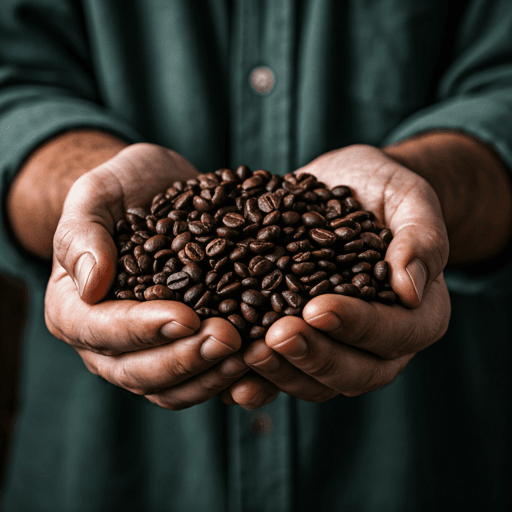
Decaf coffee beans are real coffee beans that have had most of their caffeine removed — at least 97% of it — while the beans are still green, before they are ever roasted. That makes decaf low-caffeine, not caffeine-free: a small trace always stays behind. Everything else about the bean is intact, from its origin and oils to the way you grind and brew it.
So a bag of good decaf is not a different product from regular coffee. It is the same fruit of the same plant, processed one extra time to draw the caffeine out. Done well, it can taste remarkably close to the caffeinated version. This guide explains what decaf coffee beans are, how the caffeine is removed, and how to buy, store and brew them so they actually taste good.
What are decaf coffee beans?
Decaf coffee beans are ordinary coffee beans — arabica or robusta, single origin or blend — that have gone through a decaffeination step before roasting. By law in most markets, a coffee can only be sold as “decaffeinated” once roughly 97% or more of its caffeine is gone. In practice the limits are written as residual caffeine: roasted decaf typically cannot exceed about 0.1% caffeine by weight, which works out to only a few milligrams per cup.
To put numbers on it, a regular 8 oz cup of brewed coffee carries somewhere around 95–120 mg of caffeine. The same cup made from decaf beans usually lands around 2–5 mg. That is a real, meaningful reduction, but it is not zero. If you are highly caffeine-sensitive, or counting every milligram, it is worth knowing that decaffeinated coffee beans still contain a trace.
One detail trips people up: decaffeination always happens to green (unroasted) beans. You cannot pull caffeine out of a roasted bean, so the work is done at origin or at a dedicated decaf facility, between the farm and the roaster. By the time the beans reach your grinder, the caffeine is long gone and the roast is all that is left to taste.
How decaffeination works
Every method does the same basic thing: it soaks or exposes the green beans to a medium that caffeine dissolves into, then carries that caffeine away while trying to leave the flavor compounds behind. The trick is selectivity — caffeine is water-soluble, but so are hundreds of the aromatic compounds you actually want to keep. The four common approaches differ in what medium they use and how gentle they are.
The Swiss Water Process
The Swiss Water Process is the best-known chemical-free method. Green beans soak in “green coffee extract” — water that is already saturated with all of coffee’s soluble compounds except caffeine. Because the water is full of flavor but empty of caffeine, only the caffeine has anywhere to go, so it migrates out of the beans while the aromatics stay put. It uses nothing but water, time and carbon filters, which is why you see it on a lot of specialty and organic decaf, and it can remove well over 99% of the caffeine.
The CO2 (supercritical carbon dioxide) process
Here pressurized carbon dioxide is pushed through moistened beans in a state between liquid and gas. The CO2 selectively grabs caffeine molecules and leaves most flavor compounds alone. It is chemical-free and very gentle on taste, but the equipment is expensive, so it is used more for large commercial batches than small specialty lots.
The sugarcane / ethyl acetate (EA) method
Often labeled “naturally decaffeinated,” this method soaks steamed beans in a mix of water and ethyl acetate, a compound that can be derived from fermented sugarcane and also occurs naturally in ripening fruit. The ethyl acetate bonds with caffeine and draws it out. It is common in Colombia, where sugarcane is abundant, and it has a reputation for preserving sweetness and body. On a label it may appear as “EA,” “sugarcane decaf” or “natural decaf.”
The solvent (methylene chloride) method
The longest-established approach uses a solvent — usually methylene chloride (MC) — to carry caffeine away. In the “direct” version the solvent rinses the beans; in the “indirect” version it only ever touches the caffeine-laden soaking water, not the beans themselves. Residual solvent levels are tightly regulated — the limit in roasted decaf is measured in parts per million, and real-world levels are typically far lower — the solvent largely evaporates during roasting, and regulators consider the finished coffee safe. Even so, some drinkers prefer a water- or CO2-processed decaf simply for peace of mind, and many roasters now state the method clearly for that reason.
Decaffeination methods compared
| Method | How it works | Notes |
|---|---|---|
| Swiss Water Process | Soaks green beans in caffeine-free green coffee extract so only caffeine migrates out; water, time and filters only | Chemical-free; common on specialty and organic decaf; flavor-friendly |
| CO2 / supercritical | Pressurized carbon dioxide circulates through moist beans and selectively binds caffeine | Chemical-free; very gentle on flavor; costly, used for larger batches |
| Sugarcane / EA | Beans soaked in water plus ethyl acetate (from fermented sugarcane); EA bonds to caffeine | Often labeled “natural” decaf; common in Colombia; keeps sweetness and body |
| Solvent / methylene chloride (MC) | Direct rinse of the beans, or indirect treatment of the soaking water, with a solvent that carries caffeine away | Long-established; residual levels tightly regulated and considered safe; mostly evaporates in roasting |
Does decaf taste different?
Modern decaf is far better than its old, flat reputation suggests. A fresh, well-processed decaf can taste very close to its caffeinated twin. That said, decaffeination is an extra round of soaking and heat, and it can shave off a little brightness or complexity, so decaf sometimes reads as a touch softer or flatter in the cup. The way to win that back is freshness. Caffeine has little to do with flavor; roast date and bean quality have everything to do with it.
Because decaf has already been through a wet, warm process, the green beans can look and behave differently. They often appear darker, more porous and a little more brittle, and they can show more color variation on the surface — all normal, none of it a quality problem. It does mean roast color is harder to read, which is one reason home roasters and cafes treat decaf as its own dial-in rather than assuming it behaves like regular beans.
How to buy decaf coffee beans
Choosing good decaf coffee beans is mostly about the same things that make any coffee good, plus one or two decaf-specific checks. Run down this list:
- Look for the method. A roaster proud of its decaf will state it: Swiss Water, CO2, sugarcane/EA or solvent. If the method is hidden, that is a small flag.
- Check the roast date. Freshness matters more for decaf than almost anything else. Favor beans roasted within the last few weeks over a vague “best before” far in the future.
- Buy whole bean, not pre-ground. Whole beans hold their aromatics far longer; grind just before brewing to claw back the brightness decaf can lose.
- Match origin and roast to your taste. Decaf comes in everything from bright single origins to cozy dark blends — pick by flavor profile, just as you would for caffeinated coffee.
- Decide single origin vs blend. Single-origin decaf shows off a place; a blend aims for consistency and balance. Neither is “better.”
How to store and brew decaf beans
Store decaf exactly as you would any whole-bean coffee: in an airtight container, somewhere cool, dark and dry, away from heat and direct light. Skip the fridge, which invites moisture and stray odors. Buy in amounts you will finish in two to four weeks rather than stockpiling.
Brewing is where the “decaf behaves a little differently” point matters. Because decaf beans are more porous and often roasted a shade darker, they can extract faster and grind finer than you expect. If your cup tastes thin or hollow, try a slightly finer grind, a touch more coffee in the dose, or a marginally longer brew. Small tweaks usually close the gap. The same logic applies to a decaf espresso shot, where dialing in the grind and dose for the softer, faster-extracting decaf beans is the whole game.
Decaf coffee beans vs other decaf formats
Whole decaf coffee beans are only one way to go low-caffeine. Instant decaf trades freshness for speed and convenience; decaf pods and capsules trade it for tidiness and a fixed dose. Beans give you the most control and, usually, the best flavor, because you grind right before you brew. If you want the wider picture — instant, ground, pods and more — the broad decaf coffee explainer covers how the whole category fits together, and a roundup of what makes a good decaf is a useful next step when you are choosing a bag.
Decaf has quietly become some of the most interesting coffee on the shelf. Better green beans, gentler processing and roasters who care about freshness mean a cup that no longer feels like a compromise — just coffee, with the caffeine turned almost all the way down. Buy fresh, grind whole bean, and treat decaf as its own thing rather than an afterthought, and it will reward you. From here, the broad decaf overview and the best-decaf roundup are the natural places to keep exploring.