
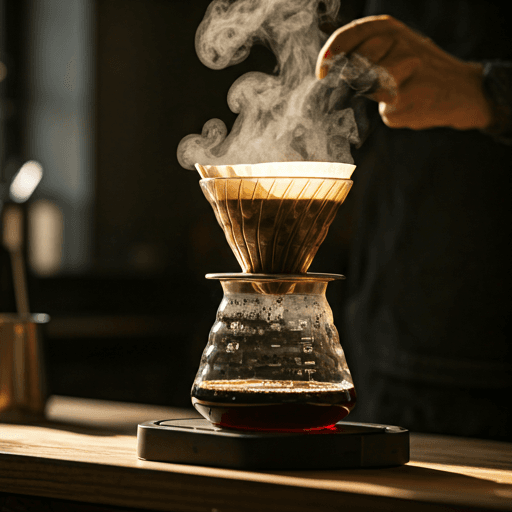
The short answer: decaf coffee and pregnancy are generally considered a comfortable match. Decaf is a very low-caffeine drink, not a caffeine-free one, so a typical cup holds only a few milligrams of caffeine, far less than regular coffee. Because the usual advice in pregnancy is to keep total caffeine moderate, decaf almost always fits within that. This is general information, not medical advice.
For guidance tailored to your own pregnancy, always talk to your doctor or midwife. The notes below are a calm, general overview, not a personal recommendation.
Decaf coffee and pregnancy: is it safe?
For most people, yes, in moderation. The reason is simple. The main thing pregnancy guidance asks you to watch is caffeine, and decaf has very little of it. So when people ask "is decaf coffee safe during pregnancy?", the honest and reassuring answer is that decaf is one of the easiest ways to keep enjoying the ritual and taste of coffee while keeping caffeine low.
The one myth worth clearing up: decaf is not caffeine-free. Decaffeination removes most of the caffeine, but a small trace always remains. It is best thought of as "very low caffeine," not "zero." That distinction matters more in pregnancy than at most other times, because here you are watching a daily total rather than a single cup. For a deeper look at the drink itself, see our decaf coffee explained guide.
How much caffeine is in decaf coffee?
Surprisingly little. To be labelled decaffeinated, coffee must have the vast majority of its caffeine removed, and regulators commonly require around 97 percent or more to be taken out. In practice that leaves roughly 2 to 15 mg of caffeine in an 8 oz (240 ml) cup, and often just 2 to 6 mg. By comparison, the same size cup of regular brewed coffee averages around 95 mg, so a cup of decaf carries a tiny fraction of that.
To put the numbers in context, here is a rough guide. Exact figures vary by bean, roast, brew strength and serving size, so treat these as ballparks rather than precise readings.
| Drink | Typical serving | Rough caffeine |
|---|---|---|
| Regular brewed coffee | 8 oz / 240 ml | ~95 mg (often 70-140) |
| Espresso | 1 oz / 30 ml shot | ~63-80 mg |
| Instant coffee | 8 oz / 240 ml | ~60 mg |
| Decaf coffee | 8 oz / 240 ml | ~2-15 mg (often 2-6) |
| Decaf espresso | 1 shot | ~0.5-7 mg |
| Black tea | 8 oz / 240 ml | ~40-70 mg |
| Cola | 12 oz / 355 ml | ~35-40 mg |
| Caffeine-free herbal tea | 8 oz / 240 ml | 0 mg |
Want the full picture on regular coffee? Our guide to how much caffeine is in a cup of coffee breaks down all the variables.
Caffeine in pregnancy: the general 200 mg guidance
Most major health bodies converge on a similar message. During pregnancy it is sensible to keep total caffeine moderate, with a figure of around 200 mg per day commonly cited as a general daily ceiling. That total counts caffeine from all sources combined, not coffee alone, so tea, cola, chocolate, energy drinks and some medicines all add up.
Because a cup of decaf contributes only a handful of milligrams, several cups can still sit comfortably under that 200 mg figure. That is exactly why many people choose decaf during pregnancy: it keeps the caffeine math easy and lets you relax about a second or third cup. Treat the 200 mg figure as general guidance rather than a hard rule, since individual circumstances differ. For the wider view, see caffeine and pregnancy and our broad coffee and pregnancy guide, which covers regular coffee in detail.
How decaf coffee is made, and is the process safe?
Caffeine is removed from green (unroasted) beans before roasting, using one of a few established methods. They differ in how the caffeine is drawn out, but all aim for the same low-caffeine result.
- Swiss Water and other water processes use only water and filters to pull caffeine out, with no added solvents. These are often labelled clearly for people who prefer a solvent-free option.
- The CO2 (carbon dioxide) process uses pressurised CO2 as a natural solvent that targets caffeine while leaving most of the flavour behind.
- Solvent-based methods use a food-safe solvent such as ethyl acetate (sometimes derived from sugarcane and labelled "natural" or "sugarcane process") or methylene chloride to extract the caffeine. The beans are then thoroughly steamed and washed.
It is the solvent methods that worry some people, but residual solvent levels in the finished coffee are tightly regulated and fall far below established safety limits. Much of any trace also evaporates during the high heat of roasting and brewing. If you would still rather avoid solvents entirely, simply choose a Swiss Water or CO2 decaf: the caffeine outcome is much the same whichever method is used, so it comes down to personal preference.
Watch for hidden caffeine elsewhere
Because the moderate-caffeine guidance covers your whole day, decaf is most useful when you also keep an eye on the less obvious sources. The drink itself is reassuringly low, but the surrounding diet is where totals quietly climb:
- Tea can carry 40 to 70 mg of caffeine in a cup of black tea, with green tea usually somewhat less. Even decaf tea keeps a small trace.
- Cola and some soft drinks often hold 35 to 40 mg per can.
- Chocolate contains caffeine too; dark chocolate has the most and milk chocolate much less.
- Energy drinks can be high in caffeine and are best treated with caution.
If you naturally reach for caffeine-free herbal infusions like chamomile, peppermint or rooibos, those add no caffeine at all, which makes them a handy swap when you want a warm drink with none of the math.
Practical tips for enjoying decaf while pregnant
- Treat it as the ritual, not the hit. Decaf delivers the aroma, warmth and routine of coffee with minimal caffeine, which is ideal if what you mainly miss is the experience.
- Mind the total, not just the cup. Add up coffee, tea, cola and chocolate across the day rather than counting drinks in isolation.
- Stay hydrated. Water, milk and caffeine-free herbal teas all count toward fluids, and decaf is gentle on this front too.
- Check the label. "Decaf" is reliably low in caffeine, but if the method matters to you, look for Swiss Water, CO2 or a named solvent process.
- When in doubt, ask. Your doctor or midwife can give advice tailored to you, including any reason to be extra cautious about caffeine.
The bottom line on decaf coffee pregnancy questions
Decaf coffee pregnancy worries are usually easy to put to rest. Decaf is a very low-caffeine drink that lets you keep the comfort of coffee while staying well within the moderate caffeine intake that most guidance suggests. It is not completely caffeine-free, and it is not a substitute for personal medical advice, but for many people it is a simple and satisfying choice during pregnancy. When something about your own pregnancy feels uncertain, a quick word with your doctor or midwife will always be the most reliable next step.