
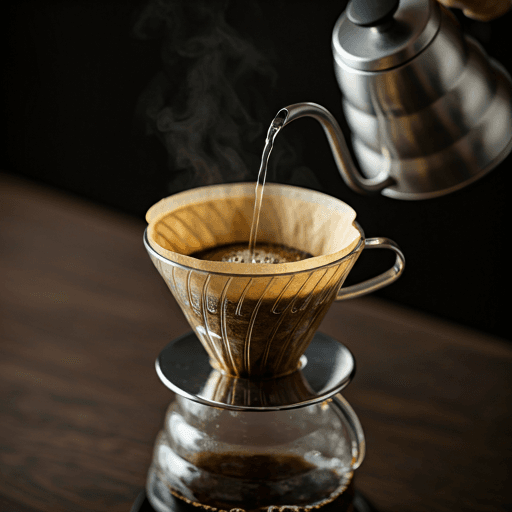
A semi-automatic espresso machine is the most popular type of home espresso machine — its electric pump produces the brewing pressure automatically, but you stay in charge of everything else: grinding, dosing, tamping, and starting and stopping the shot yourself with a switch. That mix of pump-driven power and hands-on control is exactly why enthusiasts favor it. You get genuine barista-style involvement without having to force the water through the coffee by hand, the way you would on a lever machine.
This guide places the semi-auto among the four main espresso machine types, breaks down the parts that matter, and walks through what to look for when you compare models. For the bigger "which type is right for me" decision, pair it with our companion guide on how to choose an espresso machine; and if you want the drink itself demystified first, start with espresso, the base of every coffee.
What is a semi-automatic espresso machine?
A semi-automatic espresso machine automates one job and leaves the rest to you. When you press the brew switch, an electric pump drives hot water through the packed coffee at roughly nine bars of pressure — the pressure that turns ground coffee into espresso. What the machine does not do is decide how finely to grind, how much coffee to use, how firmly to tamp, or when the shot has run long enough. You set the grind, you dose and tamp the puck, and you switch the pump off when the right amount of espresso has flowed into the cup.
That is the line between a semi-automatic coffee machine and the fully hands-off machines most people picture. It is "semi" because the work is split between the machine and the person. The payoff is repeatability with room to grow: once you have dialed in your grind and dose you can pull a consistent shot every morning, and when you want to chase a better one, every variable is still in your hands.
The four types of espresso machine
Espresso machines sit on a ladder that runs from fully manual to fully automated. Seeing where the semi-auto falls makes the whole category much easier to shop.
- Manual / lever — You generate the pressure by pulling a lever or pressing a piston; there is no pump, just a heated cylinder and your arm. Maximum control and connection to the process, but the steepest learning curve.
- Semi-automatic — The pump makes the pressure while you grind, dose, tamp and start and stop the shot. The enthusiast sweet spot, and the subject of this guide.
- Automatic — Works like a semi-auto, but a flow meter stops the shot for you at a pre-set volume. You still grind and tamp; you just do not have to judge the cut-off yourself.
- Super-automatic / bean-to-cup — One button grinds, doses, tamps and brews, and often steams the milk too. The most convenient and the most hands-off; these are covered in our guide to fully automatic espresso machines.
| Type | Who makes the pressure | Who stops the shot | Best for | Typical cost |
|---|---|---|---|---|
| Manual / lever | You, by hand | You | Hands-on purists who love the ritual | Low to high |
| Semi-automatic | Electric pump | You, with a switch | Enthusiasts who want control and value | Moderate to high |
| Automatic | Electric pump | Machine, at a set volume | People who want consistency with less timing | Moderate to high |
| Super-automatic / bean-to-cup | Electric pump | Machine | One-touch convenience, minimal effort | High |
So, what is a semi-automatic espresso machine within that line-up? It is the middle path: far more control than a bean-to-cup, far less effort than a lever, and — model for model — usually the most espresso quality for the money.
Why the semi-automatic is the enthusiast sweet spot
Ask seasoned home baristas which machine to learn on and most point straight at a semi-auto. A few reasons come up over and over.
Control without the full workout
You decide the grind size, the dose, the tamp and the shot length — the four levers that actually change how espresso tastes — while the pump handles the physically demanding job of pushing water through the puck at pressure. That is a lot of expressive control for very little strain.
Repeatability
Because your inputs are consistent, your output can be too. Weigh the same dose, grind to the same setting, tamp the same way, and you get a shot you can actually reproduce and then refine — which is the whole foundation of getting better at espresso.
Value
Money that would otherwise go toward a bean-to-cup machine's built-in grinder, dosing hardware and electronics can instead go into the parts that matter for the cup: a stable boiler, a good pump and a solid group head. At a given price, a semi-auto tends to pull a better shot than a super-auto.
You learn the craft
A semi-auto rewards practice. Because you perform each step yourself, you come to understand how grind, dose and tamp interact — knowledge that carries over to any machine you use later, from a moka pot to a cafe's commercial group head.
The key parts of a semi-automatic espresso machine
Most semi-autos share the same anatomy. Knowing the vocabulary helps you read spec sheets and compare like with like.
- Portafilter — the handled basket that holds the coffee and locks into the machine. Larger, cafe-style machines commonly use a 58mm basket; many compact home models use 54mm or 51mm.
- Group head — the fixture the portafilter locks into, where hot water meets the coffee. A heavier, well-heated group head holds temperature more steadily from shot to shot.
- Pump — the component that generates the roughly nine bars of brew pressure. Most home machines use a vibratory pump; some higher-end ones use a quieter, smoother rotary pump.
- Boiler or thermoblock — how the water is heated. A thermoblock heats water on demand and reaches temperature fast; a boiler holds a reservoir of hot water and tends to be more thermally stable.
- Steam wand — the pipe that delivers steam for texturing milk. A proper, articulating steam wand lets you make the real microfoam a flat white or cappuccino needs.
- PID controller — on nicer models, an electronic thermostat that holds the brew temperature to within about a degree for more consistent shots.
What to look for in a semi-automatic espresso maker
Once you have decided a semi-automatic espresso maker is your style, these are the specifications that separate one model from another. None of them is about a brand name — they are about how the machine handles heat, pressure and milk.
Boiler configuration
This is the biggest divider in the category. A single boiler heats one tank for both brewing and steaming, so you switch between the two and wait a moment in between — perfectly fine if you mostly drink straight espresso or one milk drink at a time. A heat exchanger draws brew water through a smaller circuit inside a steam boiler, so you can brew and steam at the same time. A dual boiler has separate boilers for brewing and steaming, giving the most stable temperatures and the smoothest back-to-back milk drinks. Stability rises with each step up — and so does the cost.
PID temperature control
Espresso is fussy about temperature. A PID keeps the water within roughly a degree of your target, which makes shots more repeatable and lets you nudge the brew temperature to suit a particular coffee. It is one of the most worthwhile features to look for on a home semi-auto.
Portafilter size: 54mm vs 58mm
The 58mm portafilter is the commercial standard, so accessories — tampers, baskets, distribution tools — are easy to find, and the wider puck can be a little more forgiving. A 54mm or 51mm basket is common on compact machines and works well; just know that a smaller size means a slightly smaller accessory ecosystem.
A proper steam wand
If you drink milk-based coffee, the steam wand matters as much as the shot. Look for a wand you can position freely and that delivers steady steam, rather than a panarello or automatic frothing attachment — the manual wand is what lets you build the silky microfoam that latte art is made of.
Build quality
Metal internals, a decent-sized water tank, a three-way solenoid valve — which releases pressure so the spent puck comes out dry rather than sloppy — and serviceable, replaceable parts all point to a machine that will last and stay pleasant to live with. Sheer heft is often a rough proxy for how much metal is inside.
The grinder is not optional
Here is the single most important thing to budget for: a semi-automatic espresso machine needs a good, dedicated espresso grinder, and it is not the place to cut corners. Espresso depends on a fine, precise, adjustable and consistent grind, and pre-ground coffee simply cannot deliver it. Many first-time buyers spend everything on the machine, pair it with a cheap grinder, and then wonder why the shots run sour or gush out too fast. If your priorities are fixed, a modest machine with a capable grinder will almost always out-pour a fancy machine hobbled by a poor one.
Finding the best semi-automatic espresso machine for you
There is no single best semi-automatic espresso machine — the right one depends on how much milk you steam, how much counter space you have, and how deep you want to go. If you drink mostly espresso with the occasional flat white, a well-built single-boiler machine with a PID is plenty. If you entertain, steam a lot of milk, or want to brew and steam without waiting, a heat exchanger or dual boiler earns its keep. For hands-on picks across the range, see our roundup of the best espresso machines.
The bottom line
The semi-automatic espresso machine endures because it strikes a rare balance: enough automation that a good shot is achievable on a weekday morning, enough control that it never stops teaching you. Buy a solid machine, pair it with a grinder you respect, and give yourself a few weeks of practice — a semi-auto is less an appliance than an instrument, and it repays everyone who takes the time to learn it.