
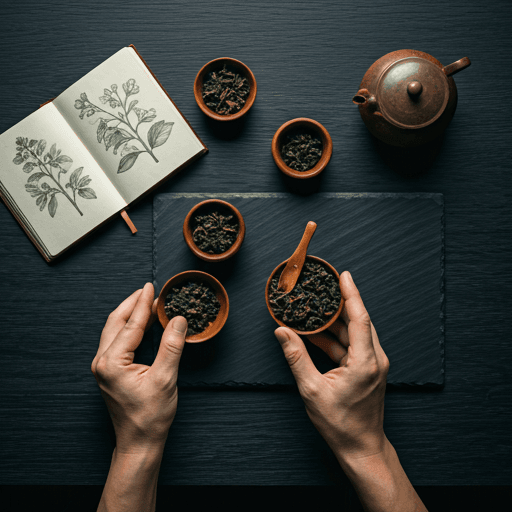
Purple tea is a real tea — not an herbal blend — made from a purple-leaved variety of the tea plant, Camellia sinensis, most famously a cultivar developed in Kenya. Its leaves are naturally rich in anthocyanins, the same purple antioxidant pigments found in blueberries and red cabbage, and it brews a light, delicate, low-astringency cup with naturally lower caffeine than most black or green teas.
Because it comes from the same species as green, white, oolong and black tea, purple tea is a genuine "true tea," yet its unusual leaf color and gentle flavor have made it one of the more intriguing specialty teas of the last two decades. Here is what it is, why it is purple, how it tastes, and how to brew it.
What Is Purple Tea, and Where Does It Come From?
Purple tea is grown from a naturally purple-pigmented cultivar of the tea plant. The best known is TRFK 306, a variety selected and developed by the tea research institute in Kenya and released to growers around 2011. Kenyan purple tea is cultivated mainly in the high-altitude highlands around Mount Kenya and the Nandi Hills, where cool nights, strong equatorial sunlight and elevation encourage the leaf to produce protective purple pigment.
Although Kenya put purple tea on the global specialty map, purple-leaf tea plants are not unique to one country — purple varietals and wild purple-leaf trees also grow in parts of Yunnan in China, Japan and the Assam region of India. What they all share is the same botanical origin as every other true tea; for the full story of the plant behind them, see our guide to Camellia sinensis, the tea plant.
Crucially, the purple color lives in the fresh leaf, not in the processing. Once harvested, purple tea leaves can be made into different styles — rolled and dried like a green tea, partially oxidized like an oolong, or fully oxidized like a black tea. Most purple tea sold today is made in a green- or oolong-like style to keep the cup light and to preserve its signature pigment. To see where it sits among the broader family, browse our overview of the types of tea explained.
Why Is Purple Tea Purple? The Anthocyanin Story
The color comes from anthocyanins — water-soluble plant pigments in the flavonoid family that also give blueberries, blackberries, red grapes and purple cabbage their deep color. In most tea plants these pigments are present only in trace amounts; in purple cultivars like TRFK 306 they build up in the leaf, tinting it purple-to-reddish rather than the usual green. The pigment is thought to act partly as the plant's own sunscreen, which is one reason high, sunny elevations bring out the color so well.
Anthocyanins are also pH-sensitive, which leads to purple tea's best party trick: squeeze in a little lemon juice and the brewed liquor shifts from a purplish-grey toward a pinker, more reddish hue as the acidity changes. Add something more alkaline and it drifts back. It is the same chemistry that makes a red-cabbage indicator change color in a school science lesson — harmless, reversible, and a genuinely useful way to tell real purple tea from a dyed imitation.
How Purple Tea Tastes — and Its Caffeine
Purple tea is generally mild, clean and smooth, with far less of the bitterness and astringency you find in a strong black or green tea. Depending on how the leaves are processed, expect gentle notes often described as woody, faintly sweet, grassy or lightly fruity, over a soft, almost delicate body. Because it is easygoing and rarely harsh, it is an approachable choice for people who find green tea too grassy or black tea too tannic.
It also tends to be naturally lower in caffeine than most black and green teas, though the exact amount varies by cultivar, harvest and how you brew it. That makes purple tea an appealing afternoon or evening cup for drinkers who still want a true tea but a lighter lift. If you enjoy delicate, low-astringency styles, you may also like white tea, which shares that soft, subtle character.
Purple Tea Benefits and the "Superfood" Label
Most of the buzz around purple tea benefits comes down to one word: antioxidants. The anthocyanins that make the leaf purple are antioxidant compounds, and purple tea is often marketed as a "superfood" tea for being rich in them — sometimes alongside a compound relatively distinctive to purple varietals known as GHG (a galloylated, hydroxydiphenoyl glucose). On paper, that gives the leaf an unusual antioxidant profile compared with ordinary green or black tea.
It is fair and factual to say purple tea is rich in antioxidants. It is not fair to call it a cure. Human research on purple tea specifically is still limited and early, and a high antioxidant content in a cup does not automatically translate into a measured health outcome. The sensible way to enjoy it is as a pleasant, low-caffeine tea that happens to be antioxidant-rich, rather than as medicine. For a grounded look at what these compounds actually are and do, read our explainer on antioxidants in tea.
Purple Tea Is Not Blue "Butterfly-Pea" Tea
These two are constantly confused, because both are colorful and both change color with a squeeze of lemon — but they are completely different drinks. Purple tea is a true tea from Camellia sinensis and contains caffeine. "Blue tea," on the other hand, is a caffeine-free herbal infusion made from the dried flowers of the butterfly-pea plant (Clitoria ternatea), which is not a tea plant at all. A quick rule of thumb: if a brightly colored "tea" is caffeine-free and made from flowers, it is butterfly-pea, not purple tea.
Purple Tea at a Glance
| Feature | Purple Tea |
|---|---|
| What it is | A true tea from a purple-leaf cultivar of Camellia sinensis |
| Best-known origin | Kenya (cultivar TRFK 306), grown at high altitude |
| Why it is purple | Anthocyanin pigments (as in blueberries and purple cabbage) |
| Processing | Can be made green, oolong or black style |
| Flavor | Mild, clean, slightly woody and sweet, low astringency |
| Caffeine | Naturally lower than most black or green teas |
| Signature trait | Liquor shifts color with lemon (pH-sensitive) |
| Not to be confused with | Butterfly-pea "blue tea" (a caffeine-free herbal flower) |
How to Brew and Enjoy Purple Tea
Purple tea rewards a gentle hand. Because the cup is delicate, use water that is just off the boil — around 175–195°F (80–90°C) — rather than a rolling boil, which can flatten its subtle flavor.
- Measure: about 1 teaspoon of loose purple tea leaves (or one tea bag) per cup.
- Heat the water: bring it near the boil, then let it settle for a minute so it is hot but not boiling.
- Steep short: pour over the leaves and steep 2–3 minutes; taste early, as over-steeping can add a dry edge.
- Strain and sip: enjoy it plain to appreciate the light, woody character — no milk needed.
Good loose-leaf purple tea can be re-steeped a couple of times, giving slightly different notes with each infusion. For iced purple tea, brew it a little stronger, cool it, and pour over ice — then add a squeeze of lemon and watch the color shift for a bit of theater. The same gentle, low-temperature approach works for most delicate loose-leaf teas.
How to Spot Good Purple Tea
As with any specialty tea, quality is set by the leaf. Look for whole or broken loose leaves with a visible purple-to-mahogany tinge rather than a green dust, and buy from sellers who name the origin and, ideally, the cultivar. The lemon test is your friend here: a genuine purple tea will shift color when you add acid, while a dyed or mislabeled product often will not. A fresh, well-stored leaf will give that clean, mild character purple tea is known for.
Purple tea is one of specialty tea's quiet success stories: a genuine Camellia sinensis tea with a naturally purple leaf, a soft and forgiving flavor, lower caffeine and a headline-friendly antioxidant profile. Approach it as a beautiful, easy-drinking cup rather than a wellness shortcut, brew it gently, and let the lemon trick remind you that this really is a little chemistry in a teacup.