
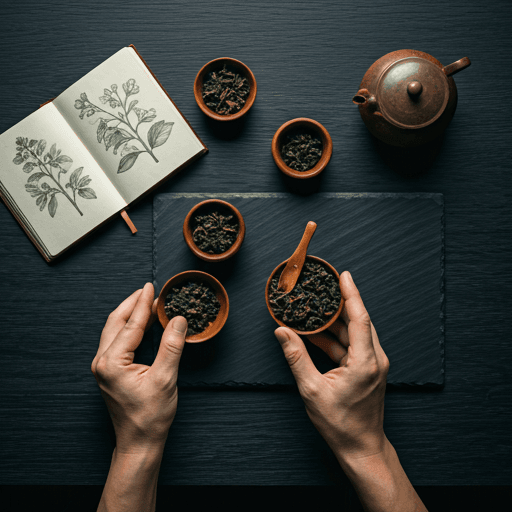
Antioxidants in tea are mostly natural plant compounds called polyphenols, which help neutralize unstable molecules known as free radicals. Green, black, white and oolong tea all come from the same plant, so they all carry these compounds, but processing changes the mix. Green tea is rich in catechins like EGCG, while black tea converts much of that into theaflavins as the leaf oxidizes. This guide explains what the antioxidants in tea actually are, how brewing affects them, and which teas tend to be richest, in plain and practical terms.
One thing to keep clear from the start: tea is a healthy, enjoyable drink, not a supplement or a treatment. Below we describe what research generally observes, not what tea cures.
What antioxidants in tea actually are
Antioxidants are compounds that can slow or stop oxidation, the chemical reaction that produces free radicals. Free radicals are normal byproducts of living, but when there are too many, the resulting "oxidative stress" is something researchers study in the context of long-term health. Antioxidants help keep that balance in check, and many everyday foods and drinks contain them.
In true tea, the antioxidants in tea are dominated by a family of compounds called tea polyphenols. The most studied subgroup are catechins, and the headline catechin is EGCG (epigallocatechin gallate). When you see "tea antioxidants" mentioned in the context of green tea, EGCG is usually the star. All true tea is made from the leaves of one plant, so the polyphenols start out similar in every leaf. What differs is how the leaf is treated after picking.
Polyphenols, catechins and theaflavins
Three terms come up again and again, so it helps to keep them straight:
- Polyphenols — the broad family of plant antioxidant compounds in tea.
- Catechins — the fresh-leaf polyphenols most concentrated in green and white tea; EGCG, EGC, ECG and EC are the main ones.
- Theaflavins and thearubigins — larger pigment compounds formed when catechins oxidize, giving black tea its colour and briskness.
The catechins in tea are not "lost" when black tea is made. During oxidation, much of the catechin content converts into thearubigins, a smaller share become theaflavins, and the rest stay as catechins. Studies comparing the two have found that the theaflavins in black tea are at least as effective as the catechins in green tea at scavenging free radicals, even though the molecules look different.
How processing changes the antioxidants in tea
The biggest factor in which compounds you end up drinking is how much the leaf is allowed to oxidize after it is picked. This is the difference between the main tea types, all of which come from the same shrub. If you want the full picture of the plant itself, see our guide to Camellia sinensis, the tea plant, and for the wider family, our overview of the types of tea explained.
Green tea: high in catechins
Green tea is heated quickly after picking to stop oxidation, which preserves a high level of catechins, especially EGCG. That is why green tea is so often the reference point for tea antioxidants. Our companion piece on green tea benefits goes deeper into what researchers generally observe about it.
Black tea: catechins become theaflavins
Black tea is fully oxidized. The catechins transform into theaflavins and thearubigins, the orange-red and darker-brown pigments that give black tea its colour and stronger taste. The total antioxidant profile shifts rather than disappears, and gram for gram these oxidized compounds hold up well.
White tea: minimally processed
White tea is the least handled of all. The young buds and leaves are simply withered and dried, with little oxidation, so it keeps a high level of fresh-leaf polyphenols. Its delicate flavour belies a respectable antioxidant content.
Matcha: the whole leaf in the cup
Matcha is shade-grown green tea stone-ground into a fine powder. Because you whisk the powder into water and drink the leaf itself rather than steeping and discarding it, the cup includes more of the leaf's polyphenols than a typical infusion. That is the main reason matcha consistently measures high for antioxidant content.
Herbal "teas" have their own antioxidants
Herbal infusions are not technically tea, because they are not made from the tea plant, but many carry their own antioxidant compounds. They simply belong to different chemical families than catechins. For the broader category, see what is herbal tea.
- Rooibos — a caffeine-free South African herb whose standout antioxidant is aspalathin, a flavonoid found almost nowhere else, alongside quercetin and orientin.
- Hibiscus — a tart, ruby-red infusion coloured by anthocyanins, the same pigment family found in berries, plus polyphenols like chlorogenic acid.
Because these are caffeine-free, they are a common choice later in the day for people who still want a polyphenol-rich cup.
What affects how many antioxidants you actually get
The antioxidant content listed for a tea is a potential, not a guarantee. How you handle and brew the leaf changes how much ends up in your cup.
- Leaf quality and freshness. Higher-grade, fresher leaf generally carries more intact polyphenols than stale, long-stored tea. Light, heat and air slowly degrade them.
- Water temperature. Hotter water extracts more compounds, but very hot water can also pull out more bitterness from green tea. Research has found water temperature matters more for some teas than others.
- Steep time. Longer steeping draws out more polyphenols. Some studies even found extended cool steeping yielded high antioxidant readings for green and white tea.
- Form. Whisked whole-leaf matcha delivers more than a quick-steeped bag because nothing is discarded.
None of this requires fuss. Brewing tea attentively, with fresh leaf and reasonable steeping, gets you most of the way there.
Which teas are richest in antioxidants
There is no single "winner," because the comparison depends on the compound measured and how the tea is brewed. That said, the general pattern researchers report is consistent enough to summarise.
| Tea | Main antioxidant compounds | General antioxidant level | Caffeine |
|---|---|---|---|
| Matcha | Whole-leaf catechins (EGCG) | Very high (whole leaf consumed) | Yes |
| Green tea | Catechins, especially EGCG | High | Yes |
| White tea | Fresh-leaf polyphenols | High | Low to moderate |
| Oolong tea | Catechins plus partial theaflavins | Moderate to high | Yes |
| Black tea | Theaflavins, thearubigins | Moderate to high (different mix) | Yes |
| Hibiscus (herbal) | Anthocyanins, polyphenols | High in its own family | None |
| Rooibos (herbal) | Aspalathin, quercetin | Notable in its own family | None |
If your goal is the highest catechin load, matcha and green tea lead. If you prefer caffeine-free, hibiscus and rooibos bring strong profiles of their own. And if you simply enjoy a robust black tea, you are still drinking a polyphenol-rich beverage; the antioxidants are present in a converted form, not absent.
A sensible way to think about antioxidants in tea
The most useful takeaway is also the least dramatic. A varied tea habit, drunk for pleasure, gives you a steady spread of different polyphenols without any need to chase numbers. Antioxidant readings in a lab do not translate neatly into a guaranteed health outcome, and tea is one part of an overall diet, not a standalone fix.
Drink the teas you actually enjoy, brew them with fresh leaf, and treat the antioxidants as a welcome bonus rather than a reason to overdo any single cup.
If this sparked your curiosity, keep exploring: read more on what makes green tea benefits so widely studied, browse the full range in types of tea explained, or dig into the plant behind it all in Camellia sinensis, the tea plant. Whatever you pour, the best antioxidant-rich tea is the one you look forward to drinking.