
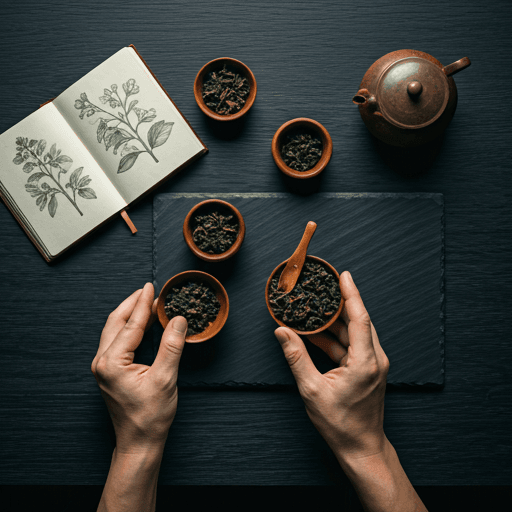
Organic herbal tea is a caffeine-free infusion made from herbs, flowers, roots, seeds or dried fruit — a tisane rather than true tea — that has been grown and processed to a certified organic standard, meaning no synthetic pesticides or fertilizers. That certification matters more in this cup than almost anywhere else, because you steep the whole dried botanical in hot water without ever washing it first, then drink the water. This guide explains what the label really promises, why it can matter for delicate flowers and leaves, and how to choose a good one.
What "organic herbal tea" actually means
Two words on the box are doing the work. "Herbal" tells you the drink contains no leaves from Camellia sinensis, the single plant behind black, green, white and oolong tea; instead it is an infusion of other botanicals — which is why a purist calls it a tisane, not a tea. "Organic" tells you how those botanicals were farmed and handled: to an audited standard (USDA Organic, EU organic leaf, and their equivalents) that bans synthetic pesticides, synthetic fertilizers, sewage sludge and, in most schemes, irradiation and genetically modified inputs. Put the two together and an organic herbal tea is simply a caffeine-free tisane whose ingredients carry that certification from field to bag.
Because the "herbal" side draws on such a wide pantry, we keep the full definition of the category on its own page — see what herbal tea is — and the story of certified true tea (the green and black kind from the tea bush) on organic tea explained. Here the focus is where those two ideas overlap.
What the botanicals can be
Herbal teas can be built from almost any edible part of a plant:
- Flowers — chamomile, hibiscus, lavender, elderflower.
- Leaves — peppermint, spearmint, lemongrass, lemon balm, nettle, tulsi (holy basil).
- Roots and bark — ginger, turmeric, licorice, dandelion, cinnamon.
- Seeds and fruit — fennel, aniseed, rosehip, plus dried apple, orange peel and berry pieces.
- Region-specific shrubs — South African rooibos and honeybush; South American yerba mate and guayusa (two of the rare caffeinated exceptions in an otherwise caffeine-free family).
Most are sold either single-note or as blends — a calming mix of chamomile, lavender and lemon balm, say, or a warming ginger-turmeric. When every ingredient in the recipe is certified, the finished blend earns the organic label too. If a single conventional flavoring or herb sneaks in, the product usually can only claim "made with organic ingredients" rather than the full seal.
What certification guarantees — and what "natural" doesn't
Certification is a legal, third-party claim with a paper trail behind it. For the main USDA seal, a product must contain at least 95% certified organic ingredients, farms are inspected annually, and the growing and handling records have to add up. The EU organic leaf and other national schemes work on the same principle: an independent body signs off, and the logo is meaningless if the audit fails.
One honest caveat: organic is not the same as "pesticide-free." Certified growers may still use a short list of approved natural inputs (neem oil or pyrethrin, for example), and residues can occasionally drift in from neighboring land or storage. Organic sharply reduces the synthetic-chemical load; it does not promise a laboratory-clean cup.
By contrast, the words "natural," "pure," "wildcrafted," "clean" and "artisanal" have no agreed legal definition on a tea package. "Natural" in particular is unregulated marketing — it can sit right next to conventionally farmed, heavily sprayed herbs. If the growing method is what you care about, look past those adjectives for an actual certifier seal and code.
Organic is not automatically fair trade or better-tasting
Two more things the label does not tell you. It says nothing about wages or farmer conditions — that is a separate Fairtrade or Fair for Life certification. And it makes no promise about flavor: an organic chamomile is not guaranteed to taste better than a well-made conventional one. Organic speaks to how the plant was grown, full stop.
Why organic can matter more for herbal tea
With most produce you wash or peel away the outside before eating. A tisane is different: the dried flower, leaf or root goes straight into your mug and you drink the infusion, unwashed. Delicate flowers and thin leaves also have an enormous surface area relative to their weight, so they can hold onto residue, and gentle herbal drying skips the high-heat "fixation" step that further processes true tea. Studies of pesticide transfer into herbal infusions confirm that some of what is on the leaf does migrate into the water.
None of that is cause for alarm — the point is simply that the case for choosing organic is a little stronger for a raw, whole, unwashed botanical than it is for, say, a banana you peel. It is one reasonable reason people pick certified herbs, alongside soil and pollinator concerns.
How to choose a good organic herbal tea
The best organic herbal tea for you comes down to the flavor and the moment you want it for, but a few practical signals separate a considered product from a marketing exercise:
- A real seal, not just the word. Look for an actual certifier logo and code (USDA Organic, the EU leaf, Soil Association and so on), not the loose adjective "organic" printed on the front.
- Whole, visible botanicals over dust. Loose leaf or a roomy pyramid bag full of recognizable flowers, leaf pieces and root shows more clearly what you are getting than fine, anonymous powder in a tight bag.
- Freshness cues. Herbal aroma fades over time, so a harvest date or a sensible best-by window — and airtight, light-proof packaging — matters more than it does for hardier ingredients.
- A short, plain ingredient list. Fewer "natural flavors" and additives, more actual named herbs, is usually the better sign in this category.
- Plastic-free bags where possible. Many tea bags are sealed with plastic; unbleached paper bags, or simply buying loose leaf, avoids brewing microplastics and fits the ethos most organic buyers are after.
On organic herbal tea brands: rather than rank anyone, treat it as a category where many established names now run fully certified lines — Traditional Medicinals, Pukka, Yogi, Numi, Clipper and Celestial Seasonings are all commonly cited examples — alongside countless smaller regional growers. Read the actual pack, not the reputation.
Popular organic herbal teas at a glance
Here is a quick decoder of common single-note tisanes you will find certified, what each is like to drink, and its caffeine status. Deeper flavor and steeping notes live on each herb's own page.
| Organic herbal tea | What it tastes like | Caffeine |
|---|---|---|
| Chamomile | Soft, apple-like, honeyed and floral | Caffeine-free |
| Peppermint | Cool, sharp, clean and minty | Caffeine-free |
| Rooibos | Smooth, red, naturally sweet and nutty | Caffeine-free |
| Hibiscus | Tart, cranberry-bright, ruby red | Caffeine-free |
| Ginger | Warming, spicy, with a peppery bite | Caffeine-free |
| Lemongrass | Citrusy, grassy, light and fresh | Caffeine-free |
| Lavender | Perfumed, floral, gently sweet | Caffeine-free |
| Yerba mate / guayusa | Earthy, grassy, robust | Naturally caffeinated (the exceptions) |
Rooibos is worth singling out: it is a leguminous shrub, not a true tea and not caffeinated, which makes an organic rooibos a popular all-day base for both plain cups and blends.
A light word on why people drink them
Herbal teas are enjoyed above all for comfort, ritual and flavor — a warm, caffeine-free cup to wind down with, or a bright fruity one over ice. Many are traditionally associated with relaxation or digestion, and some people specifically reach for a chamomile or lavender blend in the evening; if that is your goal, our roundup of the best herbal teas for sleep is a good next stop. Choosing an organic tisane changes the sourcing, not the effect — and none of this is medical advice. If you are pregnant, taking medication or managing a health condition, it is worth checking specific herbs with a doctor, since even gentle botanicals can interact.
The takeaway
An organic herbal tea is a caffeine-free tisane whose herbs, flowers, roots or fruit were grown and handled to a certified standard — a meaningful choice precisely because you infuse the whole, unwashed botanical. The label is worth trusting when it is backed by a real seal rather than the word "natural," and worth reading closely for whole ingredients, freshness and plastic-free packaging. Beyond that, the fun part is the same as with any tisane: finding the flowers, leaves and roots that taste like your kind of quiet.