
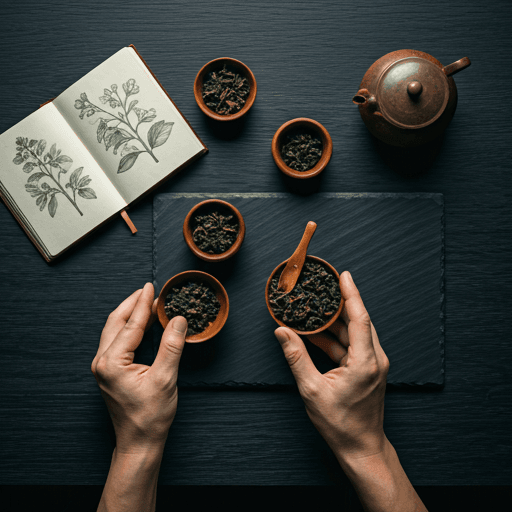
Organic tea is tea from the Camellia sinensis plant that is grown and processed without synthetic pesticides, herbicides or chemical fertilisers, and certified to a recognised organic standard. In plain terms, the leaf you steep carries no residue from those synthetic inputs, and an independent body has audited both the garden and the factory to confirm it. The word printed on the front of the pack matters far less than the certification seal on the back — that seal is the difference between a real standard and a marketing mood.
What "organic tea" actually means
The organic tea meaning is narrower and more specific than most shoppers assume. It is not simply "clean," "pure" or "grown the old way." To qualify, a tea garden has to follow a defined system: no synthetic pesticides or herbicides sprayed on the bushes, no synthetic nitrogen fertiliser feeding the soil, no genetically modified inputs, and usually a multi-year conversion period before the first harvest can be sold as organic (three years of clean land under USDA rules). The factory that withers, rolls, oxidises and dries the leaf has to keep organic batches separated and traceable, so an organic lot cannot be quietly cut with conventional leaf on the way to the bag.
This page stays on organic Camellia sinensis tea — green, black, oolong, white and pu-erh from the tea plant. If you want the botany of the plant itself, see the Camellia sinensis explainer, and for how the main styles differ, the types of tea guide. Herbal "teas" like chamomile, peppermint and rooibos are technically tisanes, not tea, and organic certification works a little differently for them — that is covered in the organic herbal tea guide.
What certified organic tea actually certifies
Certified organic tea carries a seal from an independent, accredited body that has inspected the operation against a published legal standard. The certifier audits the farm and the processing facility, reviews records, and re-inspects on a schedule — you are not trusting the brand's own word, you are trusting a third party whose job is to check it. Different regions run their own programmes, and a garden selling worldwide often carries several seals at once:
| Standard / seal | Region behind it | Core promise |
|---|---|---|
| USDA Organic | United States | No synthetic pesticides, fertilisers, GMOs or irradiation; land clean for 3+ years; annual inspection |
| EU Organic (the green leaf logo) | European Union | Bans synthetic agrochemicals and GMOs; demands full traceability and strict separation from conventional lots |
| JAS Organic | Japan | Emphasis on soil fertility and low environmental impact; tight approval of any permitted inputs |
| India Organic (NPOP) | India | National standard behind many Assam and Darjeeling gardens; audited farm-to-factory chain |
The standards are broadly aligned and several have equivalence agreements, which is why a single Japanese sencha or Darjeeling can legitimately show a JAS or India Organic mark alongside a USDA or EU logo. What matters is that a named seal is present — not a self-declared phrase.
Why organic matters more for tea than for many foods
Here is the point that surprises people. You wash an apple, peel an orange, scrub a potato. You do not wash tea. Dried tea leaf goes straight from the caddy into the pot, and hot water pulls compounds out of the leaf surface and into the cup you drink. So whatever sits on a tea leaf when it is picked, withered and dried can travel into your infusion largely intact. There is no rinse step to lower the exposure the way there is with produce you scrub under the tap.
Tea is also, historically, a crop that has attracted heavy spraying. Bushes are grown as dense monoculture hedges in warm, humid, pest-friendly climates, and the young shoots that make the best tea are exactly the tender growth insects go for. Conventional gardens have leaned on agrochemicals to protect yield. Choosing certified organic is one of the clearer ways to reduce the chance that spray residue ends up steeping in your mug — which is precisely why the "no wash before you brew" fact makes the label more meaningful for tea than for a food you rinse or cook.
Does organic tea taste better?
Not automatically — and this is where honest marketing and wishful marketing part ways. Flavour in tea is driven mostly by terroir (the garden's altitude, soil and climate), the cultivar (the specific tea varietal), the plucking standard, and above all the processing — how the leaf is withered, rolled, oxidised, fired or steamed. The organic certificate governs how the plant was farmed, not how skilfully the leaf was made. A carelessly processed organic tea can taste flat, while a masterfully made conventional single-estate lot can be extraordinary.
That said, the label and quality often travel together in practice. Gardens that invest in organic conversion tend to be high-care operations that also pluck carefully and process attentively, and healthier soil can support a more vigorous bush. Some tasters also report a cleaner, less "green-metallic" finish in well-made organic teas. Treat "organic" as a farming assurance, not a flavour guarantee — and judge the cup on its own terms. If you are hunting for genuinely good leaf, the best green tea brands guide weighs taste and sourcing together rather than leaning on the seal alone.
Pesticide residue, soil and biodiversity
Two things are true at once, and good guidance holds both. First, certified organic tea is far less likely to carry detectable synthetic pesticide residue than conventional tea — large reviews of organic crops consistently find a much lower frequency of residues. Second, "organic" does not mean "guaranteed zero residue." The USDA's own materials are explicit that certification does not promise a product is completely free of every pesticide trace, because drift from neighbouring farms, contaminated water and background soil pollution are outside a single garden's control. Organic certifies the practices and approved inputs, not a perfect lab result on every leaf. So the accurate claim is "much lower likelihood of residue," not "no chemicals ever."
Beyond your cup, organic farming is a soil-and-ecosystem system, not just a spray ban. Composting, cover crops and no synthetic nitrogen tend to build richer soil microbial life, and studies of organic tea plantations report higher species richness and biodiversity than conventional ones nearby. For many drinkers, that environmental case — healthier soil, cleaner watersheds, more insect and bird life around the garden, and safer conditions for the workers who pick and process the leaf — is as compelling a reason to choose organic as the residue question.
"Natural tea" vs certified organic — how to shop
The single most useful shopping rule: look for a real certification seal, not a vibe. "Natural tea," "chemical-free," "pesticide-free," "clean" and "pure" are unregulated marketing words. A small garden may genuinely farm cleanly and simply not pay for certification — but the buyer has no independent way to verify a self-declared claim, and a cynical seller can print "natural" on anything. Certification is the mechanism that turns a promise into something audited. Here is what common front-of-pack language does and does not guarantee:
| Claim on the box | What it actually guarantees |
|---|---|
| USDA Organic / EU Organic leaf / JAS / India Organic seal | Audited by an accredited body to a legal organic standard, farm through factory — the strongest assurance |
| "Made with organic ingredients" | A defined majority is organic, but not the whole blend — check the ingredient list for which parts |
| "Natural" / "all natural" | Nothing enforceable — an unregulated marketing word, no audit, no standard behind it |
| "Pesticide-free" / "chemical-free" (no seal) | A self-declared claim with no independent verification unless a certifier stands behind it |
| "Single estate" / "hand-picked" / "artisan" | Speaks to sourcing or craft, not to whether synthetic agrochemicals were used |
A few extra checks help. Note that organic and fair trade are separate certifications — an organic tea is not automatically ethically traded, and a fair-trade tea is not automatically organic; if both matter to you, look for both marks. Cross-reference the seal on the pack with the certifier's name, and remember that reputable brands are usually happy to name their certification and origin garden. And do not read organic as a promise about caffeine, antioxidants or health outcomes — it is a farming standard, full stop.
The bottom line
Organic tea is a clear, auditable idea wearing a fuzzy marketing halo. Stripped of the halo, it means Camellia sinensis grown without synthetic pesticides and fertilisers, processed under separation, and signed off by an independent certifier — which genuinely lowers the odds of spray residue reaching a leaf you never rinse before you brew, and supports healthier soil and biodiversity in the bargain. It does not promise a tastier cup or a residue-free lab test, and it is not the same as the unregulated word "natural." Buy the seal, judge the flavour on its own merits, and let the certificate do the one job it is actually good at: telling you how the leaf was farmed.