
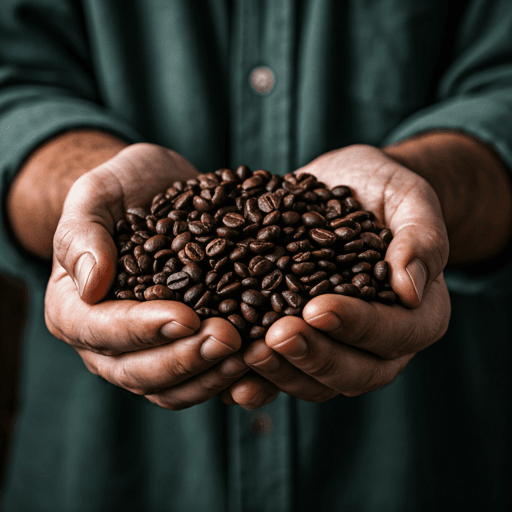
Organic coffee is coffee grown and processed without synthetic pesticides, herbicides or fertilizers, and certified to an organic standard along the whole chain from farm to roaster. In plain terms, the beans in the bag and the cup you brew carry no residue from those chemicals, and an independent body has audited every step to confirm it. The claim on the front of the pack is only ever worth as much as the seal that backs it.
That distinction matters, because "organic" is one of the most abused words on the coffee shelf. A genuinely certified bag is a different thing from one that simply prints the word in a leafy green font. This guide explains what the label actually guarantees, why certification means more for coffee than for many crops, how it overlaps with fair trade and shade-grown labels without being the same thing, whether it tastes better, and how to shop so you get the real article.
What Organic Coffee Really Means
Organic coffee starts on the farm. To qualify, the land must be free of prohibited synthetic inputs for a set transition period (three years under most standards), and the grower has to manage soil fertility and pests with organic methods instead: compost, cover crops, natural predators and careful shade rather than a chemical spray schedule. Genetically modified organisms are not allowed, and neither is sewage sludge or synthetic nitrogen fertilizer.
Crucially, the "organic" promise does not stop at the farm gate. Because coffee changes hands many times, the standard follows a chain of custody: the exporter, the importer, the roaster and the packer each have to be certified too, and keep records showing the organic beans were never mixed with or contaminated by conventional lots. A roaster cannot legally call the finished product organic unless its own facility is certified. That is why the small print usually names a certifier, not just a claim.
What Certification Guarantees
The value in the word comes entirely from independent, audited certification. The best-known seals are USDA Organic in the United States and the EU organic leaf in Europe, with equivalents such as Canada Organic, JAS in Japan and others recognized around the world through equivalency agreements. Behind each seal sits an accredited third-party certifier that inspects farms and facilities at least once a year, reviews paperwork and can pull the certificate if the rules are broken. That audit, not the leaf graphic itself, is what you are paying a small premium for.
Certified organic coffee is therefore a verifiable claim rather than a vibe. It is worth learning to read the label, because a lot of packaging borrows the look of certification without the substance. The table below decodes the claims you will actually see.
| Label claim | What it actually guarantees |
|---|---|
| USDA Organic seal / EU organic leaf | Grown and handled without synthetic pesticides, herbicides or fertilizers and no GMOs; farm and roaster audited yearly by an accredited certifier. |
| "Certified organic" | The same protection, but only when tied to a named standard and certifier code. Meaningful with a seal, empty without one. |
| "Made with organic beans" (no seal) | Often a partial or marketing claim; may not be fully certified end to end. Look for the actual mark. |
| "Natural" / "chemical-free" | Unregulated words that guarantee nothing about how the coffee was farmed. |
| Fair Trade mark | About price paid to growers and trading terms, not chemicals. A bag can be organic, fair trade, both or neither. |
| "Shade-grown" / Bird Friendly | About habitat and tree canopy. Smithsonian Bird Friendly requires organic plus shade; plain "shade-grown" is unverified on its own. |
| "Swiss Water" (on decaf) | A chemical-free way to remove caffeine, not an organic farming certification. The two are separate. |
Why It Matters More for Coffee
Conventional coffee is among the more heavily sprayed crops in the world. It grows almost entirely in tropical, biodiverse regions where warmth and humidity encourage pests and fungal disease, and intensive sun-grown production leans hard on synthetic fertilizers and pesticides to keep yields up. Choosing organic keeps that particular chemical load out of the system.
The benefit is not only about your cup. Because organic farming bans the harshest inputs, it protects the people who actually handle the crop, many of them smallholders and seasonal pickers who would otherwise be exposed to agrochemicals with limited protective gear. It also keeps those chemicals out of tropical soils and waterways, encourages the tree cover that shelters migratory birds, and rewards slower, healthier soil management. For a plant grown this far from where most of it is consumed, those farm-level and environmental effects are arguably the strongest reason to buy organic at all.
Organic Coffee Beans, Shade-Grown and Fair Trade
It helps to see where organic sits among the other badges on the shelf, because shoppers often assume one implies the others. It does not. When you buy certified organic coffee beans, you are buying a guarantee about chemicals and farming methods, full stop. Whether the grower was paid a fair price, and whether the trees grew under a natural canopy, are separate questions answered by separate labels.
Fair trade is the clearest example. It is an economic and ethical certification about minimum prices, community premiums and trading conditions for producers, and it is deliberately not the same as organic. A bag can carry one mark, both or neither, and the two schemes are audited by different bodies. If the grower story matters to you, read our companion guide to fair trade coffee alongside this one rather than treating "organic" as shorthand for everything good.
Shade-grown and Bird Friendly labels are a third axis, about habitat. There is real overlap in practice (organic farms are more likely to keep shade trees), but only the Smithsonian Bird Friendly certification actually bundles organic and shade together as a requirement. You will sometimes see a bag marketed as "organic bean coffee" that carries none of these habitat claims, so check each mark on its own terms. And because "organic" describes the farming, not the format, it applies whether you buy whole beans or ground; if you want to understand the raw material itself, our explainer on what coffee beans are covers the fundamentals.
Does Organic Coffee Taste Better?
Not automatically. Organic certification is about how the coffee is grown and handled, not about flavor, and there is no guarantee that a certified bag will taste better than a well-made conventional one. What genuinely drives taste is origin and altitude, the variety of the plant, how ripe the cherries were picked and processed, how fresh the coffee is, and above all the roast. Two organic bags can taste worlds apart for those reasons alone.
That said, many organic lots are grown slowly and carefully on smaller farms, and speciality roasters often source them with the same attention they give any high-scoring coffee, so the best organic coffee can absolutely stand with the best of anything else. Just do not choose it for flavor alone; judge it the way you would any coffee, and match the roast to how you brew. Our guide to coffee roast levels is the better place to chase taste, because roast development will change the cup far more than the organic seal ever will.
Organic Decaf and Organic Instant
Two formats confuse shoppers, so they are worth a quick note. Organic decaf is real, and reputable versions usually pair the organic farming certificate with a chemical-free caffeine removal method, most often the Swiss Water process, so that no solvents are introduced at the decaffeination stage either. The two claims are independent, though: a coffee can be decaffeinated without solvents yet not be organically farmed, so look for both. How the caffeine is actually taken out, solvent-based versus water-based, is its own separate topic; for organic buyers it is enough to confirm the label carries both the organic seal and a named, solvent-free method.
Organic instant coffee also exists, made by freeze-drying or spray-drying certified organic brewed coffee, with the same farm-to-processor chain of custody behind it. It is its own small category with its own quality quirks, so we cover shopping for it separately in the guide to organic instant coffee.
How to Shop for Organic Coffee
Shopping well comes down to trusting the seal over the sentiment. Look for an actual certification mark, ideally with the name or code of the certifying body printed nearby, rather than the bare word "organic" or an unregulated flourish like "natural" or "pure." If a bag only whispers the idea without a seal, treat it as marketing.
Beyond the certificate, buy on the same signals you would for any good coffee: a visible roast date so you know it is fresh, whole beans over pre-ground when you can grind at home, and clear origin information. A stale organic bag is still a stale bag. If you keep two rules in mind, the real seal plus a recent roast date, you will get genuine certified organic coffee that also happens to be worth drinking. And remember that organic sits alongside, not on top of, fair trade and shade-grown claims, so decide which of those matter to you and read each label for what it truly promises.
Organic coffee, in the end, is a straightforward idea wrapped in a noisy label. It guarantees that no synthetic agrochemicals touched the crop and that someone independent checked, which is a meaningful thing for a plant grown by hand in the tropics and shipped across the world. It is not a promise about taste, price fairness or bird habitat, so buy it for what it is, pair it with the other labels you care about, and let the roast and the freshness do the rest in your cup.