
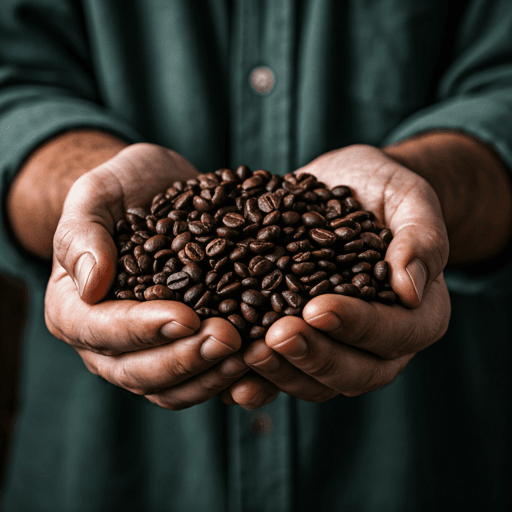
Organic instant coffee is soluble coffee made from certified-organic beans — brewed into a concentrate, then dried into granules or powder by freeze-drying or spray-drying — so you get the grab-and-go convenience of instant with none of the synthetic-pesticide residue that can come from the growing side. In short, the "organic" part is a promise about the farm, and the "instant" part is a promise about your morning. This guide walks through what actually earns the organic label, why freeze-dried usually tastes better than spray-dried, what to look for on the jar, and how to brew a smoother cup.
What "organic instant coffee" means
For a jar to be sold as organic instant coffee, the beans behind it have to be grown and handled under a recognized organic standard — think USDA Organic, the EU organic leaf, or equivalents such as JAS in Japan or the Canada Organic mark. In practice that means the farms skip synthetic pesticides and synthetic fertilizers, and the chain from farm to processing plant is certified and audited rather than self-declared. Because coffee is a heavily sprayed crop, the growing side is where an organic seal does most of its work.
The certification also has to carry through the step that turns roasted coffee into soluble granules, so the finished product — not just the green beans — qualifies for the label. That is the difference between a bag of organic beans and a jar of genuinely organic instant.
A few of the seals you will actually see on jars:
- USDA Organic — the United States standard; a product labeled "organic" carries at least 95% organic ingredients, while "100% organic" is exactly that.
- EU organic leaf — the green leaf-of-stars mark used across the European Union.
- JAS Organic — Japan's agricultural standard, seen on jars sold there.
- Canada Organic — Canada's federal organic mark, often printed alongside USDA on North American shelves.
- Soil Association and other national certifiers — respected bodies whose logo signals independent, audited certification rather than a self-claim.
One caution worth internalizing: words like "natural," "pure," "clean," or "pesticide-free" printed on a label are unregulated marketing and mean nothing on their own. Only a certification mark backed by an accredited body counts. If you want the broader story of how coffee earns an organic seal across beans, roasting and trade, our organic coffee guide covers it; here we stay focused on the instant format.
Why the organic label does most of its work on coffee
Organic certification matters for almost any crop, but coffee is a case where it earns particular attention. Conventionally grown coffee is one of the more chemically treated crops in world agriculture, routinely sprayed against pests and fungal disease. You also do not wash green coffee the way you might rinse an apple — the beans are processed, dried, roasted and then extracted into your cup, so whatever was used on the plant travels a short path to the mug. Choosing certified-organic beans is a way to keep synthetic residues out of that chain from the start.
There is a knock-on benefit many buyers care about, too: organic standards generally push growers toward healthier soil, shade-friendly plots and less chemical runoff. None of that is a taste guarantee, but it is a genuine reason the label is more than a sticker on a coffee jar specifically.
How instant coffee is made — and why freeze-dried usually keeps more aroma
All instant coffee starts the same way: real coffee is brewed into a strong concentrate, and then the water is removed so what is left is a dry solid that redissolves in your cup. The two main ways to remove that water are spray-drying and freeze-drying, and they are not equal for flavor. (For the full mechanics of solubles, our instant coffee explained piece goes deeper; the short version is what matters for buying.)
Spray-drying blasts the concentrate as a fine mist into a tower of hot air. The water flashes off almost instantly and you are left with a light powder. It is fast and inexpensive, which is why a lot of everyday instant is spray-dried — but the heat drives off a good chunk of the delicate aromatic compounds that make coffee smell like coffee.
Freeze-drying takes the opposite approach. The concentrate is frozen solid, and the ice is then pulled off as vapor under vacuum without ever melting (a process called sublimation). Because it happens cold, far more of the volatile aroma survives, and you get those recognizable dark, glassy granules rather than a fine dust. That is why organic freeze dried coffee is usually the better-tasting choice, and why premium jars tend to advertise "freeze-dried" prominently. It costs more to make, so expect it to sit at the higher end qualitatively.
A third style you will meet is microground, or "instant with real coffee added," where a little finely milled roast-and-ground coffee is blended into the soluble base for extra body and aroma. It is not a drying method so much as a top-up, and it can noticeably lift a cup — at the price of a touch of sediment at the bottom.
What to look for in the best organic instant coffee
Choosing the best organic instant coffee is mostly about reading the jar honestly. Here is what actually moves the needle, roughly in order of importance:
- A genuine certification seal. Look for an actual mark (USDA Organic, EU organic leaf, or a regional equivalent) and, ideally, the certifying body's name — not just the word "organic" sitting in the product name.
- Freeze-dried over spray-dried. If aroma matters to you, this single detail matters more than almost anything else. The label or product description will usually say which method was used.
- Single-origin or 100% arabica for a smoother cup. Arabica beans tend to taste sweeter and less harsh than robusta, and a single-origin jar gives you a more defined flavor. Blends with robusta hit harder and more bitter — fine if that is what you like, and they carry more caffeine.
- No added fillers. Some "coffee" jars slip in sugar, maltodextrin, milk solids or creamer. If you want plain coffee, the ingredient list should read as coffee and nothing else.
- A decaf option done well. If you want organic decaf, favor a chemical-free method — the Swiss Water process is the common one — so the decaffeination matches the spirit of buying organic.
- Certifications are separate. Organic is not the same as fair trade; they are different standards with different seals covering different things. A jar can be one, both or neither, so check for each mark independently.
- Packaging and freshness. A resealable jar or a sealed pouch protects those aromatics after opening. Instant is shelf-stable, but air and moisture still dull it over time.
Across organic instant coffee brands you will see all of these variables mixed and matched, from supermarket own-labels to specialty roasters selling freeze-dried single origins. We deliberately avoid ranked picks here; for a wider tour of what is on shelves, see instant coffee brands explained and our broader best instant coffee overview.
Drying method and type: what to expect
Use this as a quick decoder when you are comparing jars. Cost is qualitative only — it varies widely by brand, origin and market.
| Method or type | How it's made / what it is | What to expect |
|---|---|---|
| Freeze-dried granules | Concentrate frozen, ice removed under vacuum (cold) | Best aroma retention; dark glassy granules; higher cost |
| Spray-dried powder | Concentrate misted into hot air, water flashed off | More aroma lost to heat; fine powder; lower cost |
| Single-origin (organic) | Beans from one origin, certified organic | More defined, distinctive flavor; often pricier |
| 100% arabica blend (organic) | Arabica beans only, no robusta | Smoother, sweeter, less bitter cup |
| Robusta or mixed blend (organic) | Includes robusta for body and strength | Bolder, more bitter, more caffeine punch |
| Organic decaf (Swiss Water) | Caffeine removed with water, no solvents | Nearly all the flavor, minimal caffeine; niche availability |
| Microground added | Instant with a little finely ground real coffee mixed in | Fuller body and aroma than pure soluble; slight sediment |
How to make a good cup of instant
Instant rewards a little technique. The most common mistake is dumping granules into a full mug of hot water and stirring — that leaves undissolved specks and a flat taste. Instead:
- Bloom it first. Put your spoonful of granules in the cup and add just a splash of warm (not boiling) water. Stir into a smooth paste or slurry so everything dissolves evenly.
- Top up. Now add the rest of your hot water. Water just off the boil, rather than fiercely boiling, is kinder to the aroma.
- Adjust to taste. Start with a level teaspoon per cup and go up or down. Freeze-dried granules often taste cleaner at a slightly lighter dose than you would expect.
For iced coffee, the bloom step is essential: dissolve the granules in a little warm water first, then pour over ice or top with cold milk. Granules will not dissolve properly straight into cold liquid, so skipping this leaves you with gritty bits at the bottom. Milk, plant milk or a touch of sweetener all work the same as with any coffee.
Storing organic instant so it keeps its aroma
Instant coffee is genuinely shelf-stable — it will not turn on you in weeks the way fresh grounds go stale — but the aromatics you paid extra for in a freeze-dried jar are exactly what fade fastest once the seal is broken. Keep the jar tightly closed, cool and dry, and out of the steamy zone above the kettle or stove. Moisture is the real enemy: a wet spoon or a humid cupboard clumps the granules and dulls the flavor. Use a dry spoon every time, and if you buy a pouch, decant it into an airtight jar. Stored well, an opened jar holds its character for many months rather than days.
The honest part: what "organic" does and doesn't mean
It is worth being clear-eyed, because a lot of marketing blurs this. The organic seal speaks to how the beans were grown and handled — no synthetic pesticides or fertilizers, an audited supply chain. That is a real and meaningful difference on the farming side.
What organic does not claim is anything about the cup being healthier for you, and it says nothing about instant coffee versus fresh. Instant is not automatically lower in acrylamide (a compound formed during roasting in all coffee), and "organic" is not a promise that a given jar tastes better than a conventional one — a spray-dried organic can easily be beaten by a well-made conventional freeze-dried. Organic is also not the same as fair trade, which is a separate certification about pay and trading terms. Treat the seal as exactly what it is: a growing-side guarantee, not a health halo.
Seen that way, organic instant coffee is a genuinely useful category — the convenience of a jar, plus confidence about the farming behind it. Decide first how much you care about aroma (freeze-dried), then about smoothness (arabica or single-origin), then check the seal is real and the ingredient list is just coffee. Get those three right and you will have a weekday cup that is easy to make and easy to feel good about.