
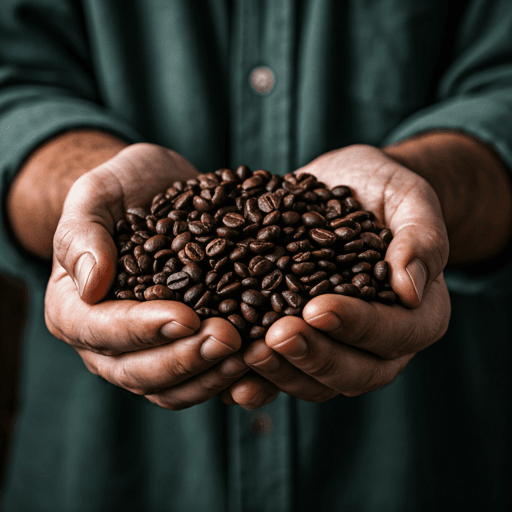
Myanmar coffee is highland Arabica grown in the misty hills of Shan State and the plateaus around Mandalay, an origin that has vaulted from anonymous bulk supply to genuine specialty status in barely a decade. Once known mainly for cheap commodity beans, Myanmar (still called Burma by many, its coffees sometimes labelled "Burmese") now turns out sweet, citrus-bright, floral, honeyed lots that cup well above the specialty threshold. It is one of Southeast Asia's most exciting young origins.
What is Myanmar coffee?
Myanmar coffee refers to Arabica (and some lower-grown Robusta) produced in the highlands of this Southeast Asian country. The specialty story centres on Arabica grown between roughly 1,000 and 1,600 metres, mostly by smallholders farming plots of just a few hectares. Since the mid-2010s, producers have shifted from selling undifferentiated bulk beans toward carefully processed washed and natural lots destined for the specialty market — the same category of traceable coffee we describe in our guide to single-origin coffee.
Compared with its neighbours, Myanmar is a latecomer. While Vietnam built a Robusta empire and Laos and Thailand developed their own reputations, Myanmar's coffee sector stayed small and inward-looking for decades. That late arrival is now an advantage: today's Myanmar coffee was built for the specialty era rather than retrofitted into it.
A short history: from colonial curiosity to specialty origin
Coffee is not new to Myanmar. Robusta was reportedly first planted in the country's south, near present-day Myeik and Dawei, in the late nineteenth century, during the British colonial period. Arabica arrived later and higher up: Roman Catholic missionaries are widely credited with introducing Arabica to the cooler Shan hills in the 1930s, seeding the growing districts that still matter today.
For most of the twentieth century coffee stayed marginal. A turning point came in the 1980s, when a government program — backed by the United Nations — promoted coffee as a substitute crop for opium poppy in the highlands. Further government initiatives around the turn of the millennium expanded acreage again. Neither effort aimed at quality; both simply added trees. The real quality revolution waited until the country opened up politically after 2011, when foreign buyers, roasters, and development agencies could finally reach the farmers directly.
Where Myanmar coffee grows
Myanmar's Arabica is concentrated in a handful of highland zones, each with its own character.
Shan State and Ywangan
Shan State, in the country's east, is the heartland of Myanmar Arabica. Within it, the district of Ywangan — the name is often translated as "salty village" — has become the poster child for Myanmar specialty coffee. Ywangan sits roughly a three-hour drive from Mandalay, and its farms average around 1,300 to 1,600 metres, higher than many rival zones. Production here is overwhelmingly smallholder, with plots rarely exceeding two or three hectares, and villages have historically owned their own pulpers for washed processing. Of the roughly 125 villages in Ywangan township, some 90 grow coffee.
Pyin Oo Lwin and the Mandalay region
Pyin Oo Lwin, a former colonial hill town east of Mandalay, is the other major growing and processing hub. Slightly lower than Ywangan, it hosts some of the country's most organised estates and central wet-milling operations. Cherry from surrounding villages is often trucked here for consistent processing and preparation for export — the town has effectively become a quality-control gateway for the region.
The southern hills
Beyond the Mandalay-Shan axis, coffee also grows in scattered southern and western hill areas, including parts of Chin and Kayin states. These lots are less prominent on the specialty map but add to the country's varietal and flavour diversity, and reflect just how widely coffee has spread through Myanmar's uplands.
Varieties in the cup
Myanmar's genetic mix is unusually broad for a young origin, a legacy of the government expansion programs that introduced cultivars from established producing countries to build a national industry. Growers today cultivate Catuai, Caturra, Catimor, and S795, alongside older introductions such as Bourbon, Typica, and SL34. Because Myanmar is an all-Arabica specialty story built on these cultivars rather than on Robusta, it sits firmly on the fine-cup side of the Arabica versus Robusta divide.
This diversity is a double-edged sword. Rust-tolerant hybrids like Catimor and S795 keep yields stable in a climate where coffee leaf rust is a real threat, while heirloom-leaning types like Bourbon and SL34 can deliver more expressive, aromatic cups. The best Myanmar producers are increasingly separating varieties to showcase what each one brings.
Processing: washed, natural, and honey
The pivot from bulk to specialty was, above all, a processing revolution. Two styles dominate.
Washed coffees are the traditional Ywangan approach, where village pulpers strip the fruit and ferment the beans for a clean, bright, citrus-forward cup. This is the classic route to transparency and clarity; our explainer on the washed process covers why it produces such crisp acidity.
Natural (dry) processing has surged as buyers reward fruit-forward intensity. Many Shan State smallholders now dry whole cherries on raised beds during the dry-season harvest, which runs roughly from December through March, coaxing out heavier body and wine-like, berry-driven complexity — the same technique explained in our guide to natural process coffee. Honey-processed lots, which leave some sticky mucilage on the bean, offer a sweet middle ground between the two.
Crucially, much of this progress rode on outside help. Beginning around 2014, a multi-year development project funded by USAID and led by Winrock International, working with the Coffee Quality Institute, brought better agronomy, drying tables, sorting protocols, and even a cupping lab and sample roaster to Ywangan. That infrastructure taught farmers to pick selectively, dry evenly, and taste their own coffee — the foundations of any specialty industry.
The Myanmar coffee flavour profile
At its best, Myanmar coffee is approachable, sweet, and clean, with the kind of gentle brightness that makes it an easy crowd-pleaser. Washed lots lean toward orange and other citrus notes with floral hints of jasmine or chamomile; naturals push into stone fruit, berry, and even cranberry or rhubarb-pie territory, with a fuller, rounder body. Honey lots split the difference with pronounced sweetness.
| Attribute | Washed Myanmar | Natural Myanmar |
|---|---|---|
| Acidity | Bright, citrusy, clean | Softer, rounded |
| Body | Light to medium, silky | Medium to full, syrupy |
| Typical notes | Orange, jasmine, honey, chamomile | Peach, berry, cranberry, rhubarb |
| Sweetness | Moderate, refined | High, fruit-driven |
| Best for | Filter, pour-over | Filter, espresso, cold brew |
Across styles, the through-line is sweetness and a clean finish — descriptors that show up again and again in professional cupping notes for the origin.
Rising competition scores and the specialty pivot
The clearest proof of Myanmar's rise is on the cupping table. The Myanmar Coffee Association, working with the Coffee Quality Institute, has run national cupping competitions in which the large majority of entered samples cleared the 80-point specialty threshold — in one widely reported edition, all but two of roughly seventy samples qualified. The top lots have scored in the high 80s, approaching 90 points, a level that would draw attention at any origin, let alone one this young.
Those scores have translated into real specialty demand. Respected roasters across Europe and North America now feature Myanmar lots, and green buyers treat the origin as an emerging discovery rather than a novelty. Well-processed specialty lots now attract real demand and recognition far beyond the country's old bulk-commodity coffee, rewarding the farmers who invested in quality — though Myanmar has yet to appear in the marquee Cup of Excellence auction circuit.
Buying and brewing Myanmar coffee
When shopping for Myanmar coffee, look for lots that name the region — Ywangan, Pyin Oo Lwin, or a specific Shan State village — along with the processing method and, ideally, the variety. That traceability is your best signal of a specialty-grade lot rather than a generic blend component. Washed Ywangan lots reward a clean pour-over; expressive naturals shine as filter or cold brew and can add fruity punch to espresso.
For brewing, treat Myanmar much as you would other bright, sweet highland Arabicas: a medium grind, water just off the boil, and a light-to-medium roast that preserves the citrus and floral top notes. If you enjoy exploring young Asian origins, Myanmar pairs naturally on the shelf next to other rising highland producers like Laos.
The editorial takeaway
Myanmar coffee is one of the most compelling arrival stories in specialty coffee: an origin with more than a century of history that only found its quality footing in the last ten years, thanks to highland terroir, a rich varietal inheritance, and a genuine processing revolution. The cups — sweet, citrus, floral, honeyed, and clean — deliver on the promise, and the competition scores back it up. For drinkers who love chasing the next great origin before the rest of the world catches on, few tickets are as rewarding right now as a bag of well-made Ywangan or Pyin Oo Lwin Arabica.