
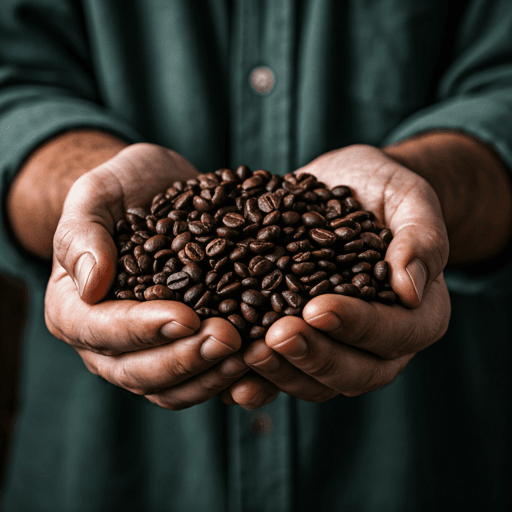
Medium roast coffee is the balanced, middle-of-the-road roast level — beans taken to roughly 210-220 C (about 410-428 F), pulled around or just after "first crack" and before second crack. They come out medium-brown with a dry, non-oily surface. It is the classic all-purpose "American" or "breakfast" roast: balanced enough in body and acidity to keep more of the bean's origin character than a dark roast, while staying rounder and less sharp than a light roast.
If you have ever picked up a bag simply labelled "medium" and wondered what that actually promises in the cup, the short version is that it is the safe, versatile default that suits almost any brewer. Below we cover where medium sits on the spectrum, how it tends to taste, and how it stacks up against lighter and darker roasts. For the full ladder from green to charred, see our guide to coffee roast levels.
What "medium roast" means
Roasting is a controlled cook. Green coffee beans go into a hot drum and, as they absorb heat, they dry, brown, expand, and audibly pop. That first popping sound — "first crack" — is the roaster's landmark for the start of the medium range. Pull the beans right around or just after first crack, before the snappier, oilier "second crack," and you land squarely in medium territory.
Two visual cues define the level. The colour is an even medium-brown — darker than the pale tan of a light roast, lighter than the near-chocolate brown of a dark one. And the surface stays dry. Because the beans come out before their internal oils are driven outward, a proper medium roast looks matte rather than glossy; those surface oils only start to bead up as you push into medium-dark and dark. So if a "medium" bag looks shiny and slick, it has probably been taken further than the label suggests.
The roast spectrum at a glance
Roast names are a rough shorthand, not a strict standard, so one roaster's "medium" can be another's "medium-dark." Still, the general ladder looks like this:
| Roast level | Rough colour | Surface | Flavour snapshot |
|---|---|---|---|
| Light | Light brown / tan | Dry | Bright, higher acidity, tea-like; most origin and fruit character |
| Medium | Medium brown | Dry (matte) | Balanced sweetness, caramel and nut notes, moderate acidity and body |
| Medium-dark | Richer, darker brown | Slight sheen, first oils | Bolder, bittersweet, lower acidity, emerging roast character |
| Dark | Deep brown to almost black | Oily | Bold, roasty, smoky and bitter; little origin character |
How medium roast coffee tastes
Medium roast flavor is best summed up in one word: balanced. The roast is developed far enough to build real sweetness and rounded body, but stopped early enough to preserve some of the acidity and aromatics that come from the bean itself. In practice that usually reads as notes of caramel and toasted nuts, sometimes milk chocolate, with a gentle brightness and a smooth, medium body. Depending on the bean, you may still catch a whisper of fruit, cocoa, or floral character underneath — the roast has not scorched it away.
All of that varies, of course. A washed Central American at a medium roast can taste clean and nutty, while a natural East African at the same level keeps more berry-like sweetness. Origin, processing, and the roaster's exact curve all shape the result, so treat "caramel and nuts" as a friendly starting point rather than a promise. If a cup tastes flat or sour, that is more often a brewing issue than the roast — dialling in your coffee-to-water ratio usually helps more than switching roast levels.
Medium roast vs light and dark
The quickest way to place medium is by what sits on either side of it. A lighter roast leans brighter and more acidic and shows off the most origin flavour, but it can taste thin or sharp if you are used to a fuller cup. A darker roast goes the other way: bolder, roastier, more bittersweet, with a heavier body and an oily surface, but far less of the bean's original character. Medium threads the needle — enough body to feel substantial, enough acidity to stay lively.
We keep the head-to-head brief here on purpose. For the full contrast, see light roast vs dark roast; for what happens at the deep end, our explainer on dark roast coffee digs into the bold, low-acidity style and how it differs from medium.
Does medium roast have more caffeine?
This is where a stubborn myth needs clearing up. Roast level barely changes caffeine. Caffeine is remarkably stable at roasting temperatures, so a medium roast and a dark roast made from the same beans have nearly identical caffeine to begin with. The medium roast vs dark roast caffeine debate mostly comes down to how you measure your coffee. Because darker beans lose more moisture and mass as they roast, they are a little lighter and less dense — so scoop for scoop, dark can actually deliver a touch more caffeine, while bean for bean the difference is negligible.
The practical takeaway: choose your roast for flavour, not for a caffeine kick. If you want a stronger cup, adjust your dose, grind, and brew method rather than reaching for a particular roast colour. Responses to caffeine vary from person to person, and this is general information, not medical advice.
Best uses: is medium roast good for everyday coffee?
For most people, yes — this is the honest answer to "is medium roast good." Its balance is exactly what makes it so forgiving. Medium roast is the natural home for filter methods: automatic drip machines, pour-over cones, and batch brew all flatter its sweetness and clarity. It also holds up well in a French press or a moka pot, and even makes a rounded, approachable espresso, which is one reason so many café house blends land in the medium-to-medium-dark zone.
If you are building a single go-to bag for the whole household, medium is usually the least controversial pick — light enough to keep some nuance, dark enough to please people who like a fuller, less acidic cup. Buy it whole bean where you can, keep it sealed away from air and light, and grind close to brew time; a versatile roast still tastes best fresh.
What about "medium-dark"?
"Medium-dark" is the half-step between medium and dark, and it is worth knowing because plenty of popular blends live there. Beans in this range are taken a little past first crack and toward — but not fully into — second crack. The colour deepens, the very first oils can appear as a faint sheen, and the flavour tips toward bittersweet: more body, more roast character, a little less acidity than a straight medium, without the smoky intensity of a full dark roast. If you like medium but want something a shade richer for milk drinks, medium-dark is often the sweet spot.
Because these labels are loose, the best guide is your own palate. Try the same beans at a couple of roast levels if you can, note what you actually enjoy, and let that steer your next bag rather than the name on the front. Medium earns its reputation as the everyday default not because it is a compromise, but because it quietly does almost everything well.