
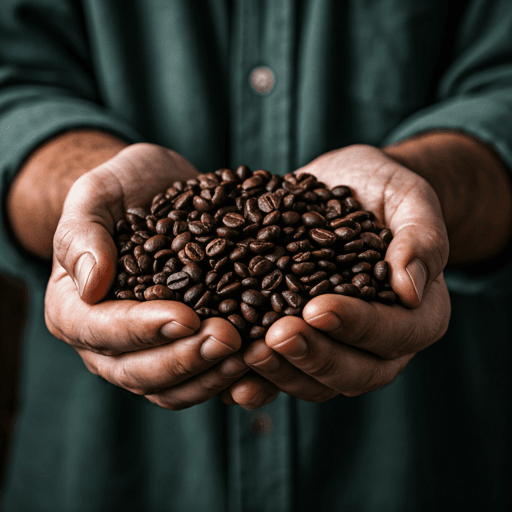
Light roast vs dark roast comes down to time in the roaster, not to different beans. The same green coffee, roasted briefly, becomes a light roast that keeps more of its origin character — bright, acidic and complex — while a longer roast turns those same beans dark: bolder, smoky, bitter-sweet, lower in acid and glossy with surface oil. And here is the surprise most people get backwards: by weight, a light roast holds a touch more caffeine and density, not less.
That single idea — one bean, two very different cups, shaped almost entirely by heat and time — explains nearly every difference between light and dark roast. Below is what actually changes inside the bean, how each roast tastes, the truth about the caffeine, and which style suits which brew.
What roasting actually changes
Green (unroasted) coffee is dense, grassy and barely drinkable. Roasting applies heat that triggers hundreds of chemical reactions — caramelization of sugars and Maillard browning — which is where nearly all of coffee's aroma and flavor are born. As roasting continues, three things happen in sequence: moisture evaporates, the bean loses mass and puffs up in size, and its natural acidity is progressively broken down.
Roasters track two audible landmarks. The first crack is a popping sound (like popcorn) as steam escapes; pull the beans around here and you get a light roast. Keep going to the second crack, a quieter crackle as the bean's structure fractures and oils migrate outward, and you are in dark-roast territory. The longer the beans stay in, the more origin flavor gives way to roast flavor. For the full ladder from cinnamon light through medium to Italian and French, see our guide to coffee roast levels explained — this article focuses on the two ends of that spectrum.
Light roast: bright, dense and origin-forward
A light roast is pulled shortly after first crack, before the roast flavors take over. Because the beans spend the least time in the drum, they retain more of the compounds that reflect where the coffee grew — the soil, altitude and variety. The result is a cup that leans bright and acidic, often with fruity, floral, citrusy or tea-like notes and a lighter body.
Visually, light-roast beans are pale to medium brown with a dry, matte surface — no oil, because the roast never reached the point where oils are pushed out. They are also denser and harder than dark beans, since less moisture and mass have been driven off. That density is exactly why light roast rewards careful brewing: pour-over and other filter methods let its clarity and complexity shine. In the espresso world, very light beans have their own following — see blonde espresso explained for how a lighter shot behaves.
Dark roast: smoky, oily and bold
A dark roast pushes to or past second crack. By this point the origin's delicate flavors have largely burned off and been replaced by the flavor of the roast itself: smoky, roasty, bitter-sweet, with chocolate, caramelized-sugar and toasted notes and a fuller, heavier body. Acidity is low and mellow, which many people find easier on the palate.
The most obvious sign is the oily sheen. Prolonged heat fractures the bean and draws its oils to the surface, so dark beans look glossy where light beans look dry. They are also puffier and less dense, having lost more moisture and mass. For a deeper look at what defines this end of the scale, see what is dark roast coffee; and for the smokiest, near-black extreme, what is French roast coffee covers that specifically.
Light roast vs dark roast at a glance
Here is the dark roast vs light roast contrast summarized side by side. Treat the caffeine rows as general tendencies rather than exact numbers — they vary by bean, brew and how you measure.
| Attribute | Light roast | Dark roast |
|---|---|---|
| Roast time and heat | Shorter, pulled around first crack | Longer, into or past second crack |
| Color | Pale to medium brown | Dark brown to near-black |
| Surface oil | Dry, matte, no visible oil | Glossy, oily sheen |
| Acidity | Higher, bright and lively | Lower, mellow |
| Body | Lighter, tea-like to medium | Fuller, heavier |
| Flavor | Fruity, floral, citrusy, origin-forward | Smoky, bitter-sweet, chocolatey, roast-forward |
| Bean density | Denser and harder | Puffier, less dense |
| Caffeine by weight | Slightly more | Slightly less (roughly similar) |
| Caffeine by scoop | More (denser beans per scoop) | Less (fewer beans per scoop) |
| Shines in | Pour-over, filter, flavor exploration | Espresso, milk drinks, bold cups |
The caffeine myth: light vs dark roast caffeine
The most persistent myth is that dark roast has more caffeine because it tastes stronger. In reality, caffeine is remarkably stable during roasting — it barely breaks down at the temperatures involved. What changes is the bean itself. As beans roast darker they lose moisture and mass and expand in size, so a dark bean weighs less and takes up more space than a light one.
That is why the answer to the light vs dark roast caffeine question depends entirely on how you measure:
- By weight (on a scale): the two are roughly similar, with light roast holding a hair more caffeine because you fit slightly more bean mass in per gram. Research and roaster testing generally put the gap at only a few milligrams per cup — small enough that most drinkers would never notice.
- By scoop (by volume): light roast comes out ahead more clearly. Denser light-roast beans pack more coffee — and therefore more caffeine — into the same tablespoon, while puffed-up dark beans give you fewer beans per scoop.
So if you always weigh your coffee, roast level makes little practical difference to caffeine. If you scoop by volume, you will typically get a touch more caffeine from a light roast. Either way the differences are modest; caffeine numbers vary by bean, grind and brew method, so treat any figure as a rough guide.
Strength is not the same as roast
So is light roast stronger than dark roast? It depends what you mean by "strong." Dark roast usually tastes stronger — more intense, more bitter, more roasty — but that is roast character, not caffeine. "Strength" in the mouth comes from roast level, brew ratio and extraction, while caffeine content is a separate axis entirely. A bold, smoky dark roast and a delicate, bright light roast can carry almost the same caffeine load.
The practical takeaway: choose your roast for the flavor you want, and control actual strength (and caffeine per cup) through your coffee-to-water ratio and brew method — not by assuming darker equals more of a kick.
Which roast for what
Neither roast is objectively better; they are built for different experiences. A useful way to think about the difference between light and dark roast is to match it to how you brew and drink.
Reach for a light roast when…
- You brew pour-over, drip or other filter methods that showcase clarity and nuance.
- You want to taste the origin — the fruit, florals and acidity that make single-origin coffees distinctive.
- You enjoy a brighter, lighter-bodied, more complex black cup.
Reach for a dark roast when…
- You pull espresso or build milk drinks like lattes and cappuccinos, where a bold, roasty base cuts through milk.
- You prefer a full-bodied, low-acid cup with chocolate and smoky notes.
- You want a forgiving, familiar, comforting flavor rather than delicate subtlety.
On acidity specifically: many people who find bright coffee sharp on the stomach prefer the mellower feel of a dark roast, though sensitivity varies from person to person and this is not medical advice — if coffee regularly bothers you, talk to your own healthcare provider. And remember, most coffee sold is a medium roast sitting between these two poles, so you are never limited to the extremes.
The bottom line
Light roast vs dark roast is a choice about flavor, not fuel. Light roast keeps origin character, brightness and (by weight) a shade more caffeine and density; dark roast trades that nuance for a bold, smoky, low-acid, oily cup that many love in espresso and with milk. Both start as the same bean — the roaster simply decides how far to take it. The best way to find your side is to brew the same coffee both ways and taste the difference for yourself.