
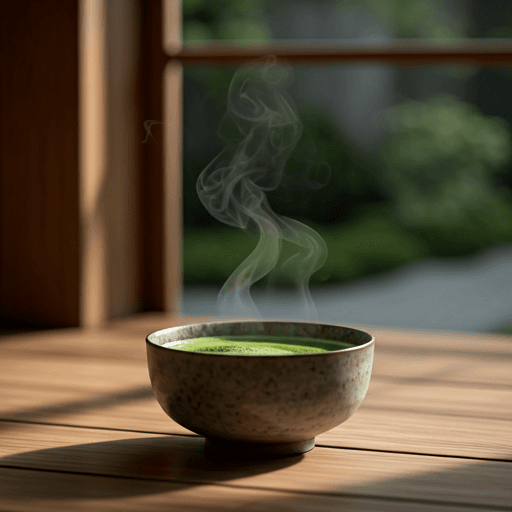
Lushan Yunwu is a Chinese green tea grown on the fog-wrapped slopes of Mount Lu (Lushan) in Jiangxi Province, and its name says almost everything you need to know: yunwu means "clouds and mist." The high ridges of Mount Lu spend a large part of the year buried in cloud, and that constant blanket of moisture and diffused light is exactly what gives this tea its reputation for a thick, mellow, gently sweet cup with a long, clean finish. If you enjoy soft, rounded green teas rather than sharp, grassy ones, Lushan Yunwu belongs on your list.
This guide is an origin story rather than a recipe. We will look at where Lushan Yunwu grows and why the terroir matters, how the mountain's history and monks shaped its cultivation, the way the leaf is picked and pan-fired, what it actually tastes like in the cup, and how it stacks up against other famous misty-mountain greens such as Longjing and Biluochun. By the end you should understand not just what makes a good cloud and mist tea, but why so many drinkers reach for this particular one.
What is Lushan Yunwu?
Lushan Yunwu, also romanised as lu shan yun wu, is a pan-fired green tea from Mount Lu in the north of Jiangxi, near the city of Jiujiang on the southern bank of the Yangtze River. It is a classic example of a "cloud and mist" style — teas grown at enough elevation that fog regularly settles over the gardens. As a jiangxi green tea, it is often mentioned in the same breath as China's better-known famous greens, and it is sometimes counted among the country's celebrated historical teas, though the exact lists vary from source to source and are worth treating as tradition rather than an official ranking.
The finished leaf is typically dark green with a downy silver tip, curled or slightly twisted rather than flat, and it carries a fresh, almost orchid-and-chestnut aroma when brewed. What sets it apart from a run-of-the-mill green tea is body: a well-made Lushan Yunwu tends to feel thicker and rounder on the palate, with a sweetness that keeps returning after you swallow. That character is widely credited to the growing conditions rather than to any single processing trick.
Where it grows: Mount Lu and its terroir
Mount Lu is a dramatic, steep-sided massif that rises abruptly from the flat river plains where the Yangtze meets Poyang Lake. This position matters. Warm, humid air moving off the water is forced up the slopes, cools, and condenses into the near-permanent cloud and mist that gives the tea its name. Local descriptions commonly note that fog wraps the higher gardens for a large share of the year — often cited as roughly half of all days — which is unusually persistent even by the standards of Chinese mountain tea.
The tea gardens sit at altitude, with figures commonly around 800 to 1,200 metres above sea level for the better plots. Three features of this environment do the real work. First, the cloud cover acts like a natural shade cloth, filtering strong sunlight; shaded tea leaves tend to build up more amino acids (including L-theanine, associated with savoury sweetness and umami) relative to the bitter catechins that direct sun encourages. Second, the wide swing between cool nights and milder days slows the leaf down, so it grows more slowly and concentrates flavour. Third, the elevation and moisture keep the air fresh and the soil damp, feeding a lush, tender leaf. Together these are the classic arguments for why mountain green tea so often tastes sweeter, softer and more aromatic than tea from hot lowland gardens.
A tea shaped by history as much as by mist
Mount Lu has been a magnet for monks, hermits and poets for many centuries, and tea culture grew up alongside that spiritual and literary life. Buddhist and Daoist communities on the mountain are traditionally credited with tending early tea plants, and the eminent monk Huiyuan, who is said to have lived on Mount Lu for decades, is often named in connection with the mountain's monastic tea tradition. Later, the scenery and the tea drew scholars and poets who wrote admiringly of Mount Lu's peaks and waterfalls. These associations are part of why the tea carries such cultural weight, though the older stories are best treated as tradition; precise attributions from a thousand-plus years ago are hard to verify and are commonly repeated rather than documented.
What is more consistently reported is that a cloud-and-mist tea from Mount Lu was recognised as a fine, even tribute-grade, tea in imperial times, and that the modern Yun Wu style has a production history spanning several centuries. In the twentieth century it was formally singled out among China's notable green teas. The takeaway for a drinker is simple: this is not a marketing invention but a tea with deep roots in one specific, unusual place.
Styles, grades and picking
Like most Chinese greens, Lushan Yunwu is graded largely by picking standard and season. The most prized lots come from early spring, when the plant pushes out its first tender growth after winter dormancy. A high grade will show a bud with one or two young leaves, plenty of fine down, and an even, unbroken appearance. Later-season pickings use slightly larger, coarser leaves and give a stronger, less delicate cup at a gentler price point in the market.
Processing follows the standard green-tea logic of stopping oxidation quickly, then shaping and drying. Fresh leaf is withered briefly, then "killed green" (shaqing) by pan-firing in a hot wok to deactivate the enzymes that would otherwise turn the leaf brown. Skilled makers alternate firing with hand-rolling, working the leaf between the palms to shape it and coax out aroma, before a final slow dry. Because so much is done by hand and by feel — judging heat, moisture and timing — quality varies with the maker's skill, which is one reason two teas sold under the same name can taste quite different.
What Lushan Yunwu tastes like
The signature of a good Lushan Yunwu is a mellow, rounded sweetness rather than a bright, cutting freshness. Common tasting notes include toasted chestnut or nut, a clean vegetal green like fresh peas or steamed greens, and a light floral top note that some drinkers describe as orchid. The liquor brews pale green to light gold, and the mouthfeel is characteristically thick and smooth for a green tea, with a sweet aftertaste (huigan) that lingers and even seems to build over several sips. Bitterness should be low and quick to fade if the tea is fresh and brewed with reasonable care.
Because of that soft profile, this is a forgiving tea and a good gateway for anyone who has found other green teas too astringent. It rewards attention but does not punish a slightly-too-hot pour the way a very delicate bud tea might.
| Attribute | Lushan Yunwu at a glance |
|---|---|
| Type | Pan-fired green tea |
| Origin | Mount Lu (Lushan), Jiangxi Province, China |
| Name meaning | "Lu Mountain clouds and mist" |
| Typical elevation | Commonly around 800–1,200 m |
| Leaf appearance | Dark green, curled, downy silver tips |
| Liquor | Pale green to light gold |
| Flavour | Mellow, sweet, chestnut, light floral, thick body |
| Aftertaste | Long, sweet, lingering |
| Best season | Early spring pickings |
How it compares to neighbouring famous greens
Set beside China's most famous greens, Lushan Yunwu occupies its own niche. Longjing (Dragon Well) is pressed flat during pan-firing and leans toward a crisp, buttery, chestnut character; Lushan Yunwu keeps a more twisted leaf and a rounder, mistier sweetness. Biluochun is famous for its tiny, tightly spiralled, intensely downy buds and a fruity-floral intensity; Lushan Yunwu is generally a touch more mellow and less punchy. The closest cousin in spirit is probably Huangshan Maofeng, another high-mountain, mist-grown green built on delicacy and sweetness rather than sheer power. If you want to see where all of these sit within the wider world of tea styles, our overview of the main types of tea is a useful map.
The through-line among these teas is elevation and mist. Whenever you see "cloud and mist" or "yun wu" on a label, the producer is signalling high-grown leaf shaded by fog — the same terroir logic that runs through the best mountain greens, just expressed with Mount Lu's particular soil, cultivars and hand.
How to brew Lushan Yunwu
Treat it like a good green tea: cooler water and a short first steep. Water around 75–85°C (167–185°F) protects the sweetness and keeps bitterness in check; water straight off a rolling boil can scorch the delicate leaf. A rough starting point is about 3 grams of leaf to 150–200 ml of water, steeped for perhaps 1 to 2 minutes, then adjusted to taste. A glass or a gaiwan lets you watch the leaves unfurl, which is part of the pleasure.
The leaf is generous with re-steeps. Expect three or more infusions from a good batch, each a little different, with the sweetness often opening up in the second and third pours. If your cup comes out bitter, drop the temperature, shorten the steep, or use a little less leaf before you blame the tea. For anyone curious about why so many people build a daily habit around this style of tea, our guide to green tea benefits looks at what the research does and does not support.
On caffeine: like all true tea, Lushan Yunwu contains caffeine, but the exact amount in your cup varies with the leaf, how much you use, water temperature and steeping time, so it is best to think in ranges rather than fixed numbers. Any wellness effects vary from person to person; this is general information, not medical advice.
The bottom line
Lushan Yunwu is a rewarding introduction to high-mountain Chinese green tea: soft, sweet, thick in the mouth and long in the finish, with a genuine sense of place behind it. The cloud and mist of Mount Lu are not just poetic branding — that persistent fog is the mechanism that shades the leaf, slows its growth and builds the mellow sweetness in the cup. Brew it gently, give it a few infusions, and let it show you why misty mountains have such a hold on the tea world.