
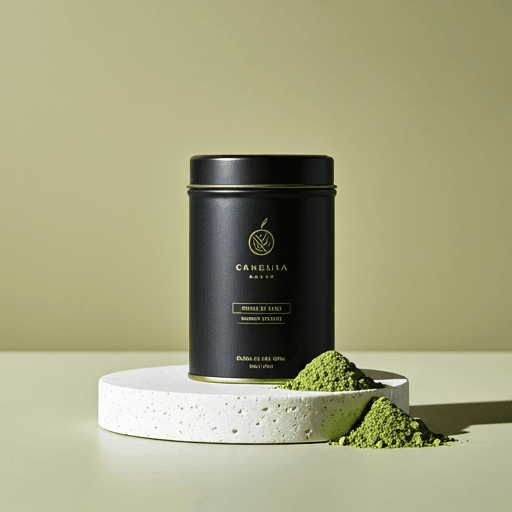
Huangshan Maofeng is one of China's most celebrated green teas — a delicate spring pluck from the mist-wrapped peaks of Huangshan (Yellow Mountain) in Anhui province. Its name translates as "Yellow Mountain Fur Peak," and that word "fur" is the whole story: the youngest buds are cloaked in fine silvery down and curl into slim, pointed shapes that tea makers liken to a sparrow's tongue. Grown high in cool, cloud-soaked mountains, it is prized for a clean, sweet, orchid-floral cup with almost no bitterness.
What is Huangshan Maofeng?
Huangshan Maofeng is a green tea, which simply means the freshly picked leaf is heated early to halt oxidation, keeping it green and vegetal rather than letting it darken into a black tea. (If you want the full picture of what "green tea" means and the light, grassy character it gives, our guide to green tea benefits covers the category.) What sets this one apart is not the process but the place and the pluck: a specific mountain, a downy bud, and a spring-only harvest window.
One point trips up newcomers constantly, so it is worth clearing up first. "Huangshan" is the name of a mountain, not a reference to yellow tea. Yellow tea is a separate, rare category with its own gently-oxidised "sealed yellowing" step. Huangshan Maofeng has nothing to do with it — it is an unoxidised green tea that happens to grow on a mountain whose name contains the word "yellow." It is one of the most storied names in Chinese famous tea, and it appears again and again on the informal roll call of the country's ten most famous teas. For where it sits among the six tea families, see our overview of Chinese tea explained.
Where yellow mountain tea grows, and why the land matters
Everything distinctive about this yellow mountain tea traces back to its terroir. Huangshan is a range of sharp granite peaks in southern Anhui, famous well beyond the tea world for its "sea of clouds" — a near-permanent blanket of mist that pools between the summits and burns off slowly through the morning. That mist is not scenery; it is the growing condition.
The best gardens sit at roughly 700 to 800 metres (about 2,300 to 2,600 feet) — with some plots climbing higher still, toward 1,200 m — and the most prized special-grade leaf comes from named high spots such as Taohua (Peach Blossom) Peak and Ziyun Peak. At that altitude three things happen at once:
- Cool air slows the leaf down. Growth is unhurried, so the buds have time to build up sugars and aromatic compounds instead of racing to size. Slow-grown leaf tastes sweeter and more concentrated.
- Cloud cover softens the light. Constant mist diffuses the sun, which nudges the plant toward a smoother, less astringent chemistry — part of why the cup is so low in bitterness.
- Cool, damp mornings favor the down. The tender spring buds stay small and hold their coat of fine white hairs, the "fur" the tea is named for.
Add mineral-rich mountain soil, generous rainfall and big day-to-night temperature swings, and you get exactly the conditions that reward a small, careful spring harvest. This is single-origin tea in the truest sense: change the mountain and you change the tea.
Why it is called "mao feng"
This is the one thing to remember about mao feng tea. In Chinese, mao means down or fur and feng means peak, and both refer to the finished leaf. Look closely at a good Huangshan Maofeng and you will see slender, slightly twisted leaves tipped with pale down, each tapering to a fine point like a tiny mountain summit — or, as local growers put it, like a sparrow's tongue or an unopened orchid bud.
That downy tip is the visible signature of quality here. It only survives if the leaf is picked young, in early spring, and then handled with unusual gentleness. Most green teas are rolled firmly to shape them; Huangshan Maofeng is rolled only lightly, just enough to twist the leaf without stripping off the fur or crushing the fragile bud. The processing itself is standard green-tea work — natural withering, a hot "kill-green" firing to stop oxidation, that careful light rolling, then slow, multi-stage drying over gradually lower heat. The skill is in restraint. Fire it too hard or roll it too roughly and the down is gone, and with it the tea's whole calling card.
A tea born from Song Luo: the Xie Yutai story
Huangshan Maofeng in its modern form is younger than its ancient mountain suggests. Green tea has been made around Huangshan for centuries — the older Song Luo tea from the same corner of Anhui is one of the region's classic pan-fired greens — but the tea we now call Huangshan Maofeng is generally traced to the Guangxu reign of the late Qing dynasty, around 1875.
The name usually attached to that origin is a She County tea merchant, Xie Zheng'an, whose "Xie Yutai" tea house set out to make a finer grade of local green. The refinements credited to that effort are precisely the two habits that still define the tea: rolling the leaf lightly so it keeps its shape and its down, and drying it in stages over falling heat to lock in a sweet, mellow flavor. In other words, the distinctive downy, sparrow-tongue leaf was a deliberate style choice, not an accident of the mountain. Today the name is a protected geographical-indication product — formal acknowledgement of an origin identity that had already been building for well over a century.
Grades, the pluck, and the pre-Qingming flush
Because the down and the sweetness both depend on picking early and small, timing is everything. The highest grades are plucked in a narrow window before the Qingming festival in early April, when the buds are barely open. The classic top-grade standard is one bud with a single small leaf; slightly later or larger grades take one bud and two leaves, giving a bolder, less delicate cup.
The leaf comes from local large-leaf tea bushes, a group cultivar often called Huangshan Daye Zhong ("Yellow Mountain large-leaf"), well suited to the cool, high gardens. As a rough guide to how the grades stack up:
- Supreme / special grade: earliest pre-Qingming pluck, one bud and one leaf, heavily downy, most fragrant and sweet.
- Premium and standard grades: picked a little later, one bud and one-to-two leaves, still clean and floral but fuller and greener.
- Everyday grades: larger leaf and a lighter dusting of down, more straightforwardly grassy.
The further you get from that early-spring, one-bud-one-leaf ideal, the less "fur" you see and the more the cup shifts from delicate and sweet toward brisk and vegetal.
What Huangshan Maofeng tastes like
Brewed well, Huangshan Maofeng is one of the gentlest greens you can drink. The liquor is pale — a soft gold-green rather than a deep jade — and the aroma leads with orchid and fresh flowers. On the palate it is smooth, sweet and mellow, with a light chestnut-and-fresh-greens note and a clean finish that keeps returning without turning bitter or drying. Where some green teas are grassy and sharp, this one leans floral and rounded. That low astringency is the pay-off of the high, misty terroir and the careful firing.
How to brew it
Delicate, downy greens dislike very hot water, which scalds the leaf and forces out bitterness. Use water off the boil — roughly 75 to 85 C (about 167 to 185 F) — and keep the steep short, around one to three minutes, adjusting to taste. A glass cup is traditional and rewarding here: you can watch the downy buds "dance," rising and sinking as they open. Good leaf will happily give several successive infusions. For the fuller rationale on matching temperature to leaf, see our guide to the best water temperature for tea.
On caffeine, Huangshan Maofeng sits at a typical green-tea level — modest, and noticeably lighter than a same-size cup of coffee. As with any green tea, people describe a calm, steady lift rather than a jolt; responses vary from person to person, and none of this is medical advice.
Huangshan Maofeng at a glance
| Attribute | Detail |
|---|---|
| Type | Green tea (unoxidised) — not a yellow tea |
| Origin | Huangshan (Yellow Mountain), southern Anhui province, China |
| Name meaning | "Yellow Mountain Fur Peak" (mao = down/fur, feng = peak) |
| Signature | Downy, silver-tipped buds shaped like a sparrow's tongue |
| Cultivar | Local large-leaf group bush (Huangshan Daye Zhong) |
| Altitude | Special-grade gardens roughly 700–800 m (some plots to ~1,200 m) |
| Pluck | Top grade: one bud + one leaf, picked before Qingming (early April) |
| Liquor | Pale gold-green, clear |
| Flavor | Sweet, mellow, orchid-floral, fresh; very low bitterness |
| Caffeine | Typical green-tea level (moderate, well below coffee) |
| Brewing | Cooler water ~75–85 C (167–185 F), steep 1–3 min, re-steeps well |
How it compares to Longjing and other Chinese greens
The most natural comparison is Longjing (Dragon Well), the other superstar of the Chinese green world. Both are famous, both are spring teas, but they are shaped and fired very differently. Longjing is pan-pressed flat and smooth against the wok, giving glossy, blade-like leaves and a toasty, nutty, savoury cup. Huangshan Maofeng goes the opposite way: barely rolled, downy and curled, with a lighter, more floral, orchid-sweet character. Think toasty-and-flat versus downy-and-floral. Our guide to Longjing unpacks that pan-fired style in full.
Closer to home, Huangshan Maofeng is one of a remarkable cluster of Anhui green teas. The same mountainous province gives us Taiping Houkui, with its huge, flat, netted leaves, and Lu'an Guapian, an unusual green made from a single leaf with no bud at all. Set beside these neighbours, Huangshan Maofeng is the delicate, downy, floral one — the tea that shows off the mountain's mist rather than a dramatic leaf shape or a bold roast.
The bottom line
Huangshan Maofeng earns its place among China's most famous teas honestly: a small, downy, sparrow-tongue bud, grown slowly in the cloud-drenched peaks of Yellow Mountain and handled gently enough to keep both its shape and its fur. That combination of high-mist terroir and light-handed processing is what gives the cup its calling card — a sweet, orchid-floral, mellow flavor with almost no bitterness. Brew it cool, watch the buds unfurl in the glass, and you are tasting a mountain as much as a leaf. From here, Longjing makes an easy next pour if you want to see how a different corner of the Chinese green-tea map does things.