
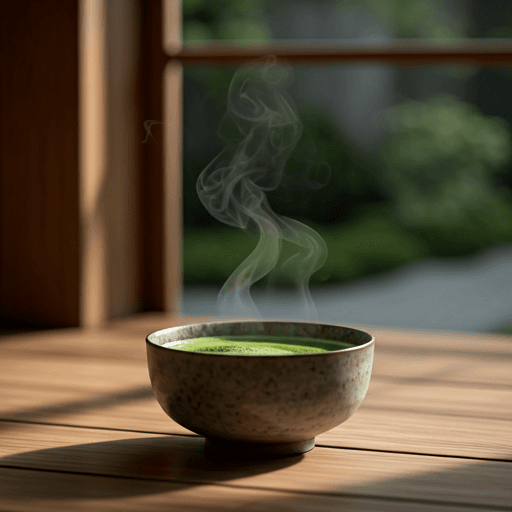
Longjing — also written Dragon Well or Lung Ching — is China's most famous pan-fired green tea, grown in the West Lake (Xi Hu) area of Hangzhou in Zhejiang province. Its flat, smooth, jade-green leaves and mellow, chestnutty taste have made it a benchmark for Chinese green tea for centuries. This guide explains what makes Longjing tea distinctive: the hand-pressed pan-firing behind that flat leaf, how its grades and early pickings work, how to brew it so the leaves dance, and how to tell the real thing from an imitation.
What Longjing (Dragon Well) tea is — and the name behind it
Longjing is a flat-leaf green tea from the hills around West Lake in Hangzhou. Like most Chinese greens, it is pan-fired rather than steamed, which stops the leaf from oxidizing and locks in a fresh, toasty character. The name means "Dragon Well," after an old spring in Longjing Village. Local lore held that a dragon lived in the well, and in times of drought people would go there to pray for rain.
The tea's fame grew under the Qing dynasty. The emperor Qianlong is said to have visited the gardens below Lion Peak (Shifeng) and been so taken with the tea that he designated eighteen bushes at Hugong Temple as "imperial" — a legend that still draws visitors to the original plot today. Whether or not the story is exact, it captures how central Dragon Well tea has been to Chinese tea culture. For the wider picture of where it sits among China's six tea categories and other famous teas, see our guide to Chinese tea, explained.
The hand-pressed pan-firing that makes the flat leaf
That signature flat, sword-shaped leaf is not natural — it is shaped in the pan. After picking, the fresh buds are wok-fired by hand over controlled heat. A skilled maker uses a sequence of traditional hand motions — shaking, pressing, grabbing, throwing and smoothing the leaves against the hot metal — to fix the green color, drive off moisture and press each leaf flat.
Two things happen at once. The heat halts oxidation, keeping the tea green and grassy-fresh rather than letting it darken. And the pressing, plus the "toasting" against the wok, develops Longjing's hallmark nutty, chestnut-like aroma. This is a different route from Japanese green teas, which are steamed and stay more vegetal and marine. It also differs from another well-known Chinese pan-fired green, gunpowder green tea, which is rolled into tight pellets instead of pressed flat — same "kill-green" idea, a completely different shape and flavor.
What Dragon Well tea tastes like
Well-made Longjing is smooth, gently sweet and low in bitterness. The classic descriptors are chestnut and toasted, sometimes with a note like sweetcorn, fresh beans or a clean orchid fragrance in the top grades. Astringency is soft, and good examples finish with a returning sweetness that lingers after you swallow (Chinese drinkers call this hui gan).
The exact profile shifts with grade, freshness and how you brew it. Younger, earlier-picked leaf tastes more delicate and floral; later, larger leaf is bolder and more robust. Because it is a whole-leaf green tea, freshness matters — Longjing is best enjoyed within months of that spring's harvest, before the bright, toasty notes fade.
Grades and origin: Xi Hu, Mingqian and the early pickings
Two things set a Longjing's value: where it grew and when it was picked.
On origin, there are broadly three tiers. The strictest and most prized is Xi Hu (West Lake) Longjing, a protected designation limited to gardens in specific villages around West Lake — famous sub-origins include Shifeng (Lion Peak), Meijiawu and Longjing Village itself. A broader definition covers Longjing grown elsewhere in Zhejiang province. Beyond that, "Longjing-style" green tea is made in other provinces too — perfectly pleasant to drink, but not the core-origin article.
On timing, spring picking is everything. The most sought-after leaf is Mingqian — picked before the Qingming (Tomb-Sweeping) festival, around the first days of April. These are the tiniest, most tender early buds; yields are small, and it can take on the order of tens of thousands of individual buds to make a single 500-gram batch, which is why pre-Qingming tea commands a premium. Slightly later comes Yuqian, picked before Grain Rain (Guyu) in mid-to-late April — larger leaf, fuller body and excellent value. Quality within a harvest is then sorted into grades, typically a Superior grade plus numbered grades below it.
| Picking / tier | Rough timing | What to expect | Cost feel |
|---|---|---|---|
| Mingqian (pre-Qingming) | Before ~April 4-5 | Tiniest, most tender buds; delicate, sweet, aromatic; small yields | Premium / a splurge |
| Yuqian (pre-Grain Rain) | ~Qingming to mid/late April | Slightly larger leaf, fuller body, great everyday quality | Mid to premium |
| Later spring / summer | After Grain Rain | Bolder, more robust, straightforward daily drinking | Budget to mid |
Origin and timing stack: a Mingqian Xi Hu Longjing is the top of the tree, while a later-pick Zhejiang Longjing is an easygoing everyday cup.
How to brew Longjing so the leaves dance
Longjing is a delicate green tea, so the golden rule is cool the water. A rolling boil scorches the tender leaf and turns the cup bitter. Aim for water that has come off the boil to roughly 75-85°C (167-185°F) — cooler for tender early pickings, a touch warmer for later, sturdier leaf. If you don't have a temperature kettle, let boiled water rest a few minutes before pouring.
A tall clear glass tumbler is the classic vessel, precisely because part of the pleasure is watching the flat leaves rise and sink — the "leaves dancing" in the water — before they settle. A gaiwan works well too if you prefer to pour off the liquor. Keep infusions short and re-steep: Longjing has more to give across two or three rounds.
| Setting | Suggestion |
|---|---|
| Water temperature | ~75-85°C (167-185°F); cooler for pre-Qingming |
| Leaf | ~2-3 g (a heaping teaspoon) per 150-200 ml |
| Vessel | Tall glass tumbler, or a gaiwan |
| First steep | About 1-2 minutes |
| Re-steeps | 2-3 more; leave about a third of the liquid, top up, add a little time each round |
A nice trick in a tumbler is to pour a little water first, add the leaves, then top up — it helps the leaf sink and open evenly. For the broader fundamentals of steeping any green tea, see how to make green tea; the health side — antioxidants, caffeine and so on — is covered in our guide to green tea benefits.
How to spot authentic vs imitation Dragon Well
Because true West Lake Longjing is limited and prized, imitations are common. A few honest checks help:
- Look at the dry leaf. Genuine Longjing is flat, smooth and pressed, with a fairly even, light jade-to-yellow-green color. Leaf that is a harsh, uniform bright green can be a sign it was dyed; very dark or ragged leaf suggests a lesser or older tea.
- Smell it. You want a clean, toasty, chestnut-like fragrance — not a flat, hay-like or overly grassy smell.
- Taste the liquor. It should brew pale gold-green and clear, tasting smooth and gently sweet with low bitterness and that returning sweetness. Sharp, harsh astringency is a red flag.
- Read the origin claim skeptically. "Xi Hu Longjing" is a protected designation, so a very cheap tea splashed with "West Lake" is worth questioning. Much good tea is honestly labeled simply "Zhejiang Longjing" or "Longjing" — that transparency is a good sign.
One folk test is to rub a damp leaf on white paper; a heavy green smear can point to added dye, though this isn't foolproof, so treat it as a hint rather than proof. When in doubt, buy from a seller who is specific about the harvest year, picking time and sub-origin.
The bottom line on Longjing
Longjing rewards a little care. Whether you have a splurge-worthy pre-Qingming West Lake tea or an everyday Zhejiang pick, the same habits bring out its best: keep the water cool, the steeps short, and use a glass so you can watch the flat leaves unfurl. Get those right and Dragon Well tea delivers exactly what has made it China's most famous green for centuries — a smooth, sweet, chestnutty cup with almost no harsh edge.