
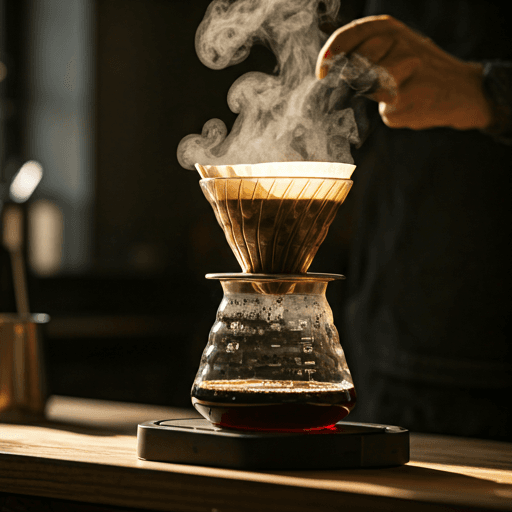
Low acid coffee is coffee that tends to be gentler on the stomach — lower in the acids that can leave a sour, sharp edge or trigger reflux in sensitive drinkers — thanks mostly to darker roasts, certain growing origins, and slower brew methods like cold brew. It is not a single product or a medical treatment; it is a set of choices about beans, roast, and brewing that dial down how acidic a cup feels and, to a degree, actually is. Because tolerance differs from person to person, "low acid" is best read as a spectrum rather than a fixed label.
If a regular cup leaves you queasy, sour-mouthed, or with a burning chest, low acid coffee is worth understanding. Below is what "acidity" really means in a cup, what pushes coffee toward the gentler end, who might benefit, and the practical levers you can pull at home.
What "acidity" means in coffee
The word "acidity" gets used two different ways, and mixing them up causes a lot of confusion.
Tasted acidity (brightness). To a barista or roaster, acidity is a flavor quality — the crisp, lively, fruity snap in a bright Kenyan or a citrusy Ethiopian pour-over. Here, acidity is prized, not a problem. It is what makes light-roasted specialty coffee taste vivid rather than flat.
Chemical acids and pH. Coffee naturally contains organic acids: chlorogenic acids (CGAs), plus citric, malic, quinic, and caffeic acids among others. Brewed coffee usually lands mildly acidic on the pH scale, often somewhere around 4.85 to 5.10, though this varies by bean, roast, and brew. These are the compounds people usually mean when they say a coffee "upset my stomach."
The catch: research suggests measured pH and perceived acidity don't correlate neatly — a coffee can taste smooth yet still be mildly acidic on paper, and vice versa. So "low acid coffee" can describe a cup that tastes mellow, a cup that is chemically less irritating, or both. In practice the two often overlap, because the same factors that mellow the flavor (dark roast, low-grown beans, cold brewing) also tend to reduce the harsher acids.
What makes a low acid coffee
No single trait makes a coffee low acid. It is a stack of factors — where the bean grew, how it was roasted, and how you brew it — that add up. The table below summarizes the main levers before we unpack each.
| Factor | Effect on acidity | Why |
|---|---|---|
| Darker roast | Lowers | Prolonged roasting breaks down chlorogenic acids; more melanoidins add body and smoothness |
| Low-grown beans (low altitude) | Lowers | Faster maturation in warm regions tends to develop fewer acids |
| Origins like Brazil, Sumatra, India | Lowers | Earthy, nutty, chocolatey profiles that are naturally mellow |
| Cold brew | Lowers | Cool water extracts fewer titratable acids over a long steep |
| Coarser grind / gentler extraction | Lowers | Less aggressive extraction pulls fewer sharp acids |
| Decaffeination | Often gentler | Removing caffeine can reduce one common stomach trigger |
| Adding milk or cream | Softens | Dairy (or fortified plant milk) buffers and mellows perceived acidity |
| Light roast, high-grown, bright origins | Raises | Preserves more chlorogenic and fruit acids for a livelier cup |
Roast level
Roast is the single biggest lever. As beans roast longer and darker, chlorogenic acids degrade substantially — dark roasts can lose a large share of their CGA — while new melanoidin compounds add body and that rounded, smoky sweetness. That is why a dark roast usually reads as smoother and less sharp than a light one. The nuance to hedge: it is not perfectly linear, and a few studies have found some acids behave unexpectedly depending on grind and brew, so "dark = zero acid" is an overstatement. For the full picture of how heat reshapes flavor, see our guide to coffee roast levels.
Origin and altitude
Where a bean grows shapes its acid load. Coffee grown at higher altitudes tends to develop brighter, more acidic profiles, while beans from lower, warmer regions mature faster and generally carry less acidity. Origins often cited as naturally mellow include Brazil (nutty, chocolatey), India, parts of El Salvador, and Sumatra, whose earthy, full-bodied, low-acid character makes it a go-to for gentler cups — more in our Sumatra coffee guide. Treat these as tendencies, not guarantees: processing and roast still swing the result.
Processing and brew
Processing plays a supporting role — natural (dry) processing and specialty methods like monsooning can round out a coffee's edges. Brewing matters just as much as the bean. Hot, fast, fine-ground extraction pulls more sharp acids; slow, cool extraction pulls fewer. That is why cold brew is the classic low-acid trick: steeping coarse grounds in cool water for many hours yields a cup with noticeably lower titratable acidity than the same beans brewed hot.
Who might want low acid coffee
Low acid coffee is most often sought by people whose stomachs react to a regular cup. That may include those with acid reflux or GERD, people with a sensitive stomach, or anyone who simply finds standard coffee sour or harsh. For some of these drinkers, a mellower cup may be easier to tolerate.
Important caveats, because bodies differ. Evidence here is limited and mixed, and coffee is only one possible trigger among many for reflux — caffeine, cup size, timing, other foods, and individual sensitivity all matter. Switching to a low-acid cup is not a cure and won't fix an underlying condition. If you regularly experience heartburn, reflux, or stomach pain, or you take medication that interacts with caffeine, talk to a doctor or pharmacist rather than self-treating with a coffee swap. Some people find decaf and drinking coffee alongside food, rather than first thing, help more than the "low acid" label itself — see coffee on an empty stomach for that angle.
Practical ways to make coffee less acidic
You can lower the acidity of almost any coffee by stacking a few of these:
- Reach for a darker roast. Medium-dark to dark roasts are the easiest single change for a smoother, lower-acid cup.
- Choose a low-grown, mellow origin. Brazilian, Sumatran, or Indian beans start out gentler than bright high-grown lots.
- Brew cold. Cold brew or a long, cool steep meaningfully cuts titratable acidity. Dilute the concentrate to taste.
- Grind a little coarser and don't over-extract. Gentler extraction pulls fewer sharp acids; avoid scalding water and overly long hot brews.
- Add milk or cream. Dairy or a fortified plant milk buffers acidity and softens the cup.
- Don't drink it on an empty stomach. Pairing coffee with food is a simple, no-cost tweak many sensitive drinkers swear by.
- Consider decaf. Removing caffeine takes one common irritant out of the equation, and low-acid decaf blends exist.
You don't need all seven. A dark-roasted Brazilian brewed as cold brew with a splash of milk, sipped after breakfast, is already about as gentle as everyday coffee gets.
Finding the lowest acid coffee for you
There is no universal "lowest acid coffee," because the smoothest cup for one person depends on their beans, brewer, and stomach. The term "low acidity coffee" also isn't a regulated standard — a bag labelled "low acid" is making a claim, not passing a test — so treat marketing as a starting point, not proof. The reliable path is to combine the factors that point the same direction: a mellow origin, a darker roast, and a cooler, slower brew. Change one variable at a time and notice how your body and palate respond.
Low acid coffee, in the end, is less a product to buy than a set of dials to turn. Understanding what acidity means, which levers move it, and how your own stomach reacts lets you build a cup that feels good — smooth, rounded, and easy to enjoy — without giving up coffee altogether. When in doubt about a persistent symptom, let a healthcare professional weigh in, and let the beans do the rest.