
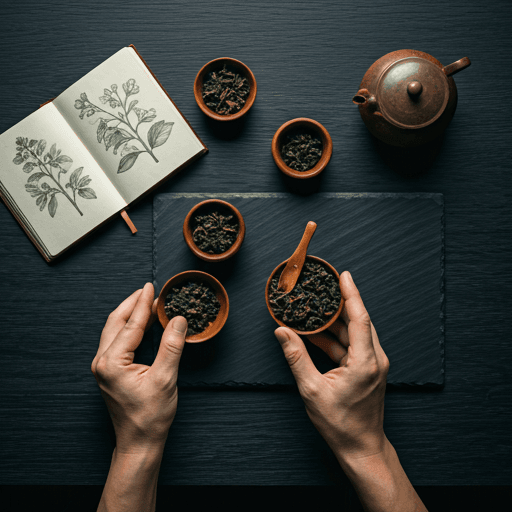
Longjing vs sencha comes down to two things: country of origin and firing method. Longjing (also called Dragon Well) is a Chinese green tea that is pan-fired in a wok, which presses the leaves flat and glossy and builds a mellow, nutty, gently sweet cup often described as "chestnut." Sencha is Japan's everyday steamed green tea, which keeps its needle-shaped leaves vivid green and gives a fresher, grassier, more vegetal and umami taste. Both are unoxidized green teas, yet they land in very different places on the flavor map.
Longjing vs sencha at a glance
Both teas are green, both are prized, and both reward cooler water and a gentle hand. The real gap between them is a tale of two techniques: China's wok-firing versus Japan's steaming. That single decision shapes the leaf, the color and the flavor of the finished cup. Here is the quick comparison before we look at each tea in turn.
| Attribute | Longjing (Dragon Well) | Sencha |
|---|---|---|
| Origin | China (Hangzhou area) | Japan |
| Tea type | Green (unoxidized) | Green (unoxidized) |
| Firing method | Pan-fired in a wok | Steamed |
| Leaf shape | Flat, pressed, smooth blades | Slender rolled needles |
| Color | Jade to yellow-green | Vivid deep green |
| Flavor | Nutty, toasty, chestnut-sweet, smooth | Grassy, vegetal, umami, brisk |
| Astringency | Low | Higher, more of a brisk edge |
| Water temp | ~75-85°C (167-185°F) | ~70-80°C (158-176°F) |
| Caffeine | Moderate (varies) | Moderate (varies) |
| Best for | Smooth, nutty, low-astringency sipping | Fresh, grassy daily green |
What Longjing (Dragon Well) is
Longjing is one of China's most celebrated green teas, traditionally grown in the hills around West Lake in the Hangzhou area. Its signature is the pan-firing: fresh leaves are hand-pressed against the hot wall of a wok, which halts oxidation and flattens each leaf into a smooth, spear-shaped blade. The result is a soft, toasty cup with roasted-nut and chestnut notes, a rounded sweetness and very little astringency. It sits within the wider family of Chinese teas, and for the full story of its grades, growing region and hand-firing craft, our Longjing (Dragon Well) green tea guide goes deeper. Here we are focused on how it stacks up against sencha.
What sencha is
Sencha is the green tea most people in Japan drink every day, making up the large majority of the country's tea. Instead of pan-firing, sencha leaves are steamed within hours of picking, a step that locks in their bright green color and a fresh, grassy character. Rolled and dried into slender needles, sencha brews into a lively cup with vegetal, seaweed-like and umami notes and a brisk, sometimes slightly astringent edge. Our sencha explainer covers its many styles and processing in detail; this comparison keeps the spotlight squarely on the sencha vs longjing contrast rather than re-defining each tea from scratch.
The key difference: pan-firing vs steaming
If you remember one thing about the difference between longjing and sencha, make it heat. Longjing is pan-fired, meaning the leaves meet a dry, hot wok surface; that toasting develops nutty, roasted, faintly sweet flavors and softens any raw green edge. Sencha is steamed, meaning the leaves meet hot vapor rather than a hot pan; steaming preserves the fresh, vegetal, "just-picked" flavor and the vivid green pigment. So the same plant, treated two ways, gives you a mellow, chestnut-toned tea on one side and a bright, grassy, umami-rich tea on the other. Everything else that follows, from color to mouthfeel, flows from that fork in the road.
How Longjing and sencha taste
Longjing leans warm and gentle. Expect toasted nuts, chestnut, a whisper of butter or roasted grain, and a clean, lingering sweetness with low astringency. It is the kind of green tea that stays smooth even if you steep it a touch long. Sencha leans bright and green. Expect fresh-cut grass, a savory umami depth (sometimes likened to seaweed or spinach), a squeeze of vegetal tartness and a brisker, more astringent finish. In short, Longjing is roasty, nutty and soft, while sencha is greener, more vegetal and more lively on the palate. Neither is "better" — they simply scratch different itches. If you enjoy the umami side of sencha, you may also like its richer cousin gyokuro; our gyokuro vs sencha comparison unpacks that shade-grown relative.
Leaf and look
You can often tell these two apart before you even brew them. Longjing leaves are flat, pressed and smooth, like small polished blades, in a jade-to-yellow-green hue that reflects the wok-firing. Sencha leaves are rolled into fine, dark, deep-green needles that unfurl as they steep. In the cup, Longjing tends to pour a pale gold to light green, clear and soft, while a good sencha brews a more saturated, vivid green-yellow that signals its fresher, steamed style. These visual cues line up neatly with the flavor: the smoother, toastier tea looks calmer, and the brighter, grassier tea looks more electric.
How to brew each one
Both teas prefer cooler-than-boiling water, because scalding either one draws out bitterness and buries the nuance. As a rough guide, sencha likes water around 70-80°C (158-176°F) with a short steep of roughly 60-90 seconds to keep it sweet and stop the astringency taking over. Longjing is a little more forgiving and does well around 75-85°C (167-185°F) for one to two minutes; its low astringency means a slightly longer steep rarely turns harsh. Use fresh, off-the-boil water, do not drown the leaves, and taste as you go. Both teas re-steep beautifully — expect two or three infusions, each with its own personality — so treat the first pour as the opening chapter, not the whole story. Exact temperatures and times vary by leaf grade and personal taste, so adjust to your own cup.
Caffeine in Longjing and sencha
Both sit in the moderate range typical of green tea, generally lower than a cup of coffee but enough for a gentle lift. Actual amounts vary a lot with leaf grade, harvest, leaf-to-water ratio, water temperature and steep time, so treat any single number with caution. As a very rough rule, sencha made with more leaf and a fuller steep can edge slightly higher, while a delicate Longjing can feel softer, but there is huge overlap and no reliable winner. If caffeine sensitivity, sleep, pregnancy or a medication interaction is a concern for you, keep servings modest and check with your own healthcare provider — responses vary from person to person, and this is general information, not medical advice.
Longjing or sencha: which should you choose?
Choose Longjing when you want a smooth, low-astringency green with nutty, chestnut-sweet warmth — an easygoing, comforting cup that is hard to over-brew and great for slow afternoon sipping. Choose sencha when you want a fresh, grassy, umami-forward green with more brightness and a brisk edge — a lively daily driver that pairs well with food and wakes up the palate. Many tea drinkers keep both on the shelf: the mellow Chinese classic for calm moments and the vibrant Japanese green for a fresh reset. If you are still exploring, trying dragon well vs sencha side by side, brewed the same afternoon, is the fastest way to feel the pan-fired-versus-steamed divide for yourself.
In the end, longjing vs sencha is less a contest than a compass: one points toward toasty, nutty softness, the other toward fresh, grassy brightness, and both start from the same humble green leaf. Learn the two firing methods behind them and you will understand a huge swath of the green-tea world — and know exactly which cup to reach for depending on the mood you are chasing.