
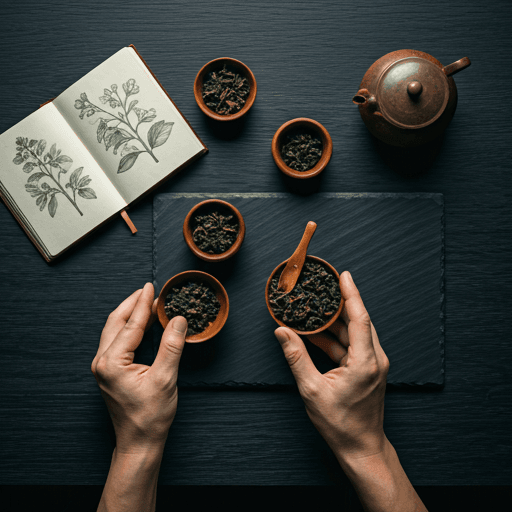
Longjing vs gunpowder comes down to shape and character. Both are classic Chinese green teas, yet they are made and taste very differently: Longjing (Dragon Well) is pan-fired and pressed into flat, smooth leaves for a mellow, nutty, chestnut-sweet cup, while gunpowder is rolled into tight little pellets that unfurl in the pot for a bolder, brisker, slightly smoky brew. Gunpowder is also the traditional base of Moroccan-style mint tea, whereas Longjing is prized as a refined tea to sip on its own.
If you only remember one thing about the difference between Longjing and gunpowder, make it the leaf: pressed-flat blades versus rolled pellets. That single processing choice drives almost everything else you notice in the cup.
Longjing vs gunpowder at a glance
Here is the quick comparison before we dig into each tea. Every figure varies by harvest, grade and how you brew, so treat these as general guides rather than fixed rules.
| Attribute | Longjing (Dragon Well) | Gunpowder |
|---|---|---|
| Origin | China (Hangzhou area) | China |
| Leaf shape | Flat, smooth, pressed blades | Small, tightly rolled shiny pellets |
| Processing | Pan-fired and hand-pressed flat in a wok | Pan-fired, then rolled into pellets |
| Flavor | Mellow, nutty, chestnut-sweet | Bold, brisk, a touch smoky |
| Astringency | Low and gentle | Higher; can turn bitter if over-steeped |
| Body | Smooth and light | Fuller and stronger |
| Water temperature | About 75-80 C | About 80-85 C |
| Forgiveness | Rewards gentle, careful brewing | More forgiving; handles a short, hot steep |
| Classic use | Refined solo sipper | Base of mint tea; everyday strong green |
| Caffeine | Moderate green-tea level (varies) | Moderate green-tea level (varies) |
What Longjing (Dragon Well) is
Longjing, often translated as Dragon Well, is one of the most famous Chinese green teas, historically associated with the hills around Hangzhou. The leaves are pan-fired and pressed flat by hand against the hot wok, which halts oxidation and gives the finished tea its signature smooth, spear-like shape. The result is a cup that leans toasty and nutty, with a distinctive chestnut sweetness and very little bite. Longjing is smooth, delicate and low in astringency, which is a big part of why it is treated as a tea to savor slowly rather than brew strong. For the full story on grades, picking seasons and how it is fired, see our Longjing (Dragon Well) green tea guide.
What gunpowder tea is
Gunpowder tea is a Chinese green tea whose leaves are rolled into small, shiny pellets that resemble grains of gunpowder — hence the name. Those tight little balls slowly unfurl as they steep, releasing a brew that is noticeably bolder and brisker than Longjing, with a faintly smoky edge. Because it is compact and holds up well, gunpowder travels and stores robustly, and it is the classic leaf used as the green-tea base for Moroccan-style mint tea. For more on how it is rolled, graded and enjoyed, read our gunpowder green tea explainer.
The key difference between Longjing and gunpowder
The heart of gunpowder vs Longjing is the leaf shape and what it does to flavor. Longjing is pressed flat, so its blades open quickly and give up a soft, sweet, nutty liquor with a light body. Gunpowder is rolled into pellets that unwind more slowly and pack more leaf into each scoop, so it brews stronger, brisker and slightly smoky. In short: flat pan-fired leaves lean nutty and mellow, while rolled pellets lean bold and smoky. Both belong to the wider family of Chinese pan-fired greens, which you can explore in our guide to Chinese tea.
Shape and processing
Both teas start the same way — fresh green leaves are heated in a wok soon after picking to stop oxidation, which is what keeps them green rather than turning them into black or oolong tea. From there the paths split. Longjing is repeatedly pressed and smoothed against the pan until the leaves lie flat and glossy. Gunpowder is instead rolled and tumbled until each leaf curls into a dense little pellet. That shaping step is the whole reason a dragon well vs gunpowder tea cup can taste so different even though both are simply Chinese green teas.
Taste and aroma
Longjing tastes smooth, sweet and nutty, with roasted-chestnut and lightly vegetal notes and almost no harshness — its aroma is gentle and toasty. Gunpowder is the more assertive of the pair: brisk, full and a little smoky, with a stronger, more warming character. That strength is also gunpowder's main risk. Because the pellets are dense and pack a lot of leaf, gunpowder can turn bitter and over-astringent if the water is too hot or the steep runs too long, whereas Longjing stays soft and forgiving on the palate.
Brewing each one
Neither tea likes fully boiling water — like most green teas, both prefer water that has cooled below the boil, roughly in the 75-85 C range. Longjing is the gentler of the two: cooler water around 75-80 C and a fairly short steep protect its sweetness and keep it from going grassy. Gunpowder is more forgiving and can take slightly hotter water and a short, punchy steep to open the pellets, though pulling the leaves before they over-extract keeps the smokiness pleasant rather than harsh. Both reward tasting as you go and steeping more than once. These are general starting points; adjust to your own taste and the specific tea in front of you.
How they are used
Longjing is usually enjoyed on its own, brewed carefully and sipped slowly to appreciate its nutty sweetness — it is a tea people reach for when they want something refined and delicate. Gunpowder plays a more workaday role: it brews strong and stands up to being combined with other ingredients, which is exactly why it is the traditional base for spearmint-and-sugar Moroccan-style mint tea. If you like a bold green that can hold its own with mint or a longer pour, gunpowder is the natural pick; if you want a quiet, elegant cup, Longjing is the one.
Caffeine in Longjing and gunpowder
Both sit in the moderate range typical of green tea, and neither is dramatically higher than the other — actual levels depend on the leaf grade, how much you use, water temperature and steep time far more than on the name on the tin. As a rough rule, a stronger, hotter, longer steep pulls more caffeine, so a robust pot of gunpowder may edge out a delicate cup of Longjing, but this varies a lot. Responses to caffeine differ from person to person, and this is general information rather than medical advice — if caffeine affects your sleep or you have specific health questions, check with your own healthcare provider.
Longjing or gunpowder green tea: which should you choose?
Choose Longjing when you want a smooth, sweet, low-astringency green tea to sip slowly and appreciate, and you are happy to brew it gently. Choose gunpowder when you want something bolder and brisker, a tea that is forgiving to brew, stores well and makes a great base for mint tea or a strong everyday cup. Many tea drinkers simply keep both: Longjing for a calm, contemplative pour and gunpowder for a robust one. If you are also weighing these against a Japanese green, our comparison of Longjing vs sencha is a useful next read.
Neither tea is better than the other — they are two expressions of the same Chinese green-tea tradition, shaped by hand into very different leaves. Once you can picture flat pressed blades on one side and rolled pellets on the other, the whole difference between them clicks into place, and choosing between a mellow, nutty cup and a bold, smoky one becomes a matter of mood rather than confusion.