
Somewhere between the clean snap of a washed coffee and the boozy sprawl of a natural sits a cup that tastes almost like drinking yogurt: round, creamy, heavy, with an acidity so soft it reads as sweetness. That texture is the signature of lactic-fermented coffee, and it comes not from the variety or the farm but from a deliberate choice about which microbes get to run the fermentation. Steer the microbial community toward lactic-acid bacteria, keep oxygen low and temperature controlled, and stretch the ferment out, and the mucilage on a coffee cherry becomes a slow-cultured dairy of the plant world.
This is a processing method, not a growing region or a cultivar. You cannot plant a "lactic" tree. What you can do is take ripe cherries of Caturra, Castillo, Bourbon or any other variety and ferment them in a way that favors Lactobacillus and its relatives over the yeasts and acetic bacteria that dominate more conventional ferments. Understanding how that happens, and where the marketing gets ahead of the science, is the difference between chasing a buzzword and actually knowing what is in your cup.
What is lactic process coffee?
Lactic process coffee is coffee whose fermentation has been managed to promote lactic-acid bacteria (LAB) as the dominant workers converting the sugars in the fruit into acids and aromatic compounds. LAB are the same family of microbes that turn milk into yogurt and cabbage into sauerkraut: species such as Lactobacillus plantarum, Leuconostoc mesenteroides and Lactococcus lactis. When these organisms metabolise the glucose and fructose in a cherry's sticky mucilage, they produce lactic acid, plus a suite of esters, ketones and aldehydes that carry creamy, buttery, milky-fruit notes into the green bean.
Because LAB thrive in low-oxygen conditions, a lactic ferment is by definition a form of anaerobic processing. The distinction is one of emphasis: "anaerobic" describes the oxygen-restricted environment, while "lactic" describes the microbial outcome that environment is being tuned to produce. Nearly every sealed-tank ferment generates some lactic acid; a genuinely lactic process is one where the producer has stacked the conditions so that lactic-acid bacteria, rather than yeasts or vinegar-making acetic bacteria, do most of the work.
The science: how lactic-acid bacteria take over
In an ordinary coffee ferment, a whole zoo of microbes competes for the sugars in the mucilage — wild yeasts, enterobacteria, acetic-acid bacteria and LAB all show up. Which ones win depends on oxygen, temperature, pH and time. Lactic-acid bacteria have a competitive advantage in oxygen-poor environments and in mildly acidic conditions, and they acidify their surroundings as they work, dropping the pH in a way that suppresses many rival organisms. So the trick is to give them a head start and let their own metabolism lock in their dominance.
Producers exploit this in two main ways. The first is inoculation: adding a starter culture of selected LAB directly to the tank, much as a cheesemaker pitches a culture into milk. The second is manipulating the chemistry so native LAB flourish — for example fermenting in a roughly 2 to 3 percent brine, which favors salt-tolerant lactic bacteria, or simply sealing high-sugar (high-Brix) cherries in a tank and controlling temperature until LAB take over. Fermentation is typically long, often 80 hours or more, and cooler than a hot tropical ferment: temperatures around 15 to 20°C keep the process slow and steer it away from harsh, fast, alcohol-heavy pathways. As LAB feed, they can consume the large majority of the available glucose and fructose, so the mucilage that eventually gets washed away is far less sugary than where it started.
Homofermentative versus heterofermentative
Not all lactic-acid bacteria behave the same way, and this detail explains a lot about why lactic coffees range from clean-and-milky to funky-and-wild. Homofermentative LAB produce almost exclusively lactic acid, which tends toward that clean, rounded, yogurt-like acidity and a smooth creaminess. Heterofermentative species — the entire Leuconostoc genus is obligately heterofermentative — produce lactic acid alongside ethanol, carbon dioxide and acetic acid. That extra chemistry adds complexity and a fermented "funk," but it also carries the risk of vinegar and solventy notes if the ferment runs too far. A producer's control over temperature, time and which bacteria dominate is really a dial between pristine dairy sweetness and pushier, wilder character.
How lactic process coffee tastes
The reason anyone bothers with all this control is the texture and the sweetness. A well-made lactic coffee is described again and again in the same vocabulary: creamy, syrupy, heavy-bodied, with a soft, rounded acidity that feels more like malic or lactic structure than the bright citric snap of a washed cup. Flavor-wise, expect dairy-adjacent notes — yogurt, cream, milk chocolate, buttered pastry — layered over ripe tropical fruit. Tasting notes for lactic lots often reach for phrases like "papaya yogurt" or "pineapple smoothie," which capture the way the fruit reads as soft and rounded rather than sharp.
Body is usually medium to full, and the finish lingers with a lactic tang that some drinkers love and others find unusual for coffee. Compared with a fruit-bomb natural or a wine-like carbonic lot, a lactic coffee generally trades some aromatic fireworks for mouthfeel and comfort. It is the processing method to reach for when you want a cup that feels indulgent and smooth rather than electric.
Lactic versus anaerobic versus carbonic maceration
These three terms overlap constantly on bag labels, which is why they get confused. They are best understood as a family, not as synonyms.
| Method | What defines it | Typical cup signature |
|---|---|---|
| Anaerobic (broad) | Any oxygen-restricted, sealed-tank ferment; an umbrella term | Amplified sweetness, fermented intensity, high aromatics |
| Lactic | Anaerobic ferment tuned so lactic-acid bacteria dominate | Creamy, syrupy, yogurt-like, soft rounded acidity |
| Carbonic maceration | Whole intact cherries in a CO2-flushed sealed vessel, borrowed from winemaking | Bright, clean, wine-like, focused fruit clarity |
Put simply: anaerobic is the category, lactic is a microbial goal within it, and carbonic maceration is a specific technique defined by a carbon-dioxide-saturated environment acting on unbroken fruit. A carbonic ferment produces some lactic acid too, but its intracellular, CO2-driven pathway usually pushes clarity and brightness rather than dairy-soft body. If you enjoy how these processes reshape a coffee, it is worth reading each of them — including the gentler honey process — side by side to hear how the same cherry can be steered in very different directions.
Where you'll find lactic coffees
Lactic processing belongs to the experimental-processing wave that took hold across specialty coffee over the last decade, and it clusters wherever ambitious micro-lot producers have the infrastructure — sealed tanks, temperature control, careful cherry sorting — to run controlled ferments. Central and South America are hotspots. Colombia in particular has become closely associated with lactic and other designer ferments, thanks to a generation of growers experimenting at farm level. You will also encounter lactic lots from Costa Rican micro-mills, from Honduras, Guatemala and El Salvador, and increasingly from East Africa. The method suits high-altitude cherries with dense, abundant mucilage, because that sugary layer is the raw material the bacteria feed on.
Because the process is labor- and knowledge-intensive and the results are polarising, lactic coffees are almost always sold as small, clearly labeled micro-lots rather than as everyday blends. They are a talking point on a menu, not a commodity grade.
The honest caveat: a loosely used label
Here is the part the marketing rarely mentions. "Lactic" is not a legally defined or certified term, and it is applied loosely across the industry. Any anaerobic ferment generates lactic acid as a byproduct, so a roaster can reasonably slap "lactic" on a bag without the producer having done anything to specifically cultivate LAB dominance or verify it in a lab. Genuine lactic processing implies deliberate control — inoculation or chemistry that favors lactic bacteria, monitoring of pH and temperature, a target profile — but there is no way for a drinker to confirm that from the label alone.
The technique is also risky. The same conditions that produce lush creaminess can, if the ferment overshoots, produce phenolic off-flavors, overwhelming bitterness, boozy or vinegary notes, and unbalanced cups. High humidity and warmth can accelerate the process past its sweet spot or invite fungal spoilage. So treat the word as a flavor intention rather than a guarantee. The best signal is not the term on the bag but whether the coffee actually delivers that creamy, rounded, yogurt-soft profile in the cup — and whether you trust the roaster who sourced it. Read it with curiosity and a little skepticism, and let your palate be the final judge.
Frequently asked questions
Is lactic process coffee a type of coffee bean?
No. Lactic is a processing method applied after harvest, not a variety or a growing region. The same cultivar — say Caturra or Castillo — can be washed, natural or lactic-processed. What makes a coffee "lactic" is that its fermentation was managed to favor lactic-acid bacteria, which reshape flavor and texture regardless of the underlying bean.
Why does lactic coffee taste creamy?
Lactic-acid bacteria produce lactic acid plus esters, ketones and aldehydes as they ferment the cherry's sugars. Lactic acid gives a soft, rounded, yogurt-like acidity rather than a sharp citric bite, and the aromatic compounds add dairy, buttery and milk-chocolate notes. Together with a syrupy, heavy body, that combination reads on the palate as creaminess.
Is lactic the same as anaerobic processing?
They overlap but are not identical. Anaerobic is a broad umbrella for any oxygen-restricted, sealed-tank ferment. Lactic is a specific goal within that umbrella: tuning the anaerobic environment — temperature, pH, time, sometimes a starter culture — so lactic-acid bacteria dominate the fermentation rather than yeasts or acetic bacteria.
Does lactic processing add more caffeine or make coffee stronger?
No. Processing method has a negligible effect on caffeine content, which is driven mainly by species (robusta has more than arabica) and dose. Lactic processing changes aroma, acidity and body — the sensory sense of richness — not the actual caffeine or the extraction strength of your brew.
How should I brew a lactic coffee?
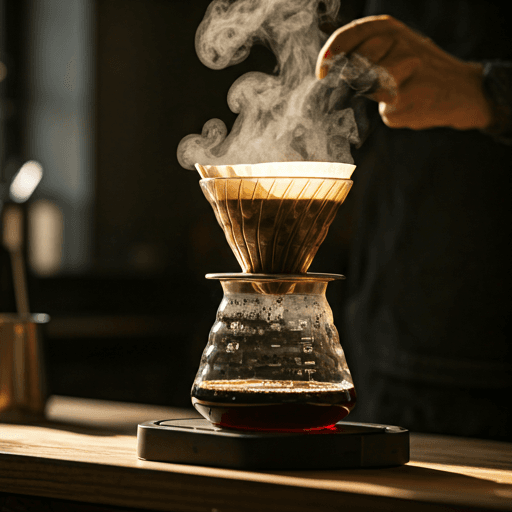
These coffees shine when you let their body and sweetness show, so many drinkers prefer them as pour-over or as a lighter-roasted filter coffee, sometimes at a slightly cooler water temperature to keep the fermented notes gentle. Because profiles vary widely, start with a standard recipe and adjust; the creamy, tropical-yogurt character usually comes through clearly without special equipment.