
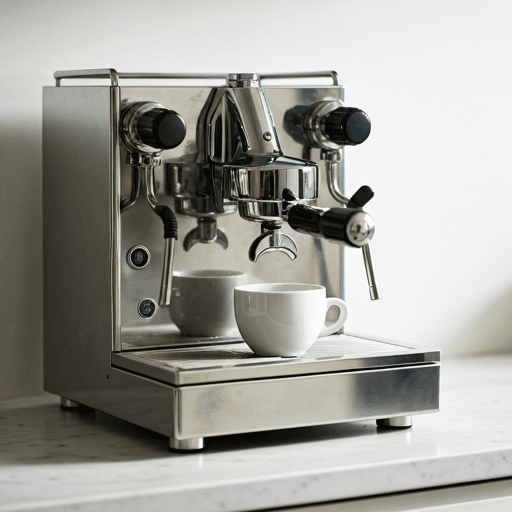
The Linea Micra and the Linea Mini are both premium La Marzocco home espresso machines built around dual boilers and PID temperature control, so on shot quality they are far closer than their price tiers suggest. The real difference is fit: the Linea Micra is the newer, smaller and lighter machine, with a quick warm-up and app-first controls, while the Linea Mini is the larger, heavier "little cafe machine" with a bigger steam boiler, a plumb-in option and the brand's most iconic build. If counter space and a fast morning routine matter most, the Micra tends to win; if you steam a lot of milk back to back or want the classic cafe machine at home, the Mini pulls ahead.
This guide compares the two head to head rather than crowning a single "best" machine, because the right answer genuinely depends on your kitchen and habits. For the wider family of La Marzocco machines see our La Marzocco espresso machines guide; for how these fit against the whole category, our notes on high-end espresso machines and dual-boiler espresso machines add useful context.
The quick verdict: Linea Micra vs Linea Mini
Both machines are made in Italy by La Marzocco, a company whose cafe espresso machines have shaped specialty coffee for decades, and both bring that heritage home. They share the same core recipe: two separate boilers (one for brewing, one for steam), digital PID temperature control, a 58 mm commercial-style portafilter and a saturated brew group derived from the company's cafe machines. That shared DNA is why both pull consistent, stable espresso.
Where they part ways is scale and intent. The La Marzocco Micra was designed as a compact, connected, quicker-heating machine for smaller kitchens and single-cup-to-a-few-cups routines. The La Marzocco Mini is the established workhorse: a larger steam boiler for effortless milk, a plumb-in path for a permanent setup, and the unmistakable stainless silhouette that made it a modern classic. Neither is a compromise on flavor; they simply optimize for different lives.
Linea Micra vs Linea Mini: side-by-side specs
Specs vary a little by model year and region, so treat the figures below as close guidance and confirm the exact numbers for the unit you are considering. Dimensions and weights are approximate.
| Attribute | Linea Micra | Linea Mini |
|---|---|---|
| Positioning | Newer, compact home machine | Established "little cafe machine" |
| Boilers | Dual boiler (approx. 0.25 L coffee / 1.6 L steam) | Dual boiler (approx. 0.2 L brew / 3-3.5 L steam) |
| Temperature control | PID, adjustable via app | PID, tight stability at the group |
| Portafilter / group | 58 mm, saturated group | 58 mm, saturated group |
| Warm-up (approx.) | About 5 minutes to brew-ready | About 15-25 minutes from cold |
| Footprint (approx.) | ~11 x 18 x 13 in (W x D x H) | ~14 x 21 x 15 in (W x D x H) |
| Weight (approx.) | ~46 lb / ~21 kg | ~66-70 lb / ~30-32 kg |
| Water supply | Reservoir tank (~2 L) | Reservoir (~2 L) plus plumb-in option |
| Connectivity | App-first (La Marzocco Home) | App connectivity on current models |
| Colors | Wide palette of finishes | Stainless plus color options |
| Cost tier | Premium; the more accessible entry | Premium; typically the pricier |
Where the two La Marzocco machines differ
Size, footprint and weight
This is the headline difference. The Micra is noticeably smaller and lighter, a compact benchtop machine that measures roughly a foot wide and light enough (around 21 kg) that one person can reposition it without a wrestle. The Mini has a larger footprint, a deeper body and a serious heft to it, around 30 kg, close to the weight of a small cafe machine. If your counter is shallow, sits under a cabinet, or you rent and expect to move, the Micra's compact body is a real advantage. If you have a dedicated coffee corner and want presence, the Mini earns its space. Do check depth in particular: both are deeper than they are wide, so measure your counter before you commit.
Boiler and temperature control
Both run a genuine dual-boiler layout, which keeps brew temperature independent from steam and is a big part of why either machine can chase specialty-cafe consistency at home. Both use PID control for stable, repeatable brew temperature. The practical gap is boiler capacity: the Mini carries a substantially larger steam boiler (roughly 3 to 3.5 litres), while the Micra's steam boiler is scaled down to about 1.6 litres to fit its compact body. For espresso quality alone, the difference is small; for steaming volume, it matters, which is the next point.
Warm-up time
The Micra is the sprinter. It typically signals ready to brew in around five minutes, a genuinely useful trait if you want espresso without planning ahead; full steam power takes a little longer, closer to seven or eight minutes. The Mini takes longer to fully stabilize, commonly cited at roughly fifteen to twenty-five minutes from a cold start, because there is more metal and a much larger steam boiler to bring up to temperature. Many owners of either machine simply schedule wake-up times through the app or a smart plug so it is hot when they walk into the kitchen.
Steam power and back-to-back milk
The Mini's larger steam boiler is its clearest performance edge. If you regularly make several milk drinks in a row, cappuccinos and flat whites for a household or guests, the Mini recovers steam pressure with more headroom and less waiting. The Micra steams capably and impressively for its size, and for one or two milk drinks at a time it feels plenty strong; it just has less reserve when you push it hard in quick succession. Casual or single-drink steamers will not notice; frequent milk drinkers will.
Water tank and plumb-in
The Micra is a reservoir machine with a tank of roughly two litres, which keeps installation simple: fill, switch on, brew. The Mini also runs from a two-litre reservoir but adds the option to plumb it in to a water line for a permanent, refill-free setup, which suits a fixed home bar or heavy daily use. If you value a fuss-free, movable machine, the Micra's tank is fine; if you want it wired into your kitchen like a small cafe station, the Mini's plumb-in path is the reason to choose it.
Connectivity and the app
Both connect to the La Marzocco Home app over Wi-Fi or Bluetooth, letting you adjust brew temperature, steam settings and pre-infusion, schedule on and off times, and check the machine's status. The Micra was designed around this app from the start, so much of its control lives on your phone. Current Mini models (sold as the Linea Mini R) also offer this connectivity, though the depth of smart features can vary by model year, so confirm what a specific Mini includes if remote control matters to you.
Aesthetics and customization
Both use the signature paddle-style actuation and a stainless, cafe-inspired look, and both can be dressed up: La Marzocco offers a wide palette of finishes and side-panel colors so you can match a kitchen. The Micra launched with an especially broad range of playful colorways; the Mini's polished stainless remains the icon, with color options available and higher-touch materials on the paddle and knobs. This is personal taste rather than performance, but for a machine that lives on the counter, it counts.
Value and cost tier
Both sit firmly in the premium-to-luxury tier of home espresso, and neither is an impulse buy. Within that bracket, the Micra is generally the more accessible entry point, which is a large part of its appeal: it brings the La Marzocco name, dual boilers and PID into a smaller, friendlier package. The Mini typically commands more, reflecting its larger boiler, plumb-in capability and flagship-home status. We describe cost only in relative terms here; both are long-term investments meant to be lived with for years.
Which one should you choose?
There is no universal winner, only the right match for your counter and your cup count. Use these quick profiles to decide.
Choose the Linea Micra if
- Counter space is tight or you may move the machine.
- You want espresso fast, with a roughly five-minute warm-up.
- You mostly make one or two drinks at a time.
- You like app-first control and a wide choice of colors.
- You want the most accessible way into La Marzocco at home.
Choose the Linea Mini if
- You steam a lot of milk, often back to back.
- You have a dedicated coffee corner and want the classic look.
- You want the option to plumb it into a water line.
- You value the larger steam boiler's extra headroom.
- You want the established, iconic La Marzocco home machine.
If you are still weighing whether either belongs in your kitchen at all, start with the fundamentals in our how to choose an espresso machine guide, then come back to this comparison. Both the Micra and the Mini are excellent, genuinely cafe-grade choices; the smart move is to be honest about your space and how much milk you steam, and let that, rather than the badge, pick the machine. Whichever you land on, you are getting the same core promise: consistent, dialed-in espresso from one of the most respected names in the craft.