
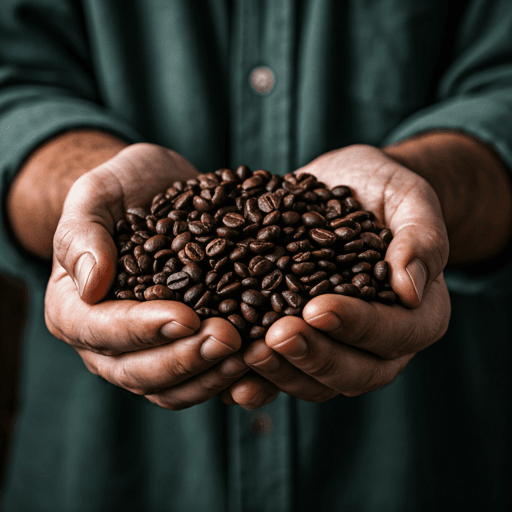
Kopi luwak coffee is the world-famous "civet coffee" — beans that an Asian palm civet eats as part of the coffee cherry, then passes through its gut, after which farmers collect, clean, dry, and roast them. The civet's digestive enzymes change the bean's chemistry, which is why the cup is unusually smooth and low in bitterness. It is also one of the most expensive and most controversial coffees on earth, and in India you will see it sold both as imported Indonesian beans and as domestic Coorg-grown civet coffee.
This is an honest explainer: what kopi luwak actually is, the real reason for the price, the welfare problem behind most of it, India price bands you can trust, and how to avoid the heavy counterfeiting in this category. For the wider "priciest coffees" picture, see our guide to the most expensive coffee in the world.
What is kopi luwak coffee?
Kopi luwak coffee is made from coffee cherries eaten by the Asian palm civet — a small, cat-like mammal native to South and Southeast Asia. "Luwak" is the Indonesian name for the animal, and "kopi" simply means coffee. The civet picks ripe cherries, digests the sweet outer pulp, and the hard coffee seed (the bean) passes through largely intact. Farmers gather the droppings, separate the beans, wash them thoroughly, sun-dry them, then roast.
The transformation happens in the gut. Proteolytic enzymes partly break down the bean's storage proteins into shorter peptides and free amino acids. Those proteins are precursors of bitterness, so reducing them is the mechanism usually credited for kopi luwak's signature low-bitterness, smooth cup. After collection, the rest is ordinary coffee processing: sorting, washing, drying, and a typically light-to-medium roast that protects the delicate character.
What it tastes like
Genuine, well-processed kopi luwak is described as smooth, full-bodied, and low in acidity, with chocolate, caramel, and earthy notes and a sweet aftertaste. The defining marker is the lack of harsh bitterness. It is not a loud, intense cup — if anything, fans value it for being mellow and clean rather than punchy. If a sample tastes sharply bitter, that is a red flag, because the civet's enzyme action specifically reduces bitterness and that effect survives roasting.
Why kopi luwak coffee costs so much
The price is driven by tiny supply and very high labour, not by any magic ingredient. A few things stack up:
- Minuscule yield. Genuinely wild kopi luwak depends on free-roaming civets choosing the ripest cherries. Estimates put truly authentic annual production at only a few hundred kilograms worldwide.
- Labour-intensive collection. Farmers forage for droppings, separate beans by hand, and wash and dry them carefully. It is slow, manual work.
- Scarcity premium and novelty. The "rarest coffee in the world" story commands a markup well beyond what the cup quality alone would justify.
- Long, opaque supply chains. Beans move through collectors, exporters, and importers, each adding margin, before reaching an Indian shelf or café.
Internationally, kopi luwak commonly sells for roughly USD 100–600 per pound, and premium lots even higher per kilogram. Note the supply paradox: only a few hundred kilograms of authentic product may be made each year, yet thousands of tonnes are sold globally under the name. That gap tells you most "kopi luwak" on the market is not what it claims to be.
Kopi luwak coffee price in India
The kopi luwak coffee price in India varies enormously by source, authenticity, and whether it is imported or domestic. Treat every figure below as an approximate band, not a live quote — prices move with import duty, the rupee, and the seller's claims. Always check the current listing before you buy.
| Type | Typical India price (approx.) | Notes |
|---|---|---|
| Imported Indonesian civet coffee, small pack | From around ₹500–700 per 100g | Cheaper packs are often blends or unverified; authenticity varies widely |
| Domestic Coorg (Karnataka) wild civet coffee, roasted | Around ₹9,000–12,000 per kg | Sold by a handful of estates and speciality cafés; small pack sizes common |
| Domestic civet, retail per kg (commonly quoted) | From around ₹8,000 per kg | Often cited as the local rate, well below export pricing |
| Premium / international-grade lots | Roughly ₹20,000–25,000+ per kg | Export-tier and certified product sits at the top |
In practice, most Indian buyers start with a small 100g pack to taste before committing. A genuinely verified, wild, ethically gathered kilogram is a serious spend — closer to the top of these bands. If a "kopi luwak" is priced like ordinary instant coffee, assume it is flavoured or blended rather than real civet coffee.
Where it is sold in India
You will not find kopi luwak on most supermarket shelves. It usually shows up in three places: speciality coffee e-commerce listings, a few Coorg estates and their own stores, and the odd boutique café. India even produces its own civet coffee in the Coorg (Kodagu) district of Karnataka, sold under estate brands such as Ainmane, often through a single café or speciality store rather than mass retail. For where-to-buy-near-you intent, treat online speciality sellers and named Coorg estates as your realistic options, and verify provenance directly with the seller rather than trusting a generic listing.
The welfare problem you should know about
This is the part the marketing skips. The romantic image is a wild civet roaming a forest at night. The reality for much of the supply is different. Investigations and animal-welfare groups, including PETA, have reported that a large share of "wild-sourced" kopi luwak actually comes from civets kept in cramped cages and force-fed cherries. Caged production raises real welfare concerns and can also dull the very quality the coffee is famous for.
If a label says "wild" but the seller cannot explain who gathered it and where, the wild claim is doing marketing work, not telling you the truth.
If you want to drink kopi luwak with a clear conscience, the only genuinely defensible version is 100% wild-gathered from free-living animals, with the seller able to show direct farmer relationships or independent verification. That is rare and expensive — which is exactly the point.
How to spot fake kopi luwak
Counterfeiting is the norm in this category, so a little scepticism saves money. Use these checks:
- Taste for bitterness. Real kopi luwak is notably smooth and low in bitterness. A sharply bitter cup suggests it is not genuine civet coffee.
- Ask three questions. Where exactly is it from (a named region, estate, or family)? How is wild-sourcing verified? What is the roast profile? Vague answers are a warning.
- Distrust suspiciously low prices. Authentic product cannot be cheap; bargain "luwak" is usually ordinary coffee with civet branding or added flavour.
- Look for provenance, not just packaging. Fancy boxes are easy to print. Direct farmer links, batch traceability, or lab verification (PCR testing can detect whether a bean passed through a civet) are the real signals.
If you simply love a smooth, low-acidity, chocolatey cup, you can get most of that experience from a good, well-roasted single-origin without the ethical baggage or the price. Our best coffee beans buying guide and the explainer on coffee bean varieties and types will point you to honest, repeatable quality.
Is kopi luwak coffee worth it?
Honest answer: as a one-time curiosity, it can be a memorable experience if you source verified, wild, ethically gathered beans and brew them well. As an everyday coffee, it is hard to justify on cup quality alone — taste is subjective, the price is steep, and the welfare risks are real. Plenty of expert tasters argue the hype outruns the flavour. Buy a small pack, brew it carefully (a clean pour-over or French press flatters its smoothness), and decide for yourself rather than chasing the legend. For brewing method ideas, see our French press coffee guide.