
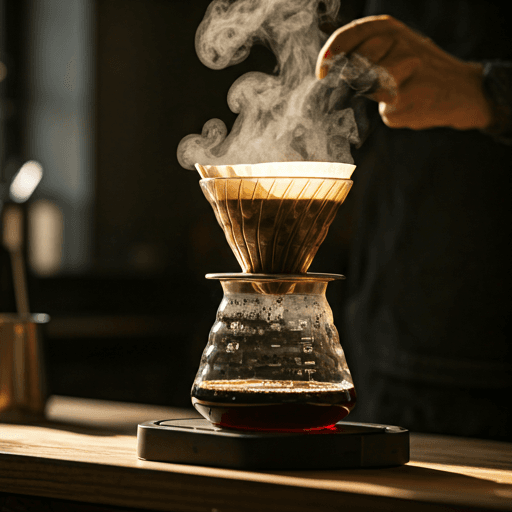
In the kopitiam — the traditional coffee shops of Singapore and Malaysia — coffee comes with its own compact shorthand. Kopi C is coffee with evaporated milk and sugar, Kopi O is black coffee with sugar, and plain Kopi arrives sweet and rich with condensed milk. Learn a handful of these words and you can order almost anything at the counter, no menu required.
The system looks cryptic at first, but it is really just a base drink plus a few modifiers stacked together. Once you know that the words come from Malay and Hokkien, and that each one describes milk, sugar, strength or temperature, the code snaps into place. Below is the full decoder, plus the story of the strong, dark Nanyang coffee that started it all.
What is a kopitiam?
A kopitiam is a traditional coffee shop — the word joins the Malay kopi (coffee) with the Hokkien tiam (shop). These open-fronted, marble-and-tile spaces have anchored neighbourhoods across Singapore and Malaysia for more than a century, serving strong coffee, tea, soft-boiled eggs and kaya toast to a steady stream of regulars. Many were founded by Hainanese immigrants, whose cooks gave the local coffee its distinctive style.
The kopitiam is a close cousin of the wider world of neighbourhood coffee houses — a place to sit, talk and watch the day go by rather than grab and run. If you enjoy reading about how different regions drink their coffee, the kopitiam sits comfortably alongside the traditions covered in our guide to coffee culture around the world and the broader idea of what a cafe is.
Nanyang-style coffee: dark, sweet and roasted with sugar
The coffee poured in a kopitiam is usually called Nanyang coffee, after the old term for the "Southern Seas" region settled by the Chinese diaspora. It is built on robusta beans — bolder and more bitter than arabica — that are roasted the local way: tumbled with sugar and a little margarine or butter until the sugar caramelises and coats the beans. The result is a very dark, glossy, slightly smoky roast with a heavy body.
Traditionally the grounds are brewed in a long cloth filter shaped like a sock, steeped and strained through repeatedly to pull a thick, concentrated coffee. That intensity is why the drink is almost always cut with plenty of milk and sugar. If you like this kind of sweetened, condensed-milk-forward brew, it rhymes with another Southeast Asian classic — you can taste the family resemblance in Vietnamese coffee.
Kopi C, Kopi O and Kopi: the three core drinks
Everything starts with three base orders. Get these right and the modifiers do the rest.
- Kopi — coffee with sweetened condensed milk and sugar. The condensed milk brings both the creaminess and much of the sweetness, so a plain Kopi is rich and almost dessert-like.
- Kopi O — black coffee with sugar, no milk. The "O" comes from the Hokkien word for "black." It is punchy and bittersweet.
- Kopi C — coffee with evaporated milk and sugar. Evaporated milk is unsweetened, so the sugar is added separately and the drink tastes lighter and more balanced than a plain Kopi. The "C" is often traced to the Carnation brand of evaporated milk, though some link it to the Hainanese word for "fresh."
The key difference between Kopi and Kopi C is the milk: condensed (sweet) versus evaporated (plain). Kopi O skips milk entirely. From there, every other order is one of these three with extra words attached.
The kopitiam decoder table
Modifiers are added after the base name, and you can stack several. "Kopi C kosong peng," for example, is iced coffee with evaporated milk and no sugar. Here is what each word does.
| Term | Origin | What it means |
|---|---|---|
| Kopi | Malay | Coffee with condensed milk + sugar |
| Kopi O | Hokkien "black" | Black coffee with sugar, no milk |
| Kopi C | Carnation / "fresh" | Coffee with evaporated milk + sugar |
| Kosong | Malay "empty" | No sugar (e.g. Kopi O kosong = black, unsweetened) |
| Gau | Hokkien "thick" | Extra strong, more concentrated coffee |
| Poh | Hokkien "thin" | Weaker, more diluted |
| Siew dai | Hokkien "less sweet" | Less sugar / less sweetened milk |
| Ga dai | Hokkien "add sweet" | Extra sugar |
| Peng | Hokkien "ice" | Served iced |
| Di lo | Hokkien "straight down" | Undiluted, thickest possible pull |
A few worth remembering: kosong means zero sugar, which is the go-to for anyone cutting back; siew dai is the gentle "less sweet" that many locals now default to; and gau versus poh lets you dial the strength up or down. String them in the order base-milk-sugar-ice and you will be understood.
How to build an order
Think of it as a formula: Kopi + milk letter + sweetness + temperature. Want a lighter, less-sweet iced coffee with evaporated milk? That is "Kopi C siew dai peng." Prefer a strong black with no sugar? "Kopi O gau kosong." An extra-thick, undiluted black? "Kopi O di lo." You rarely need more than three or four words, and staff are used to hearing every combination.
The same code works for tea
Once the coffee grammar clicks, tea is effortless, because the modifiers are identical — you just swap kopi for teh (the Malay word for tea).
- Teh — tea with condensed milk and sugar.
- Teh O — tea with sugar, no milk.
- Teh C — tea with evaporated milk and sugar.
All the same add-ons apply: Teh O kosong is plain unsweetened tea, Teh C peng is iced milk tea with evaporated milk, and Teh siew dai is a less-sweet cup. In Malaysia you will also meet teh tarik, the theatrically "pulled" milk tea poured between two vessels to build a frothy head. Milk tea in all its forms is a huge subject in its own right — this is just the kopitiam dialect of it.
Where the terms come from
This vocabulary is firmly rooted in Singapore and Malaysia, shaped by the Malay, Hokkien, Hainanese, Tamil and Cantonese communities who built the region's coffee-shop culture. It is a genuinely local creole of the counter — not something imported or standardised, which is why you will hear small variations from shop to shop and town to town. Like the way English speakers turned "coffee" into "a cup of joe," these words are a shorthand born from daily habit; if that kind of naming interests you, see our note on the meaning of "cup of joe."
Prices, portions and even a few spellings differ across kopitiams, so treat the list above as the reliable core rather than an unbreakable rulebook. The beauty of the system is that it is additive: memorise the three bases and the ten modifiers, and you can decode — or build — almost any drink on the board.
The takeaway
Kopitiam ordering only looks like a secret language. Underneath, it is a tidy grid: pick your base (Kopi, Kopi O or Kopi C), choose your milk and sweetness, add ice if you want it, and adjust the strength with gau or poh. The next time you find yourself in front of a marble-topped counter in Singapore or Malaysia, you will be able to skip the pointing and simply say what you want — and taste one of the world's great, and greatly underrated, coffee traditions the way locals have for generations.