
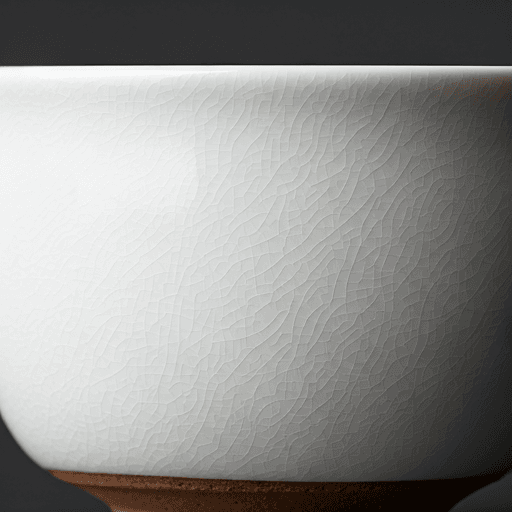
The free tea in the sushi cup, explained
If you have ever finished a plate of nigiri and drained a small ceramic cup of dark, brisk, faintly grassy green tea, you have almost certainly been drinking konacha. It is the everyday green tea poured, usually without charge and often without appearing on any menu, across sushi counters worldwide. The name (粉茶) translates roughly as "powder tea" or "dust tea," and that is the honest description of what it is: the fine fragments, broken leaf and small buds sifted out during the finishing of higher-grade Japanese teas.
Far from being a throwaway, konacha is a category unto itself. It brews fast, tastes bold, and stands up to the oils of raw fish in a way delicate leaf teas cannot. This guide treats it as an origin story rather than a recipe: what it actually is, where the leaf behind it grows, how the sushi-counter tradition of agari gave it a second name, how it differs from its cousins, and how to get a clean cup at home.
What is konacha?
Konacha is not grown as its own tea. It is a by-product grade created during the refining (shiage) stage of producing sencha and, at the top end, gyokuro. After the leaf is steamed, rolled and dried, it is sorted and cut to a uniform size. The very small fragments, leaf tips, powder and dust that fall through the sorting screens are collected together and sold as konacha. You will also see it romanized as kona cha, and because it sits at the fannings-and-dust end of the sorting line, it is essentially the Japanese green-tea equivalent of a tea dust grade.
That origin explains almost everything about the cup. Because the particles are tiny, they carry enormous surface area, so flavor, color and astringency pour out of them within seconds. The liquor comes out deep green and slightly cloudy, with a punchy, savory intensity. When the fragments are gathered from gyokuro production instead of ordinary sencha, the result is marketed as gyokuro konacha (玉露粉茶), a noticeably sweeter, more refined version. If you want the full picture of the parent leaves, our companion pieces on sencha and on gyokuro are the natural next reads.
Where the leaf grows: terroir by inheritance
Because konacha has no plantation of its own, its terroir is borrowed from whatever tea it was sorted out of. That means it comes from the same celebrated Japanese growing regions that supply the country's sencha and gyokuro. Shizuoka, on the Pacific slopes below Mount Fuji, is the historic heartland and still the largest producer. Kagoshima in the warm south has become the other giant, prized for early, machine-harvested crops. Uji, near Kyoto, is the prestige name most associated with shaded teas such as gyokuro and matcha, while Yame in Fukuoka and the tea districts of Mie round out the major sources.
The plant itself is Camellia sinensis, overwhelmingly the Yabukita cultivar that dominates Japanese green-tea acreage, though many gardens also grow early or aromatic cultivars alongside it. The steaming step — light (asamushi) or deep (fukamushi) — that defines the parent tea carries through into the konacha. Deep-steamed leaf breaks more easily and produces more fine material, so a good deal of konacha is, in effect, the fine dust of fukamushi sencha, which is part of why the cup is so green and full-bodied.
Harvest timing matters as well. The prized first-flush spring crop (ichibancha) yields sweeter, more aromatic leaf, while later summer flushes tend to be brisker and more astringent. Konacha inherits whichever character its source batch carried, so dust sifted from an early, tender harvest can taste markedly rounder than dust drawn from a coarser late-season one — one reason quality varies more than the humble price suggests.
Agari tea: the sushi-counter tradition
The reason most people meet this tea is sushi tea service. At a traditional counter the green tea handed over at the end of a meal is called agari, and konacha is the classic leaf used for it. The word carries a small piece of history. By many accounts the term descends from agaribana, an old expression from the pleasure-quarter and teahouse world of the Edo period for the fresh tea served to a guest; sushi shops shortened it to agari, which also plays on the sense of "finishing up." So when a sushi chef offers agari tea, they are using an insider word for the closing cup, and konacha is what usually fills it.
The pairing is practical, not merely ceremonial. Hot tea helps rinse the fat of oily cuts such as toro from the tongue, and the brisk astringency of konacha — driven by its catechins and its fast extraction — scrubs the palate clean between bites of strongly flavored fish. A cheaper, bolder tea that can be brewed quickly in volume, cup after cup, is exactly what a busy counter needs. That combination of low cost, high intensity and instant brewing is why konacha, rather than a delicate premium leaf, became the sushi tea of choice.
Styles, grades and close relatives
Within the konacha family there is real range. Ordinary konacha from sencha sorting is the workhorse. Gyokuro konacha, drawn from shade-grown leaf, is the connoisseur's version — sweeter, rounder and lower in the sharp edge. There is also a roasted style, sometimes called houji konacha, where the fragments are fired to give a toasty, nutty, low-astringency cup.
Konacha is easy to confuse with its sibling by-product, mecha, but the two are genuinely different. Mecha is made from the rolled buds and leaf tips separated during sorting; it keeps small, curled, bud-like shapes and is generally considered a step up in quality, with a fuller, sweeter body and a less cloudy liquor. Konacha, by contrast, is the finer dust and broken fragment. If you like the fast, savory character of the sushi cup but want a little more finesse, mecha is the natural place to explore next, and our overview of the main types of tea maps out where both sit in the wider world of leaf.
Japanese green teas at a glance
| Tea | What it is | Grade level | Cup character |
|---|---|---|---|
| Konacha | Dust, fine fragments and small buds sifted from sencha/gyokuro | By-product / everyday | Deep green, cloudy, brisk, savory, fast-brewing |
| Mecha | Rolled buds and leaf tips separated in sorting | By-product / better | Fuller, sweeter, less cloudy than konacha |
| Sencha | Steamed, rolled whole-leaf tea, sun-grown | Standard to premium | Balanced grassy-sweet, clean, medium body |
| Gyokuro | Shade-grown leaf, steamed and rolled | Premium | Intensely sweet, umami-rich, soft |
| Matcha | Shade-grown leaf (tencha) stone-milled to fine powder | Premium / ceremonial | Thick, creamy, vivid; whisked not steeped |
What konacha tastes like
Expect a cup that arrives quickly and speaks loudly. The color is a deep, saturated green, often a little turbid because so many fine particles stay suspended. The flavor is fresh and vegetal — think steamed greens, seaweed and a marine, savory edge — with a firm, clean astringency in the finish that resets the mouth. It is less nuanced and less lingering than a well-made sencha, and nowhere near as sweet and velvety as gyokuro, but that is precisely the point: konacha trades subtlety for immediacy and impact.
Gyokuro konacha softens this picture, adding a broth-like sweetness and rounder umami. The roasted houji style pivots away entirely into toasty, nutty, coffee-adjacent territory with very little bite. Push any konacha too hard, though — hotter water, longer time — and the same tannins that make it useful turn harsh and bitter fast.
How it compares to neighbouring origins
The most useful comparisons are with the teas konacha comes from and the by-product it sits beside. Against sencha, konacha is coarser in flavor but far quicker to brew and much cheaper; sencha rewards patience and gives more aromatic complexity. Against gyokuro, there is no contest on refinement — gyokuro is a shaded luxury tea — but gyokuro konacha borrows a good slice of that pedigree at a fraction of the fuss. Against mecha, the split is fragment versus bud: mecha is the more polished by-product, konacha the bolder, dustier one.
It also helps to place konacha among Japan's other everyday teas. Bancha, made from later, coarser harvests, is mellow and low in astringency; genmaicha blends green tea with toasted rice for a nutty, comforting cup; and hojicha is roasted to a warm, low-caffeine brown brew. Konacha stands apart from all of these as the concentrated, fast-brewing dust grade — brisker and greener than bancha, and, unlike genmaicha or hojicha, defined not by roasting or blending but simply by particle size.
It is worth separating konacha cleanly from matcha, too, because newcomers often assume the sushi-cup "green powder" is powdered ceremonial tea. It is not. Matcha is shade-grown tencha leaf, de-veined and stone-milled into an ultra-fine, uniform powder that is whisked into suspension and drunk whole. Konacha is a coarser, granular by-product of ordinary steamed leaf that is steeped and strained like any leaf tea. They look superficially similar in the cup and could hardly be more different in production, price and purpose.
How to brew konacha
The golden rule is speed. Because the particles are so fine, everything extracts almost instantly, so short steeps and modest temperatures keep the cup bright rather than bitter. A reliable starting point:
- Leaf: roughly 4 grams (about 2 teaspoons) for a 120 ml cup — konacha is denser than whole leaf, so it settles fast.
- Water: commonly around 70–80°C (about 160–175°F). Hotter water gives the brisk, no-nonsense sushi-counter cup; cooler water coaxes out more sweetness, especially with gyokuro konacha.
- Time: very short — often just 20 to 40 seconds. Over-steeping is the single most common mistake.
- Vessel: a teapot with a fine mesh (kyusu) or a strainer helps, since the fine particles will otherwise pass into the cup.
A gentle initial pour, a short wait, and a full decant — leaving no water sitting on the leaf — will give a clean, green, palate-refreshing cup. It usually yields one or two good infusions rather than many.
On caffeine: konacha is a true green tea and does contain caffeine, and because it includes buds and high-surface-area fragments it can extract quickly. Green teas commonly fall somewhere in the broad range of roughly 20–45 mg of caffeine per cup, but the exact level varies with the leaf, the quantity used and how it is brewed, so treat any single figure as an estimate rather than a fact. As for the wider wellness angle, green teas are a natural source of catechins and other plant compounds that some studies associate with potential benefits, but any effect may be modest and responses vary from person to person; this is general information, not medical advice. Our broader look at green tea and its potential benefits puts the evidence in context.
The bottom line
Konacha is the unglamorous hero of Japanese green tea — the dust and fragments left when the good leaf is sorted, reborn as the brisk, bold cup that clears your palate at the sushi counter. Under the name agari it has become one of the most-drunk teas on earth without most drinkers ever learning its name. It will never out-refine gyokuro or out-nuance sencha, but for a fast, punchy, fish-friendly green tea with a genuinely interesting backstory, it is hard to beat. Brew it hot, brew it short, and you will understand in a single sip why the sushi world keeps it close.