
Tucked into the far northwestern corner of Guatemala, hard against the Mexican border, Huehuetenango is a name specialty roasters say with a certain reverence — and a certain amount of practice, because the syllables (roughly "way-way-teh-NAHN-go") trip up almost everyone at first. What earns the reverence is the coffee itself: bright, wine-like, and layered, grown at some of the highest elevations found anywhere in Central America. Huehuetenango is one of the country's most acclaimed origins precisely because it breaks the mold. Most of Guatemala's celebrated coffee ripens on volcanic slopes, but here the mountains are limestone rather than lava, and a quirk of geography lets farmers push their trees to an altitude where the crop would normally freeze. The result is a distinctive, deeply expressive coffee that has become shorthand among roasters for high-grown Guatemalan quality.
Where Huehuetenango Sits
Huehuetenango is both a department (a Guatemalan administrative region) and a coffee-growing zone in the country's remote northwest. The coffee itself grows in the folds of the Sierra de los Cuchumatanes, generally regarded as the highest non-volcanic mountain range in Central America and one of its most extensive highland areas. This matters more than it might sound. Guatemala is famous for volcanic terroir — the mineral-rich, free-draining soils that define regions such as those covered in our broader guide to Guatemalan coffee — yet Huehuetenango stands apart. Its soils are largely limestone-based and mineral-rich in their own way, a different geological story that helps explain why the cup here reads differently from the country's volcanic origins.
The region is also genuinely rural. Farms are scattered across steep, hard-to-reach slopes, and much of the crop comes from smallholders working a couple of hectares each rather than large estates. That remoteness has shaped everything about how the coffee is grown and processed, and it is part of why Huehuetenango lots often carry a sense of place that feels wilder and less industrial than more accessible origins.
The Winds That Make It Possible
The signature feature of Huehuetenango is climatic, not geological. Dry, hot winds descend from the Tehuantepec plain in neighboring Mexico and roll across the region's high slopes. Those warm air currents act as a natural frost shield: by keeping cold at bay, they let coffee survive and ripen at elevations where frost would otherwise damage or kill the trees. In effect, the winds buy the farmers extra altitude.
Huehuetenango is often described as the highest and driest of Guatemala's non-volcanic regions. It typically receives less rainfall and lower humidity than much of the rest of the country, which slows and concentrates cherry development. That combination — heat from the Tehuantepec winds, thin dry mountain air, and a long, unhurried ripening season — is the engine behind the region's intensity in the cup. Without those winds, coffee simply could not be grown as high as it is here.
Altitude, and Why It Matters Here
Altitude is the fact everyone repeats about Huehuetenango, and for good reason. Coffee here is commonly grown from roughly 1,400 meters up toward about 2,000 meters above sea level, placing many lots at the extreme upper end of what Arabica can tolerate. At those heights, cooler temperatures slow the ripening of the cherry. The fruit takes longer to mature, and the seed inside develops more densely, concentrating sugars and the acids and aromatic compounds that translate into flavor complexity.
This is why so many Huehuetenango bags are stamped SHB, short for Strictly Hard Bean. In Guatemala, green coffee is often graded by the altitude at which it grew, and SHB denotes the highest, hardest, densest beans — those grown above roughly 1,350 meters. Density is a rough proxy for quality here: a harder bean generally survived a slower, cooler ripening and tends to reward careful roasting with more clarity and sweetness. When you see "SHB EP" on a label, the EP stands for European Preparation, meaning the lot was meticulously hand-sorted to remove defects.
The Cup: Bright, Wine-Like, and Full
Huehuetenango's calling card is a lively, wine-like acidity paired with genuine body and sweetness — a rare and appealing combination. Compared with other Guatemalan regions, it often tastes brighter, fruitier, and more layered. Roasters frequently reach for descriptors like citrus and stone fruit up top, a cherry or red-grape note that earns the "wine-like" tag, and a base of caramel, cocoa, brown sugar, and chocolate underneath. The acidity tends to be vivid without being sharp, and the natural sweetness keeps everything in balance.
Because so much of the coffee comes from many small farms blended together, exact flavor varies from lot to lot and year to year. But the family resemblance is consistent enough that experienced tasters can often pick a Huehuetenango out of a lineup. The table below sketches the region's typical character — treat it as a general guide rather than a promise for any single bag.
| Attribute | What to expect in Huehuetenango |
|---|---|
| Acidity | Bright and lively, often described as wine-like; citrus and red-fruit tones |
| Body | Medium to full, rounded rather than thin |
| Sweetness | Pronounced; caramel, brown sugar, chocolate |
| Common notes | Citrus, cherry, stone fruit, cocoa, honey, spice |
| Overall | Complex, layered, and expressive — a "high-toned" Guatemalan profile |
Varieties Grown in the Highlands
The backbone of Huehuetenango is classic, well-loved Arabica. Most lots draw on some mix of Bourbon, Caturra, Catuaí, and older Typica plantings — the traditional Latin American cast of characters, each contributing sweetness, structure, and that signature acidity. Bourbon in particular is prized for its sweetness and cup clarity, which suits the region's expressive style.
You will also find pockets of more unusual, showy varieties. Large-beaned Maragogipe and its celebrated descendant Pacamara both turn up in Huehuetenango, planted by producers chasing distinctive, high-scoring microlots. These varieties are lower-yielding and more of a gamble to grow, but at these altitudes they can produce something genuinely striking. The variety mix, combined with the terroir, is a big part of why no two Huehuetenango lots taste quite the same.
Smallholders and the Micro-Mill Tradition
Huehuetenango's remoteness shaped its processing culture in an unusual way. In many Guatemalan regions, farmers deliver ripe cherry to a large centralized wet mill that handles the pulping and washing. Here, those big central mills are rare. Because the terrain is so rugged and the farms so scattered, growers have long processed their own coffee — pulping, fermenting, washing, and drying it on their own small plots before selling the parchment onward.
Nearly all of it is made using the washed process, in which the fruit is stripped away and the beans are fermented and rinsed clean before drying. Washed processing is the classic choice for a reason: it strips back fruity muddle and lets the underlying terroir speak, which is exactly what you want from a coffee whose whole appeal is its bright, transparent, high-grown character. The trade-off is that quality depends heavily on each producer's care and water access, so the best Huehuetenango bags are often built from carefully selected lots and cooperative pooling rather than a single anonymous stream.
Harvest generally runs from around November or December through April, with the highest farms picking latest because their cherries ripen most slowly. Once dried, the parchment travels down out of the mountains to be milled, sorted, and prepared for export.
How It Compares to Guatemala's Volcanic Origins
It is worth placing Huehuetenango next to its more famous volcanic cousins to see what makes it distinct. The classic reference point is Antigua, grown in a volcanic valley and known for a smooth, chocolatey, full-bodied profile with a certain elegant restraint. The lake-ringed slopes profiled in our Atitlán guide offer another volcanic expression, often with a bright, crisp balance of their own. Against those, Huehuetenango tends to read as higher-toned and more overtly fruity and acidic — the wild highlander to Antigua's polished valley.
None of these is objectively "better"; they are simply different dialects of Guatemalan coffee. But if you enjoy a cup with vivid acidity, wine-and-red-fruit brightness, and enough sweetness and body to carry it, Huehuetenango is often the region that delivers most emphatically. It is the origin many drinkers reach for when they want Guatemala turned up a notch.
Buying, Roasting, and Brewing
On a bag, look for the region name (sometimes spelled "Huehue" for short), the SHB or SHB EP grade, and ideally the variety and a cooperative or municipality. Those signals point to genuine high-grown coffee rather than a generic Guatemalan blend. A single-origin Huehuetenango is one of the more rewarding ways to taste the region clearly.
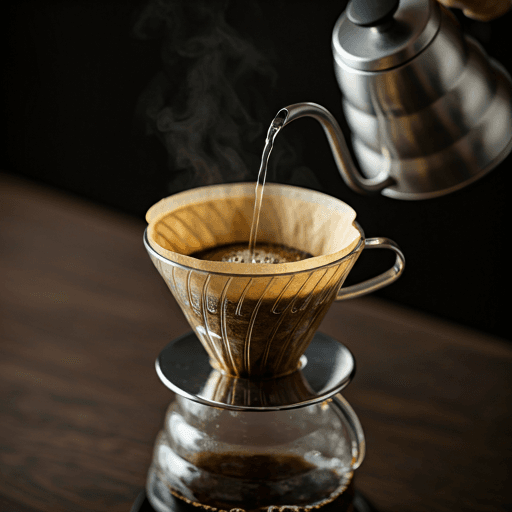
To keep the acidity and fruit that make this coffee special, most roasters favor a light-to-medium roast; pushing it dark tends to bury the citrus and wine notes under roast character. On the brewing side, filter methods such as pour-over or a well-dialed drip really flatter Huehuetenango, letting its brightness and layered sweetness come through. It also makes a vivid, fruit-forward espresso for those who like a lively shot rather than a heavy, syrupy one. Whichever way you brew it, treat the acidity as a feature to showcase, not a rough edge to roast away.