
Few coffee origins arrive with a postcard already attached. In the southwestern highlands of Guatemala, three volcanoes rise straight out of a deep, wind-ruffled caldera lake, and on their steep flanks Indigenous smallholders grow one of Central America's most recognizable coffees. This is Atitlán — a compact but storied origin where volcanic soil, high altitude, and a daily wind off the water conspire to build a cup that is full-bodied, brightly citric, and threaded with cocoa. It is one of the eight named regions recognized by Anacafé, Guatemala's national coffee association, and among the most scenic places anywhere that specialty coffee is farmed.
Where Atitlán Sits: A Lake Ringed by Volcanoes
Lake Atitlán fills a vast volcanic caldera in the department of Sololá, formed by an enormous eruption tens of thousands of years ago. The lake surface sits at roughly 1,560 meters (about 5,100 feet), and three volcanoes — San Pedro, Tolimán, and Atitlán — crowd its southern side, their forested slopes climbing far higher. Coffee here grows in a narrow altitude band, typically between about 1,500 and 1,700 meters, wedged onto steep terrain that ranges from the lakeshore up into the cloud line.
The vast majority of what Anacafé calls "Traditional Atitlán" is cultivated on these volcano flanks, in towns such as San Juan La Laguna, San Pedro La Laguna, and Santiago Atitlán. The steepness matters. Slopes that severe drain quickly, force plants to root deep, and are almost impossible to farm mechanically, which keeps the region firmly in the hands of hand-picking smallholders. Rainfall is generous — often on the order of 70 to 90 inches a year — and temperatures stay mild, hovering in a comfortable range that rarely swings to extremes. Together those conditions let cherries hang and develop slowly rather than rushing to ripeness. If you have explored the broader story of Guatemalan coffee, Atitlán is the classic "lake and volcano" chapter of it.
The Xocomil: A Wind That Shapes the Cup
Atitlán's defining feature is not just the volcanoes or the water but the interaction between them. Nearly every day, usually from late morning into the afternoon, a wind called the Xocomil sweeps across the lake. The name comes from the Kaqchikel and Tz'utujil Mayan languages, and it describes what happens when warm air rising off the Pacific coastal plain collides with cooler air moving down from the northern highlands. The two meet over the water and churn it into whitecaps.
For the coffee, this daily churn creates something close to a maritime microclimate in the middle of the mountains. The moving air moderates temperatures, keeps humidity high, and gently stirs the cool waters of the lake below the plantings. Growers and buyers often credit the Xocomil, along with the region's mist and cloud cover, for the slow, even maturation of Atitlán cherries — and for the concentrated sweetness and lively acidity that come with fruit that ripens without stress.
Volcanic Soil: Among the Richest Earth in Guatemala
Volcanoes give Atitlán more than a skyline. Centuries of ashfall have built soils that are unusually deep and fertile, and among Guatemala's volcanic coffee regions Atitlán's ground is frequently described as the richest in organic matter. Volcanic ash weathers into a loose, mineral-heavy medium carrying iron, magnesium, calcium, and other elements that feed vigorous plants and, many believe, help shape the coffee's complexity in the cup.
That fertility also allows a lighter touch. Because the soil already supplies so much, many Atitlán farmers lean on natural inputs — leaf litter, shade, and compost — rather than heavy chemical fertilization, and a number of cooperatives are certified organic. The result is coffee grown in a way that reads as both traditional and, increasingly, deliberately sustainable.
What Atitlán Coffee Tastes Like
The Atitlán profile is a study in balance. Expect a full, rounded body carrying bright citric acidity, with chocolate or cocoa running underneath and floral or fruit notes — think black cherry, orange, sometimes a spicy edge — lifting the top. It is cleaner and often brighter than the deep, chocolate-and-spice cup people associate with Antigua coffee, and rounder and more chocolatey than the wine-like, fruit-forward acidity that defines Huehuetenango coffee. The three make a useful comparison for anyone learning to read Guatemala by region.
| Region | Typical altitude | Body | Acidity | Signature notes |
|---|---|---|---|---|
| Atitlán | ~1,500–1,700 m | Full, rounded | Bright, citric | Cocoa, orange, black cherry, floral |
| Antigua | ~1,500–1,700 m | Full, velvety | Balanced, gentle | Chocolate, caramel, subtle spice |
| Huehuetenango | ~1,500–2,000 m | Medium, lively | High, wine-like | Stone fruit, floral, bright citrus |
These are tendencies, not guarantees — a single well-managed lot can defy its region. But if you want a shorthand, Atitlán is the one where a substantial, chocolatey body meets a clean citric snap.
Varieties Grown Around the Lake
Atitlán is planted overwhelmingly to heirloom and traditional Arabica varieties. Bourbon is the backbone, prized for its sweetness and rounded body, and it pairs naturally with the region's structure. Older Typica plantings still appear on long-established farms, while more compact, higher-yielding selections such as Caturra and Catuaí are common where growers need denser, more manageable trees on steep ground. The mix leans classic rather than experimental, which is part of why Atitlán tastes like a benchmark version of highland Guatemalan coffee.
Shade, Smallholders, and Cooperatives
Atitlán coffee is, to an unusual degree, community coffee. Much of it is grown by Indigenous Kaqchikel and Tz'utujil Maya families on small plots, then pooled and processed through cooperatives that handle milling, quality control, and export. Names like La Voz, in San Juan La Laguna, and the associations of producers around Santiago Atitlán are well known to specialty buyers; some cooperatives gather hundreds of member farmers whose individual holdings may be only a hectare or two.
Nearly all of this coffee is shade-grown, maturing under a canopy of native trees rather than in full sun. Shade slows ripening, shelters birds and wildlife, and helps stabilize the steep slopes against erosion — practical virtues as much as ecological ones. For smallholders selling into a global specialty market, the cooperative model also concentrates the expertise and equipment that turn carefully picked cherries into export-grade green coffee. A single family may deliver only a few bags of cherry each season, but pooled together those lots become a consistent, traceable Atitlán offering that roasters around the world can rely on year after year. That shared infrastructure — a wet mill, a drying patio, a cupping table, an export license — is often the difference between a farmer selling to a passing middleman and reaching the specialty buyers who reward quality.
Harvest, Processing, and Grading
The Atitlán harvest generally runs from around late December into March, when ripe cherries are hand-picked in successive passes. The dominant style is the fully washed process: cherries are pulped, fermented to loosen the sticky mucilage, washed clean in channels or tanks, and then dried — a method that favors clarity and lets the region's citric acidity and cocoa ring through. It is the classic Central American approach, and it suits Atitlán's already-clean cup.
On grading, Guatemala sorts primarily by altitude rather than bean size, and coffee grown at these elevations qualifies as Strictly Hard Bean (SHB) — Anacafé's top tier, generally reserved for coffee grown at roughly 1,350 meters (about 4,500 feet) and above. The logic is straightforward: cooler, higher slopes ripen fruit slowly, producing a denser, harder bean that tends to carry more concentrated flavor and stand up better to roasting. Most Atitlán you will encounter is labeled something like "Genuine Atitlán SHB."
| Stage | What happens | Why it matters |
|---|---|---|
| Picking | Ripe cherries hand-selected in multiple passes | Even ripeness; fewer defects |
| Pulping | Outer skin removed at the wet mill | Exposes the mucilage layer |
| Fermentation & wash | Mucilage broken down, then rinsed away | Builds the clean, bright cup |
| Drying | Beans dried on patios or raised beds | Stabilizes and preserves flavor |
How to Roast and Brew Atitlán
Atitlán is versatile, but it rewards a roaster who resists the temptation to go dark. A medium roast tends to keep the citric brightness and floral top notes intact while developing the chocolate; push too far and you trade that clarity for generic roasty bitterness. If you are unsure where a bag sits, a quick look at coffee roast levels helps you read the label before you brew.
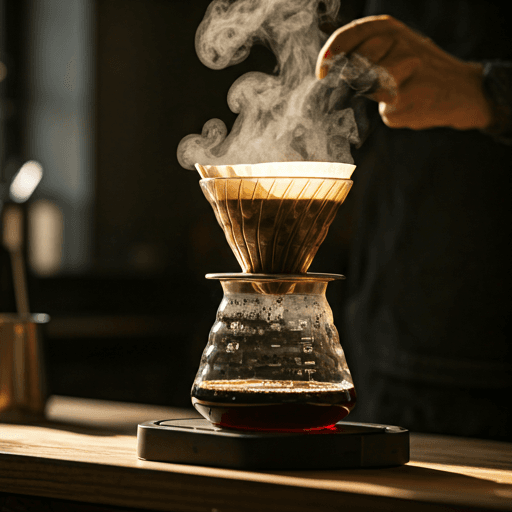
In the cup, Atitlán shines as a pour-over or drip coffee, where its acidity and body have room to show. It also makes a warm, chocolate-forward single-origin espresso for drinkers who like some fruit in the shot. However you brew it, treat it as a bright, structured coffee rather than a heavy one, and you will get the best of what this volcanic lake has to give.