
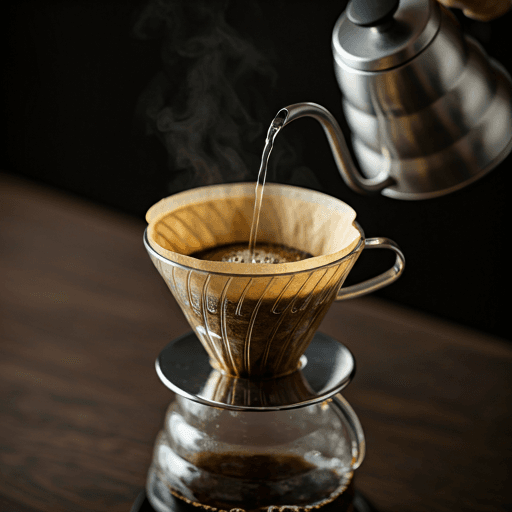
A French press (also called a cafetiere) makes rich, full-bodied French press coffee by steeping coarse grounds in hot water, then pressing a mesh plunger to separate the grounds from the liquid. Because there is no paper filter, more oils and body carry into the cup, so the result tastes fuller and heavier than drip. This is the practical, step-by-step method: get the grind, ratio, temperature, steep, and press right and you will make a great cup almost every time.
If you want the gear overview and buying advice first, see the French press guide. For a deeper dive on numbers, the French press coffee to water ratio page breaks down doses cup by cup. Here we focus on the method itself.
What you need
- A French press (cafetiere), any size.
- Fresh whole beans, ideally a medium roast, and a burr grinder set coarse (think rough sea salt).
- A kettle. A gooseneck helps but is not required.
- A timer, a spoon, and ideally a kitchen scale.
Coarse, even grounds are the single biggest lever. Too fine and the coffee turns muddy and hard to press; too uneven and you get bitterness and grit together. If your grinder struggles, learn the settings in coffee brewing ratios and dial in from there.
How to Make French Press Coffee, Step by Step
This how to make French press coffee routine takes about six minutes start to finish. Amounts are hedged starting points, not rules, so taste and adjust.
- Measure and grind. Use a French press coffee ratio of about 1:15 to 1:17 by weight, roughly 30 g of coffee per 500 ml of water, or about one heaped tablespoon per cup if you have no scale. Grind coarse, right before brewing.
- Heat the water. Aim for about 93 to 96 C (200 to 205 F), just off the boil. No thermometer? Boil, then let the kettle rest 30 seconds. Rinsing the empty press with hot water first keeps the brew temperature stable.
- Add grounds and start the timer. Tip the coffee in, put the press on your scale if using one, and zero it.
- Bloom. Pour in about twice the coffee's weight in water (roughly 60 g for a 30 g dose), give it a gentle stir so all grounds are wet, and wait 30 to 45 seconds. Fresh coffee releases gas here and blooms into a small dome.
- Pour the rest and steep. Add the remaining water, set the lid on with the plunger pulled all the way up, and let it steep about 4 minutes total.
- Break the crust and skim. At four minutes, stir the crust of grounds on top a couple of times, then skim off the foam and floating grounds with a spoon. This is optional but gives a cleaner cup, since the foam holds some of the harshest notes.
- Press slowly. Push the plunger down gently and evenly. If it fights back, stop, wait, and press slower. Forcing it can send grounds over the top or stress the glass.
- Pour it all out immediately. Decant every drop into a mug or carafe right away. Coffee left sitting on the grounds keeps extracting and turns bitter within minutes.
French press coffee ratio, grind and settings
Use this table as a quick reference. Every variable interacts, so change one thing at a time.
| Variable | Recommended setting | If it tastes off, fix |
|---|---|---|
| Ratio | 1:15 to 1:17 (about 30 g / 500 ml) | Weak or thin: use more coffee. Overpowering: use less. |
| Grind size | Coarse, like rough sea salt | Muddy or gritty: grind coarser. Sour and weak: grind slightly finer. |
| Water temp | 93 to 96 C (200 to 205 F) | Harsh or bitter: cooler water. Flat and sour: hotter water. |
| Bloom | 30 to 45 seconds | Skip only if beans are older and not gassy. |
| Steep time | About 4 minutes | Weak: steep 30 to 60 seconds longer. Bitter: shorten it. |
| Press speed | Slow and steady | Sludge in cup: press slower and skim first. |
Troubleshooting cafetiere coffee
Muddy, silty cup
Grind coarser, press more slowly, and skim the foam before plunging. A worn or fine mesh lets fines through, so a slower press and a decant into a clean carafe both help.
Weak or watery
Use more coffee (move toward 1:15), steep a little longer, or grind slightly finer. Also check your water was properly hot.
Bitter or harsh
Steep shorter, use cooler water, and pour it out the moment you press. Bitterness usually means over-extraction from heat, time, or grounds sitting too long.
How to use a French press for iced and larger batches
To brew a bigger batch, keep the same ratio and scale up; a full cafetiere follows the same steps. For iced, brew a touch stronger (closer to 1:14) so melting ice does not dilute it, then pour over a glass of ice. The French press also doubles as a cold brew steeper if you use it at room temperature over many hours, but that is a different method with its own timing.
Serving and storing
French press coffee is at its best within a few minutes of pressing. If you are not drinking it right away, decant into a warm thermal carafe rather than leaving it in the press. Skip any milk or sugar on your first tasting so you can judge the brew itself, then adjust the recipe next time. Small, single changes teach you far more than overhauling everything at once.
Once this method feels automatic, you can compare it with other everyday brewers in our how to make coffee overview, or push your dial-in further with the ratio and grind notes across our brewing guides. The beauty of the cafetiere is how forgiving it is: coarse grind, hot water, four minutes, a slow press, and a quick pour will get you a rich, satisfying cup wherever you are in the world.