
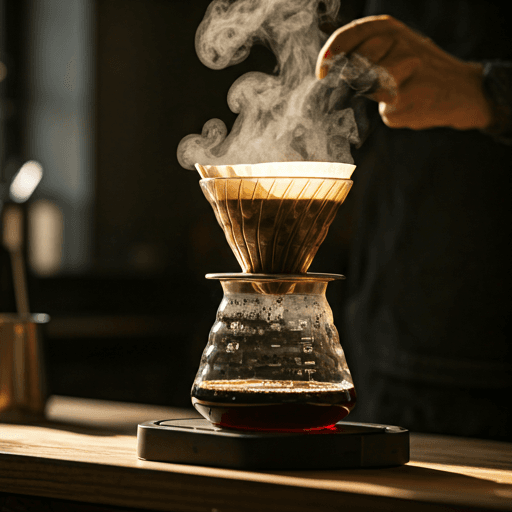
You can make coffee without a coffee maker using nothing more than a saucepan, a heatproof mug and a strainer: the ground coffee steeps in hot water, then you separate the grounds back out. That single idea powers every method on this page. Learning how to make coffee without a coffee maker means a power cut, a hotel room, a campsite or a broken machine never stands between you and a decent cup.
None of these approaches need electricity beyond a way to heat water, and most use gear you already own. Below are five reliable ways to brew coffee without a machine, the handful of essentials they all share, and a quick decoder table so you can pick the one that suits whatever you have on hand.
The shared essentials for how to make coffee without a coffee maker
Before the individual methods, four fundamentals decide whether your cup is bright and balanced or muddy and bitter. Get these roughly right and any method works, because they all rely on the same steep-and-separate principle.
- Grind medium-coarse. A grind like coarse sea salt is the sweet spot for steeping. Too fine and you get sludge in the cup and harsh over-extraction; too coarse and the coffee tastes thin and watery. If you are grinding your own, aim for that sea-salt texture; if you bought pre-ground, most standard grinds work fine.
- Use a ratio around 1:15. That is roughly one part coffee to fifteen parts water by weight, or about two tablespoons of grounds per cup (250 ml). Scale it up or down to taste, but 1:15 is a dependable place to start.
- Heat water to about 90 to 96 C (195 to 205 F). That is just off a rolling boil. With no thermometer, simply boil the water and let it rest for around 30 seconds before you pour, which drops it into roughly the right window.
- Steep for about four minutes. Most immersion methods land in the three-to-five-minute range. Longer steeps pull out more bitterness, so begin at four minutes and adjust from there.
These are the same fundamentals covered in our general guide to how to make coffee, worth a read if you want the theory behind extraction. Here we are focused purely on doing it without any dedicated brewer.
Method 1: The saucepan, or "cowboy" coffee
The oldest trick in the book. You add grounds straight to water in a pan, heat it, and let the grounds settle before pouring off the clear coffee on top.
- Add water to a saucepan and bring it to a gentle simmer, not a violent boil.
- Take it off the heat, stir in the grounds (about two tablespoons per cup), and let it steep for around four minutes.
- Let it stand another couple of minutes so the grounds sink to the bottom. A small splash of cold water helps them settle faster.
- Pour slowly and steadily into your mug, stopping before the sludge at the bottom of the pan follows.
This works over a stove, a camp stove or an open fire, which is why it is the classic outdoor brew. For the full campfire technique and the tricks that keep grounds out of your teeth, see our dedicated guide to cowboy coffee.
Method 2: Mug and strainer (steep and strain)
If you own a fine sieve, a tea strainer or even a slotted spoon, this is the cleanest no-equipment method and needs nothing more than a mug.
- Put your grounds directly into a heatproof mug or jug.
- Pour in your hot water, give it a gentle stir, and let it steep for about four minutes.
- Strain the coffee through a fine mesh sieve into a second mug. For an even cleaner cup, strain twice, or line the sieve with a paper towel or cloth.
The finer your strainer, the less grit ends up in the cup. A double layer of muslin catches almost everything. This is essentially a manual immersion brew, and it forgives just about any mug or vessel you have to hand.
Method 3: A do-it-yourself pour-over
No filter papers in the cupboard? You can improvise a passable pour-over dripper from a paper towel, a clean cotton handkerchief, or a tea bag emptied and refilled with coffee.
- Line a sieve, a funnel, or even the top of your mug with a folded paper towel or thin cloth.
- Add your grounds to the makeshift filter.
- Pour a little hot water on first to wet the grounds, wait about 30 seconds, then pour the rest slowly in circles.
- Let it drip through fully, then lift the filter away and discard the grounds.
Paper towels can lend a faint papery taste, so rinse the towel with a little hot water first if you can. A tightly woven cloth gives a cleaner result and can be rinsed and reused. For something you rig up in a minute, this mimics a filter machine surprisingly well.
Method 4: The jar "French press"
A lidded jar turns immersion brewing into a plunger-free press. It is the closest you will get to a proper French press without owning one.
- Add grounds and hot water to a heatproof jar (a canning jar is ideal) and stir.
- Set or screw the lid on and let it steep for about four minutes.
- To separate the grounds, either pour slowly through a sieve, or set the lid slightly ajar so it acts as a strainer while you pour, holding the grounds back.
Because the coffee sits in full contact with the grounds the whole time, a jar brew is rich and full-bodied, much like the real thing. If you find you enjoy this immersion style, our French press guide covers the plunger version and how to dial it in.
Method 5: Instant coffee, the honest fallback
When you truly have nothing but a kettle, instant coffee is the fallback that needs no straining at all. Stir a teaspoon or two into hot water, adjust the strength to taste, and you have a cup in seconds. It will not match freshly ground coffee for aroma, but modern freeze-dried instant is far better than its reputation, and it travels anywhere. Keeping a jar in your bag or desk drawer covers exactly these moments.
Which no-machine method should you use?
Every method here follows the same steep-and-separate logic; they differ mainly in the gear they need and how clean the final cup is. Use this table to pick the right one for what you have.
| Method | Gear you need | Rough time |
|---|---|---|
| Saucepan / cowboy | A pan and a heat source | ~6 to 8 min |
| Mug and strainer | Mug plus a fine sieve or cloth | ~5 min |
| DIY pour-over | Mug, funnel or sieve, paper towel or cloth | ~4 to 5 min |
| Jar "French press" | A lidded heatproof jar | ~5 min |
| Instant | A kettle or any hot water | ~1 min |
Getting a good cup, not a bitter one
The three most common complaints when you make coffee without a coffee machine all have simple fixes:
- Too bitter? Your water was probably too hot or you steeped too long. Let boiled water rest a little longer and trim the steep back to three minutes.
- Too weak or sour? Add more grounds or steep a touch longer. A thin, sour cup usually means under-extraction rather than bad coffee.
- Gritty cup? Grind a little coarser and strain more carefully, ideally through a cloth or a paper-lined sieve rather than a wide mesh.
None of this needs a special brewer, which is the whole point: water, grounds and a way to separate them are all coffee has ever really required. That said, if you find yourself brewing this way often and decide you want an upgrade, our coffee maker guide walks through the options without any pressure to buy.
Once you have made coffee without a coffee machine a few times, a missing appliance stops feeling like a problem at all. A pan, a jar or a folded paper towel is enough to get grounds and hot water to do their work, and there is something quietly satisfying about the ritual. Keep one method in your back pocket and you can brew coffee without a machine anywhere, anytime.