
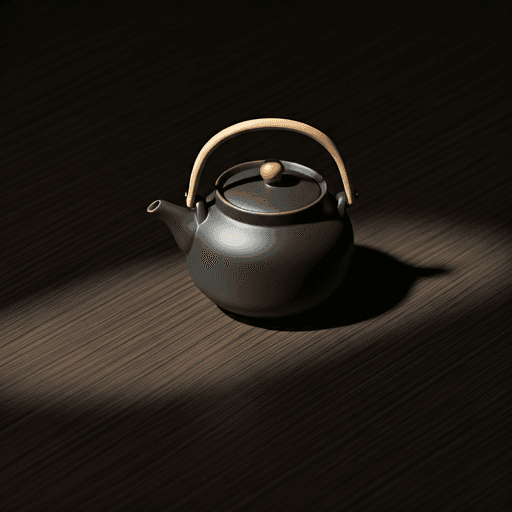
If you are wondering how much palo azul tea per day is reasonable, the honest answer is that there is no single official limit. Most people who enjoy this mild, earthy, faintly sweet, woody herbal infusion settle into about 1 to 3 cups a day, usually starting with one. Because plain palo azul tea is a caffeine-free tisane made by boiling the bark and wood of the Eysenhardtia polystachya tree, the question is really about taste and personal tolerance rather than a hard ceiling.
Palo azul, also called kidneywood or palo dulce, has a long history in Mexico and the wider region, where the wood chips are simmered in water to make a gentle golden-brown brew that famously shimmers blue when the light catches it. Below we walk through a sensible everyday range, why people tend to spread their cups out, and how to start and adjust. For the wellness and traditional-uses story, we defer to our dedicated guide on palo azul tea benefits.
How much palo azul tea per day: the short answer
There is no universally agreed cap, but a common, gentle everyday range for plain palo azul tea is about 1 to 3 cups a day. Many people begin with a single cup to see how they like the flavor and how their body responds, then add a second or third cup on days they want more. Since the pure bark-and-wood version carries no caffeine, there is no caffeine ceiling steering the amount the way there is with coffee or true tea.
That means how much is a personal question. Some sip one relaxed cup; others keep a small batch going and drink it through the day. As with any herbal infusion, more is not automatically better, and it is fine to keep your intake modest while you get used to it. Responses vary from person to person, and this is general information rather than medical advice.
Why people often spread the cups out
Palo azul tea is traditionally sipped through the day rather than downed all at once, and part of that habit is simply how it is brewed: a pot of wood chips can be topped up and re-steeped, so a mug here and a mug there is the natural rhythm. Some drinkers also find it gently and naturally water-flushing, so they prefer to keep to a few cups and avoid a large amount late in the evening. That is a light, everyday observation and not a medical claim.
Spacing cups out also helps you notice how the tea suits you. If one cup feels good, there is rarely a reason to rush to three. Keeping a couple of hours between servings, and not loading up right before bed, is the same easygoing approach many people take with other mild herbal teas such as chamomile, which we cover in our guide to how much chamomile tea per day.
The striking blue color is a taste note, not a strength meter
Palo azul's party trick is its color. Brew it and the liquid looks golden to amber in the cup, but hold it up to daylight or shine a light through it and a beautiful blue fluorescent shimmer appears. That glow comes from natural compounds in the wood and is exactly why the tea is prized and named "palo azul," meaning "blue stick."
It is worth saying clearly: the blue shimmer is a visual and taste curiosity, not a measure of how strong or how "active" your brew is. A pale batch that still glows blue is not weaker in any meaningful safety sense, and a darker one is not something to drink less of purely because of the color. Let flavor and your own comfort guide how much you pour, not the intensity of the blue.
The caffeine caveat: check what is in the blend
Plain palo azul, made only from the bark and wood, is caffeine-free. But not every product labeled palo azul is pure. Some blends and ready-to-drink versions add real green or black tea, yerba mate, or other ingredients, and any blend built on Camellia sinensis leaf would carry caffeine. If a mix contains those, the caffeine content, and therefore how late or how much you might want to drink, changes.
So before you decide on a daily amount, read the label or ask how the tea was made. If it is 100 percent kidneywood bark and wood, you are dealing with a caffeine-free tisane. If it is a blend, treat it more like a caffeinated tea for timing and quantity. We go deeper into this in our explainer on whether palo azul tea has caffeine.
Why the pure herbal version has no caffeine cap
Caffeine is what makes people cap their coffee or their black tea. Palo azul in its traditional form has none, because it is brewed from the wood of a tree rather than from the tea plant. That places it in the family of herbal tisanes: infusions made from bark, roots, flowers, seeds, or leaves other than Camellia sinensis. If the idea of a "tisane" is new, our overview of what herbal tea is lays out how these caffeine-free brews differ from true tea.
Without a caffeine load to worry about, the main things shaping how much you drink are flavor fatigue, how the tea sits with you, and simple everyday hydration sense. That is a big part of why a relaxed 1-to-3-cup range works for so many people rather than a strict numerical limit.
A light brewing note
Palo azul is usually made by boiling or simmering the wood chips or bark in water for several minutes, rather than steeping loose leaf for a minute or two like green tea. A common approach is to bring the chips and water to a boil, lower to a simmer for anywhere from about 5 to 20 minutes until the liquid takes on its golden color and blue glint, then strain. The longer or hotter the simmer, generally the deeper the flavor.
One of the friendly quirks of palo azul is that the same wood can often be re-used for more than one batch. Many people simmer a first pot, then top the chips up with fresh water for a second, lighter round. A milder second batch naturally invites a second or third cup without feeling heavy, which loops back to that spread-out, few-cups-a-day pattern.
How to start and adjust
The simplest plan is to begin with one cup and pay attention. If you like the taste and it agrees with you, you can move to two or three cups on the days you want them, ideally spaced out and not right before sleep. There is no need to escalate, and there is nothing wrong with staying at a single daily cup indefinitely. Use the rough guide below as a starting frame, remembering that the right amount varies by person.
| Rough guide | Cups per day | Notes |
|---|---|---|
| A light start | About 1 cup | A gentle way to try the flavor and see how it suits you. Varies by person. |
| A typical day | About 2 cups | A common everyday rhythm, ideally spaced out. Varies by person. |
| More than usual | About 3 cups | Toward the higher end of a common gentle range; not late at night. Varies by person. |
These are loose, everyday figures for the plain caffeine-free brew, not prescriptions. Lighter, re-steeped batches can be sipped more freely; a strong first simmer might have you happy with less.
A note on safety
Palo azul tea is enjoyed as an everyday beverage by many people, but bodies differ. If you are pregnant or breastfeeding, take any medication (for example diuretics or anything for an ongoing health condition), or have allergies or a specific medical situation, it is a good idea to check with your own healthcare provider before making palo azul a daily habit or drinking large amounts. This article is general information, responses vary from person to person, and it is not medical advice. For what the tea is traditionally valued for, we keep that focus in our separate benefits guide rather than here.