
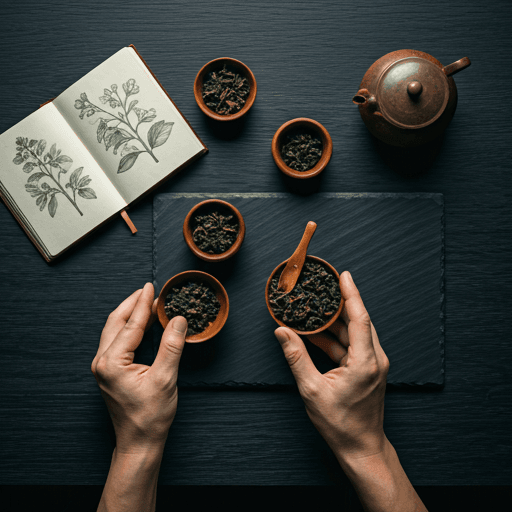
Palo azul tea is a mild, woody herbal brew made by simmering the bark and inner wood of Eysenhardtia polystachya, a small tree native to Mexico and the US Southwest that is also known as kidneywood. It is naturally caffeine-free, tastes earthy and faintly sweet, and is famous for one bit of natural magic: the amber-colored brew glows a fluorescent blue when the light hits it. Traditionally, palo azul tea has been sipped for kidney, urinary and general hydration support — though, as with most folk remedies, the modern evidence is limited and the health claims deserve healthy caution.
This guide covers what palo azul actually is, why it glows, the traditional uses people reach for it, the honest truth about the popular "detox" and "drug test" claims, how to prepare it, and who should be careful. For the wider world of caffeine-free botanical brews, see our overview of what herbal tea is.
What is palo azul tea?
Palo azul (Spanish for "blue stick") is a bark-and-wood tea rather than a leaf tea. Where green and black tea come from the leaves of Camellia sinensis, palo azul is brewed from the shredded bark, chips or shavings of the kidneywood tree — which is exactly why you will sometimes see it sold as kidney wood tea, palo dulce, or simply "palo azul." Because it contains no tea leaves and no coffee, it is naturally caffeine-free, which is part of why it is drunk freely throughout the day and often served iced.
The tree grows across arid regions of Mexico and the southwestern United States, and the drink has centuries of use in Mexican traditional medicine. The flavor is gentle and unmistakably woody, with a light, almost sweet finish — closer to a delicate infusion than a bold black tea. Most people drink it plain or with a squeeze of lime and, if they like, a little honey.
Why does palo azul glow blue?
The signature trick of palo azul is that the finished tea looks amber or golden in the cup, but flashes a striking, almost neon blue when you hold it up to sunlight or shine a light through it. This is not a dye or an additive — it is a natural fluorescence. The wood is rich in plant compounds (flavonoids and related polyphenols) that absorb light at one wavelength and re-emit it as visible blue light, a property the plant produces as part of its own defenses against environmental stress.
The effect is more pronounced with certain water and steeping conditions, and it is completely harmless. It is a good, if unscientific, sign that you have brewed with genuine palo azul bark rather than a look-alike. The same fluorescent flavonoids are the compounds researchers point to when they study the plant, but a pretty blue glow is a property of the chemistry, not proof of any health effect on its own.
Palo azul tea benefits: traditional uses and what the evidence shows
When people talk about palo azul benefits, they are usually describing how the drink has been used in folk practice rather than what has been proven in clinical trials. It is worth being clear up front: palo azul tea benefits are rooted in tradition and a handful of early laboratory and animal studies, not in large, well-controlled human research. Promising is not the same as proven. With that framing, here are the uses it is most often associated with.
Kidney and urinary comfort
The English name "kidneywood" gives away its best-known traditional role: it has long been sipped as a gentle drink to support kidney and urinary-tract comfort. This is a folk use with a long history, and some preclinical research on the plant's antioxidant compounds is consistent with the interest — but it is not a treatment for kidney disease, infection or stones, and it should never replace medical care for a urinary or kidney problem.
A mild diuretic and hydration
Palo azul is traditionally described as a gentle diuretic, meaning it may increase urination. As a caffeine-free, water-based infusion, it also simply contributes to daily fluid intake the way other herbal brews do. If you already take a prescribed diuretic or "water pill," this overlap matters — talk to your doctor before adding it. Another herbal drink with a similar diuretic reputation is dandelion tea, and the same "traditional use, limited human proof" caveat applies to both.
Joint comfort and inflammation
In traditional use, palo azul has also been reached for around joint aches and general inflammation. Laboratory studies have found antioxidant and anti-inflammatory activity in extracts of the plant, but that kind of early research does not establish that a cup of the tea meaningfully reduces inflammation or eases joint pain in people.
| Traditional use | What the evidence actually shows |
|---|---|
| Kidney & urinary support | Long folk history; some lab and animal work on the plant's compounds, but robust human trials are lacking. Not a treatment for kidney disease. |
| Gentle diuretic (more urination) | Commonly described this way in tradition; little formal human data. Overlaps with prescription diuretics, so check with a doctor. |
| Joint comfort & inflammation | Early lab studies on antioxidant compounds; not proof of benefit for pain or inflammation in people. |
| Hydration / everyday drink | As a caffeine-free, water-based brew it adds to fluid intake like any herbal tea. This is its most straightforward, real benefit. |
| Blood sugar | Some preliminary animal and laboratory research on the plant exists, but nothing establishes a safe, effective dose for people. Do not use it to manage diabetes. |
| "Detox" / passing a drug test | Folklore with no reliable scientific evidence. Do not rely on it (see below). |
The "detox" and "pass a drug test" claim, honestly
Palo azul's biggest modern reputation online is as a "detox" drink that supposedly helps someone pass a drug test. It is worth being blunt: there is no reliable scientific evidence that palo azul tea removes, masks or speeds the elimination of drugs, THC or any other substance from your body. This is folklore, not fact, and it should not be relied on for anything with real consequences.
The likely explanation for the anecdotes is mundane: palo azul is a diuretic that people drink in large volumes of water, and drinking a lot of fluid temporarily dilutes urine — the same non-specific effect behind most "detox" drinks. That is not the tea doing something special, and dilution is neither reliable nor undetectable. Your body clears substances on its own timeline, and no tea meaningfully shortens it. We unpack this pattern more generally in our look at what "detox" teas really do. Enjoy palo azul as a pleasant herbal drink; do not treat it as a loophole.
How to prepare palo azul tea
Palo azul is a decoction — because you are extracting from bark and wood rather than tender leaves, it is simmered rather than briefly steeped. A typical home method looks like this:
- Give a small handful of palo azul bark or chips a quick rinse under water to remove dust.
- Add the bark to a pot with fresh water and bring it to a boil, then reduce to a gentle simmer.
- Simmer for roughly 5 to 15 minutes, until the water turns a clear amber or reddish-gold. A longer simmer gives a stronger brew and a more obvious blue glow.
- Strain out the wood, and drink it warm — or chill it and serve over ice.
A squeeze of fresh lime is the classic finishing touch and brightens the woody flavor; a little honey suits those who prefer it sweeter. The bark can often be simmered a second time for a lighter batch. Amounts vary by personal taste and by product, so follow the guidance on the pack rather than any fixed "dose," and start light to see how the flavor suits you.
Safety, side effects and who should be careful
For most healthy adults, an occasional cup of palo azul is generally considered a low-risk herbal drink, and it is caffeine-free. But the honest picture is that rigorous human safety research is limited, so a cautious approach makes sense — especially because herbal products are loosely regulated and vary in strength and purity from one supplier to another.
- Pregnancy and breastfeeding: there is not enough reliable safety data, so it is best avoided unless your doctor or midwife specifically says otherwise.
- Kidney conditions: despite the "kidneywood" name and folk reputation, anyone with existing kidney problems should check with their doctor before drinking it, not self-treat with it.
- Diuretics and blood-sugar or blood-pressure medication: because palo azul is traditionally diuretic and has been studied for possible metabolic effects, it could in theory interact with these medicines — ask your doctor or pharmacist first.
- Any prescription medication or chronic illness: run it past a healthcare professional before making it a habit.
- General caution: stop and seek advice if you notice any unusual reaction, and do not use palo azul as a substitute for diagnosis or treatment of any medical condition.
None of this is medical advice, and nothing here is a claim that palo azul cures, treats or prevents any disease. When in doubt, talk to a qualified healthcare provider who knows your history.
The bottom line on palo azul tea
Palo azul is one of the more charming herbal drinks out there: a caffeine-free, woody Mexican brew with a genuinely eye-catching blue glow and a long history in traditional practice. Its most dependable benefit is the simplest one — it is a pleasant, hydrating cup you can drink any time of day. The kidney, urinary and anti-inflammatory uses are traditional and interesting but not yet backed by strong human evidence, and the "detox" and drug-test claims are folklore worth ignoring. Enjoy it for what it reliably is, keep the safety notes in mind, and if you like exploring caffeine-free botanicals, the tart, ruby-red world of hibiscus tea makes a natural next stop.