
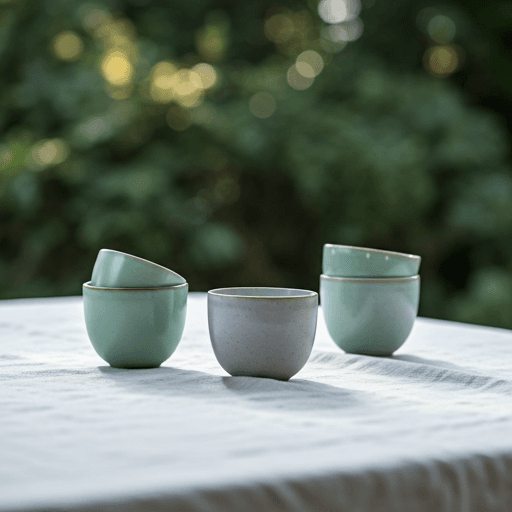
If you are wondering how much moringa tea per day is reasonable, the short and hedged answer is that there is no single official limit. Many people who enjoy this green, grassy, slightly earthy herbal infusion — brewed from the dried leaves of the moringa or drumstick tree (Moringa oleifera) — simply sip about 1 to 3 cups a day, usually starting with one and seeing how they feel. Because it is a caffeine-free tisane, most of the "how much" question comes down to personal tolerance rather than a caffeine ceiling.
How much moringa tea per day: the short answer
For most people who drink it, a gentle everyday range is roughly 1 to 3 cups a day, and the easiest place to begin is a single cup. If you are asking how many cups of moringa tea a day is normal, most regular drinkers land somewhere in that 1-to-3 band. There is no widely agreed maximum number of cups, partly because moringa tea is a herbal leaf infusion rather than a standardized product, and partly because how it sits with any given person varies. Think of 1 to 3 cups as a common comfort zone that a lot of regular drinkers settle into, not a target you have to hit or a limit you must not cross.
We are keeping this page focused on the "how much" question. The wider story of what moringa tea is thought to offer, how it tastes across different brands, and the ways people use it belongs to our dedicated moringa tea benefits guide. Here, the goal is simply to help you picture a sensible daily rhythm and adjust it to your own body.
Why there is no caffeine cap to worry about
A big reason people ask whether a certain number of cups is "too many" is caffeine. With true teas — black, green, oolong, white — the caffeine adds up cup by cup, so an upper limit makes sense. Moringa tea is different. It is not made from Camellia sinensis, the plant behind those teas; it is a herbal infusion, or tisane, made from moringa leaves. That means it is naturally caffeine-free, and there is no caffeine total quietly climbing with each mug. We dig into that in more detail in does moringa tea have caffeine, and if the whole category of leaf-and-herb infusions is new to you, what is herbal tea is a helpful primer.
Because there is no caffeine ceiling, the number of cups is mostly a matter of taste and how your body responds — much the same way people think about other mild, caffeine-free cups such as chamomile. If you like that comparison, our how much chamomile tea per day guide walks through a similar "start low, notice how you feel" approach that transfers neatly to moringa.
What a cup is like, plus a light brewing note
Moringa tea has a distinctly green, vegetal character — think steeped garden greens with an earthy, slightly grassy edge and a mild bitterness at the finish. It reads as more savory than floral, which is why many people brighten it. A typical, unfussy way to make a cup is to steep about a teaspoon of dried moringa leaf, or a small amount of moringa powder, in water that has just come off the boil — roughly 80 to 90 C — for around 3 to 5 minutes, then strain. A squeeze of lemon or a little honey softens the grassy note nicely.
Treat that as a starting point rather than a rigid recipe. A shorter steep or slightly cooler water gives a lighter, milder cup; a longer steep pulls out more of the earthy, bitter side. Powder tends to make a fuller, more intense drink than loose leaf for the same volume, so if you use powder you may naturally want a little less of it. Steep strength matters here as much as cup count: a strong cup and a light cup are not really the same "amount," even if the number on the mug is identical.
Cup size plays into this too. A small teacup and a large mug are both counted as "one cup" in casual conversation, yet they can hold quite different volumes, so two people describing the same daily number may be drinking noticeably different amounts. When you are gauging your own limit, it is worth thinking about the actual volume and strength together rather than the headcount of mugs alone. Many people find a lighter brew simply makes moringa easier to enjoy more often.
How to start and adjust
The simplest approach is to begin with one cup a day for a few days and pay attention to how you feel. If you enjoy it and it agrees with you, you might add a second cup, and some regular drinkers comfortably reach three. There is no rush to climb — plenty of people are perfectly content at a single cup, and that is a completely valid place to stay.
A couple of practical notes on finding your own moringa tea daily amount. Some people report a mild laxative or loosening effect when they drink larger amounts of moringa, especially when they are new to it; this is commonly mentioned rather than universal, and it tends to show up more with stronger or more frequent cups. If you notice anything like that, easing back on the number or the strength of your cups is a reasonable response. Spreading cups across the day, instead of drinking several close together, also tends to feel gentler. Responses vary a lot from person to person, so let your own comfort be the guide rather than any fixed number.
A rough daily guide
There is no official moringa tea daily amount, so the table below is a loose, hedged sketch of how people tend to talk about their intake — not a prescription. Every person is different, and cup sizes and steep strengths vary, so treat these as flexible bands rather than firm rules.
| Rough guide | Cups a day | Notes |
|---|---|---|
| A light start | About 1 cup | A gentle way to begin and see how it sits with you; varies by person. |
| A typical day | About 2 cups | A common everyday rhythm for regular drinkers; often one earlier, one later. |
| More than usual | About 3 cups | Toward the upper end of the common range; some people notice a mild loosening effect around here. |
Who should be more cautious
A few people have good reason to be more careful, and this is where it helps to check with your own healthcare provider rather than lean on a general guide. If you are pregnant, it is often suggested to be especially cautious with moringa — particularly the root, bark and concentrated extracts, which are stronger and are treated differently from the mild leaf tea — so this is a clear "ask first" situation. The same goes if you are breastfeeding, taking any regular medication, or managing a health condition, since a herbal infusion can interact with individual circumstances in ways a one-size guide simply cannot predict.
None of this is a reason to worry if you just enjoy a cup or two. It is only a reminder that the honest answer to how often to drink moringa tea depends on the person. This article is general information, not medical advice, responses vary, and if you have any specific health question the best next step is a short conversation with a qualified healthcare professional who knows your situation.