
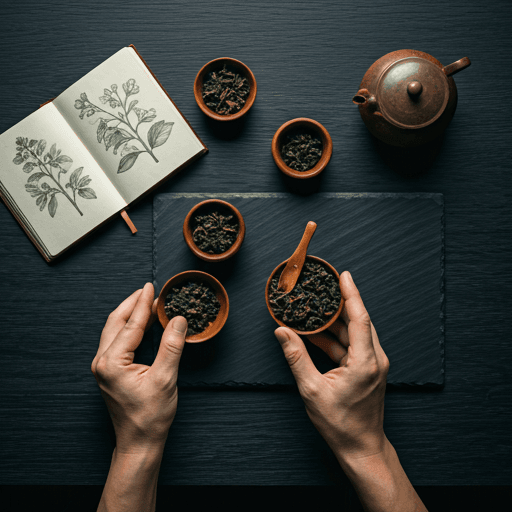
Holy basil tea — better known as tulsi tea — is a caffeine-free herbal tea made from the leaves of the holy basil plant (Ocimum tenuiflorum). In Ayurvedic tradition it is prized as an "adaptogen," a plant traditionally used to help the body cope with stress. This guide covers the traditionally cited tulsi tea benefits, what the tea tastes like, how to brew it, and who should be cautious. It is a plain-language explainer, not medical advice.
What is holy basil tea?
Holy basil tea is a herbal infusion — a herbal tea made from a plant other than the true tea bush, Camellia sinensis. Because it contains no leaves of the tea plant, it is naturally caffeine-free. The plant itself, holy basil, is native to the Indian subcontinent and is a sacred plant in Hindu and Ayurvedic tradition, where it is called tulsi and is often grown in courtyards and used in daily ritual.
Botanically, holy basil (Ocimum tenuiflorum, also written Ocimum sanctum) is a cousin of the sweet basil used in cooking, but it has a stronger, more medicinal aroma. Several cultivars are grown, and you will sometimes see them named on tea packaging:
- Rama (green-leaf) tulsi — the mildest and most common, clove-like and gently peppery.
- Krishna (purple-leaf) tulsi — a darker, more pungent, peppery leaf.
- Vana (wild) tulsi — a wilder relative with a lemony, aromatic character.
Many packaged tulsi teas blend two or three of these together, and some add other herbs and spices. If you enjoy that layered style, our overview of tea and herb blends explains how such infusions are put together.
Holy basil tea benefits: what tradition and early research say
The reputation of tulsi rests on centuries of Ayurvedic use plus a small but growing body of modern study. It is important to keep expectations grounded: most human trials are small, short, and preliminary. So the honest way to describe the holy basil tea benefits is as things the herb is traditionally used for and that early research suggests — not as guaranteed effects. If you are managing a health condition, treat the notes below as background and talk to a qualified professional.
Stress and calm
This is the headline claim, and the reason people reach for holy basil tea for stress. As an adaptogen, tulsi is traditionally used to help the body stay steady under physical and mental pressure. Some small clinical studies have reported reductions in self-rated stress and anxiety symptoms, though researchers consistently call for larger, better trials. Practically, a warm, aromatic, caffeine-free cup is also a calming ritual in its own right — part of why it fits so naturally into an unwinding routine.
Blood-sugar support
Several small studies suggest tulsi may modestly lower fasting and post-meal blood sugar, which is one of the more consistently reported findings. This is genuinely useful context, but it is also a reason for caution rather than a reason to self-treat: if you already take diabetes medication, an added blood-sugar-lowering effect can stack. See the cautions section below.
Immune and respiratory comfort
In traditional use, tulsi is taken to support the immune system and to soothe coughs and congestion, which is why it appears in so many "immunity" and cold-season blends. Early laboratory and small human studies point to immune-modulating and anti-inflammatory activity, but the evidence in everyday drinkers is limited. Think of a comforting cup as a pleasant support, not a cure.
Antioxidants
Like many aromatic herbs, holy basil contains antioxidant plant compounds (including eugenol, the same aromatic molecule found in cloves). A cup contributes these compounds along with hydration and zero caffeine, which is a sensible everyday reason to enjoy it even setting the bigger claims aside.
Tulsi tea benefits at a glance
| Traditionally used for | What early research suggests | Note |
|---|---|---|
| Stress and calm (its main reputation) | Small trials report lower self-rated stress and anxiety | Evidence is early; the ritual itself is calming |
| Blood-sugar balance | May modestly lower fasting and post-meal glucose | Can add to diabetes medication — see cautions |
| Immune and respiratory comfort | Early signs of immune-modulating, anti-inflammatory activity | Comfort, not a cure; see a doctor if you are unwell |
| Everyday antioxidants | Contains antioxidant compounds such as eugenol | Caffeine-free and hydrating |
What holy basil tea tastes like
Tulsi has a distinctive flavor that surprises people expecting culinary basil. It is warm and clove-like, with a peppery bite, a cooling minty edge, and a faint natural sweetness on the finish. Purple (Krishna) tulsi leans more peppery; green (Rama) and wild (Vana) types are softer and more floral or lemony. It is aromatic enough to drink plain, and it also takes well to a squeeze of lemon or a little honey.
How to brew holy basil tea
You can brew tulsi from fresh leaves, dried loose leaf, or tea bags. Because the flavor lives in volatile aromatic oils, the single most useful tip is to keep the cup or pot covered while it steeps so those oils do not escape as steam.
- Measure. Use about 1 heaping teaspoon of dried leaf, or 5 to 7 lightly torn fresh leaves, per cup (about 8 oz / 240 ml).
- Heat the water. Bring water to a boil, then let it settle for a moment to just off the boil (about 200°F / 93°C). Tulsi is forgiving, so boiling water is fine too.
- Steep, covered. Pour over the leaves, cover, and steep 5 to 7 minutes (up to 10 for a stronger cup). Longer steeping deepens the flavor without much bitterness.
- Strain and finish. Strain, then drink it plain or add lemon or honey to taste.
- Serve hot or iced. For iced tulsi, brew it stronger and pour over ice, or make a cold brew by steeping leaves in cold water in the fridge for several hours.
Quick brewing reference
| Form | Amount per cup (8 oz / 240 ml) | Water | Steep (covered) |
|---|---|---|---|
| Dried loose leaf | 1 heaping tsp | ~200°F / 93°C | 5–7 min (up to 10) |
| Fresh leaves | 5–7 leaves, lightly torn | ~200°F / 93°C | 5–8 min |
| Tea bag | 1 bag | Off-the-boil | Per pack, usually 3–5 min |
A pinch of honey suits tulsi's clove-and-mint character well. Remember that honey is still a sugar, and it should never be given to infants under one year old.
Cautions: who should be careful with tulsi tea
For most healthy adults, a cup or two of tulsi tea is a gentle, caffeine-free drink. That said, holy basil is an active herb, so a few groups should be careful and check with a professional first:
- Diabetes or blood-sugar medication. Because tulsi may lower blood sugar, drinking a lot of it alongside glucose-lowering medication could push your levels too low. Monitor and speak to your doctor.
- Pregnancy and trying to conceive. Holy basil may affect fertility and is traditionally avoided during pregnancy and when trying to conceive. If you are pregnant, planning to be, or breastfeeding, check with a professional before drinking it regularly.
- Blood thinners. Tulsi may have a mild blood-thinning effect, so it could interact with anticoagulant or antiplatelet medication, or matter before surgery. Ask your doctor if this applies to you.
- Ongoing symptoms. Tulsi tea is a comfort, not a treatment. If you are unwell — a persistent cough, fever, or any symptom that does not settle — see a healthcare professional rather than relying on tea.
Where tulsi fits among calming herbs
Holy basil is one of a family of herbs people reach for to wind down. If it is the calm-and-stress angle you care about, it sits alongside our guide to herbal teas for relaxation, which covers chamomile, lemon balm, lavender and more. And if you are drawn to tulsi specifically as an adaptogen, its best-known peer is ashwagandha — a different, root-based adaptogen with its own traditions and cautions. Trying a few and noticing which ritual you actually look forward to is often the most honest way to choose.
The bottom line
Holy basil tea, or tulsi, is an easy, aromatic, caffeine-free herbal tea with a long heritage and a modest but real base of early research behind its calming reputation. Keep the claims in proportion, cover the cup while it steeps, mind the pregnancy, blood-sugar and blood-thinner cautions, and enjoy it for what it plainly is: a warm, clove-scented moment of calm in the day. From here, it is worth exploring the wider world of herbal teas to find the flavors and rituals that suit you.