
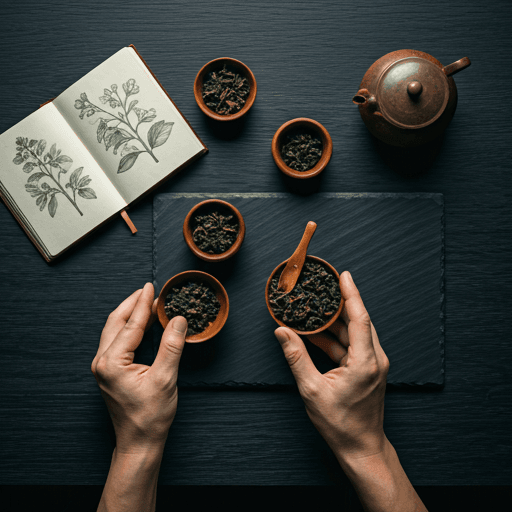
When people talk about tea and herbs, they are usually describing one of two things: a true tea base flavored with botanicals, or a caffeine-free herbal infusion built entirely from plants other than the tea bush. The difference matters because it changes the caffeine, the flavor, and how you blend. This guide explains what counts as "tea," what counts as a herb or tisane, and how blenders combine the two into the cups you buy off a shelf or mix at home.
Tea and herbs: what each word actually means
Strictly speaking, tea is one plant: Camellia sinensis, the evergreen shrub whose leaves give us green, black, white, oolong, and pu-erh. Everything else — chamomile flowers, peppermint leaves, rooibos, hibiscus, ginger root — is a herb, fruit, flower, or spice. A drink brewed from those non-tea plants is technically a tisane (the French word for a herbal infusion), even though almost everyone calls it "herbal tea" on the label and in conversation.
That distinction is the key to understanding blends. True tea always contains some caffeine. A tisane may have caffeine (yerba mate does) or none at all — chamomile, rooibos, and peppermint are naturally caffeine-free. So when you read "tea and herbs" on a packet, the first job is to figure out whether there is real tea leaf in the base or not. The ingredient list settles it: if Camellia sinensis is in there, expect caffeine; if it is all herbs, flowers, roots, and fruit, you are holding a tisane.
| Type | Made from | Caffeine | Common examples |
|---|---|---|---|
| True tea | Camellia sinensis leaves | Always some | Green, black, white, oolong |
| Flavored true tea | Tea leaf + herbs, oils, or fruit | Yes (from the tea) | Earl Grey, masala chai, jasmine green |
| Herbal tisane | Any non-tea plant | Usually none | Chamomile, peppermint, rooibos, hibiscus |
How a tea base meets the herbs
Most commercial tea blends follow a simple logic. There is a base, and there are additions. The base sets the body, color, and caffeine level; the additions set the character. Get those two layers clear in your head and almost any blend on the shelf becomes easy to read.
Blends built on a true-tea base
These keep real tea leaf as the foundation and layer botanicals on top. The classic example is Earl Grey: a black tea base scented with oil from bergamot, a fragrant citrus. Masala chai is another — a strong black tea base simmered with spices like cardamom, cinnamon, ginger, and clove. Jasmine tea takes green tea and lets it absorb the scent of jasmine flowers. In all of these, you still get caffeine because the base is genuine tea.
Blends built on a caffeine-free herbal base
Here there is no tea leaf at all. The base is a mild, drinkable herb that other ingredients can sit on. Rooibos, a reddish bush from South Africa, is a favorite base because it is naturally sweet, smooth, and slightly earthy, with zero caffeine, so it pairs with almost anything. Sleep blends, fruit infusions, and digestive blends usually work this way: a soft base plus a few supporting and accent herbs. These are the true herbal infusions, and they are what most people reach for in the evening.
How blends are actually flavored
Blenders have three broad ways to put flavor into a mix, and knowing them helps you copy the effect at home.
- Whole-ingredient blending. The flavor comes from real dried plant matter mixed straight into the leaf — ginger pieces, hibiscus petals, dried apple, cinnamon bark. This is the most transparent style; what you see in the tin is what you taste.
- Scenting. The base absorbs aroma from another ingredient laid alongside it, then the two are often separated. Traditional jasmine green tea is made this way, with fresh jasmine blossoms layered against the leaf over several nights.
- Flavoring with oils or extracts. A measured amount of natural or nature-identical flavor oil is tossed through the leaf. Bergamot oil on a black tea base gives Earl Grey its signature lift; vanilla, citrus, and berry blends often use this method.
None of these is "better" by default. Whole-ingredient blends tend to taste rounder and let you see every component; oil-flavored blends can deliver a cleaner, more concentrated top note.
The herbs and botanicals that do the work
A handful of plants appear again and again in herbal blends because they taste good and play well with others. Knowing their roles makes any ingredient list easier to read.
- Mint (peppermint, spearmint) — cool, bright, and refreshing; a tiny amount lifts a whole blend.
- Chamomile — soft, apple-like flowers that anchor most sleep and calming blends. More in chamomile tea benefits.
- Hibiscus — tart, ruby-red petals that bring sharpness and color; powerful, so it is used in small doses.
- Ginger — warm and spicy; a natural fit for digestive and chai-style blends.
- Lemongrass — citrusy and clean; brightens fruit and green blends without overpowering them.
- Rooibos — the smooth, caffeine-free workhorse base for countless herbal mixes.
Beyond these, blenders reach for rose petals, lavender, fennel, cinnamon, orange peel, lemon balm, rosehip, and dried fruit. Each contributes either a base note, a supporting body, or a top accent — and the art is deciding which job each ingredient is there to do.
Classic blend styles, decoded
Once you see blends as base-plus-additions, the famous ones make sense:
- Earl Grey — black tea + bergamot oil. A flavored true tea.
- Masala chai — black tea + warming spices. A flavored true tea, often brewed with milk.
- Herbal sleep blends — chamomile or rooibos base + lemon balm, lavender, or passionflower. A caffeine-free tisane.
- Fruit infusions — hibiscus and rosehip base + dried apple, berries, and orange peel. Tart, bright, and caffeine-free.
- Detox or digestive blends — ginger, fennel, peppermint, and lemongrass, usually on a mild herbal base.
Blending tea and herbs at home
Blending tea and herbs yourself is straightforward once you think in proportions rather than recipes. Professionals talk about a base, a support, and an accent, and a beginner-friendly starting point is roughly three parts base to one part support to one part accent.
A simple home ratio
- 60-70% base — the dominant, easy-drinking note: rooibos, chamomile, peppermint, or a true tea if you want caffeine.
- 20-30% support — a complementary herb that adds body without competing: lemongrass, lemon balm, rose, or fennel.
- 5-10% accent — a strong flavor used sparingly: ginger, cinnamon, hibiscus, or lavender.
Practical tips
- Let one note dominate. A blend with five equal ingredients usually tastes muddy. Pick a clear lead and let the rest support it.
- Use dried ingredients. Dry herbs blend evenly, store well, and resist mold. Fresh herbs are lovely brewed fresh but do not keep in a tin.
- Go light on the powerhouses. Hibiscus, lavender, and clove can take over fast. Add a pinch, taste, then adjust.
- Match the steep. Hardy roots and barks (ginger, cinnamon, rooibos) shrug off boiling water, while delicate flowers and green tea prefer cooler water and a shorter steep — try to group ingredients that brew alike.
- Brew, taste, tweak. Mix a small test batch, steep about one teaspoon per cup of just-off-the-boil water for five minutes, and refine before scaling up.
- Store airtight and dark. A sealed jar or tin away from light and moisture keeps a blend fresh for months.
If you are blending true tea with delicate herbs, remember that green and white teas prefer cooler water and shorter steeps than black tea, so pair them with herbs that are happy with a gentler brew. When in doubt, write down what you used — a blend you cannot reproduce is only ever a lucky accident.
Where to go next
The line between tea and herbs is really just the line between one plant and all the others — and a good blend lives on both sides of it. Once you can spot the base and read the additions, every packet on the shelf becomes legible, and your own jar of leftover herbs starts to look like a blend waiting to happen. To go deeper, browse the herbal tea types guide, or see how the true teas are categorized in types of tea explained.