
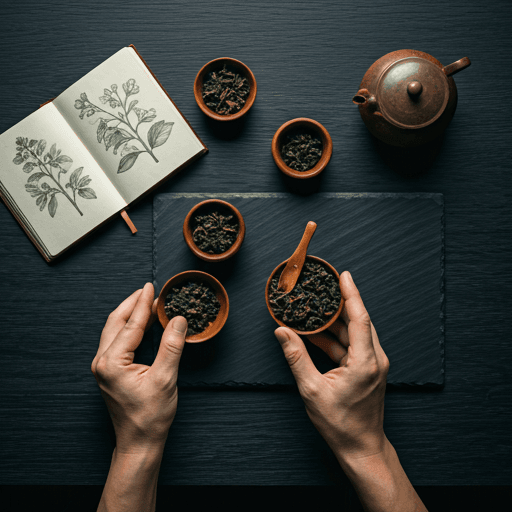
Gunpowder tea vs sencha comes down to two different green-tea traditions: gunpowder is a Chinese green tea whose leaves are rolled into tight little pellets, giving a bold, brisk, slightly smoky cup, while sencha is Japan's everyday steamed green tea, sold as flat, needle-like leaves, with a fresh, grassy, umami taste. Both are unoxidized green teas, so they share a family resemblance, but they are made in different countries and by different methods, and they taste noticeably different in the cup. If you want a strong, forgiving green that also anchors a mint tea, gunpowder is your pick; if you want a delicate, vegetal daily cup, reach for sencha.
Gunpowder tea vs sencha at a glance
The short version of sencha vs gunpowder tea is origin and processing. Gunpowder is a pan-fired Chinese green rolled into shiny pellets that brews strong and a touch smoky. Sencha is a steamed Japanese green, shaped into flat needles, that brews bright and grassy. The table below lays out the main points before we dig into each one.
| Attribute | Gunpowder | Sencha |
|---|---|---|
| Origin | China | Japan |
| Leaf shape | Tight, rolled pellets that unfurl when steeped | Flat, thin, needle-like leaves |
| Key processing step | Pan-fired (heated in a dry pan or drum), then rolled | Steamed, then rolled and dried into needles |
| Flavor | Bold, brisk, slightly smoky, can turn bitter if over-steeped | Fresh, grassy, sweet, umami, mildly astringent |
| Body/strength | Stronger, more robust | Lighter, more delicate |
| Typical water temp | More forgiving; tolerates slightly hotter water | Cooler, around 70-80 C, to avoid bitterness (varies) |
| Caffeine | Moderate green-tea level (varies) | Moderate green-tea level (varies) |
| Classic use | Base of Moroccan-style mint tea | Everyday Japanese green tea, plain |
What gunpowder tea is
Gunpowder is a Chinese green tea whose leaves are rolled into small, shiny pellets, said to resemble grains of gunpowder, which is where the name comes from. The tight rolling helps protect the leaf and keeps the tea fresh longer than looser styles, and it brews into a strong, brisk, slightly smoky and bold cup. It is also the traditional base for Moroccan-style mint tea, where the sturdy, brisk flavor stands up to fresh mint and sugar. That resilience and punch are exactly why gunpowder is often chosen for blending rather than sipped delicately on its own. For a full walk through its history, grades and rolling, see our guide to gunpowder green tea explained; here we are focused on how it stacks up against sencha.
What sencha is
Sencha is Japan's most popular green tea, and the one most households drink every day. Unlike gunpowder, it is steamed rather than pan-fired, then rolled and dried into flat, needle-shaped leaves. Steaming locks in a bright green color and a fresh, grassy, umami character with a mild astringency, making it lighter and more vegetal than a Chinese pan-fired green. It sits within a wider family of Japanese greens, from shaded gyokuro to roasted hojicha, so if you want the bigger picture, browse our overview of Japanese tea types. For the specifics of how sencha itself is grown and graded, see what sencha green tea is; in this comparison we assume you already know the basics and want the contrast.
The key difference: pan-fired pellets vs steamed leaves
The single biggest difference between gunpowder tea and sencha is how the leaf is heated to stop oxidation. Gunpowder is pan-fired, a dry-heat method common in China, which gives it that toasty, slightly smoky, bolder edge. Sencha is steamed, a wet-heat method typical of Japan, which preserves a fresher, greener, more marine and grassy profile. Add the shape on top of that — tight Chinese pellets versus flat Japanese needles — and you get two teas that look, smell and taste quite different despite both being green. In one line: Chinese pan-fired rolled pellets give you bold and smoky; Japanese steamed flat leaves give you fresh and grassy.
Processing: rolling and pan-firing vs steaming and shaping
Processing is really the whole story here, because it is what makes them taste so different. For gunpowder, freshly picked leaves are withered, then pan-fired to halt oxidation, then rolled tightly into pellets and dried. The heat of pan-firing develops those roasty, brisk notes, and the pellet shape concentrates flavor so the tea releases slowly and strongly as the balls unfurl. For sencha, the leaves are steamed within hours of picking, then rolled and shaped into thin needles and dried. Steaming keeps the leaf vivid green and preserves delicate grassy and umami compounds rather than toasting them. Same starting plant, two philosophies of heat, two very different cups.
Taste: bold and smoky vs fresh and grassy
If you brew them side by side, gunpowder is the stronger, brisker cup, with a fuller body, a slight smokiness and a robust finish. Push it too long or too hot and it can turn bitter, which is part of why it works so well cut with mint and sweetened. Sencha is greener, sweeter and more vegetal, with a savory umami depth and a clean, refreshing edge; over-steeping it brings out sharp astringency rather than smoke. So when people ask whether gunpowder is punchy and sencha is subtle, that is roughly right: gunpowder leads with strength and roast, sencha with freshness and umami. Neither is objectively better, they simply aim at different things.
Shape and re-steeping
Shape affects more than looks. Gunpowder's tight pellets take a moment to open, then release flavor steadily, and because each ball unfurls into a fuller leaf, quality gunpowder can often be re-steeped a few times, with later infusions tasting mellower and less brisk. Sencha's already-open needles give up their flavor quickly, so it tends to brew fast and is usually good for two or three short infusions before the umami fades. If you enjoy watching leaves unfurl and getting several cups from one measure, the pellet format is fun to work with. Sencha, by contrast, rewards quick, attentive brewing. Both are worlds away from a blended, roasty green like genmaicha, which we compare with sencha separately.
Brewing gunpowder or sencha green tea
Both are green teas, so both prefer cooler-than-boiling water and shorter steeps than black tea, but they forgive different amounts of error. Gunpowder is the more forgiving of the two: it can take slightly hotter water and a short steep, which is one reason it is a good starter green and travels well in blends. Sencha is fussier and likes cooler water, often around 70-80 C, with a short steep of roughly one to two minutes, so it does not turn bitter or sharply astringent (these numbers are rough and vary by leaf and taste, so adjust to your own cup). A practical rule: if you tend to brew too hot or too long, gunpowder will punish you less than sencha will. Whichever you choose, use fresh, filtered water and taste as you go.
Caffeine in gunpowder tea and sencha
Both sit in the moderate range typical of green tea, and neither is dramatically higher than the other as a rule. Actual caffeine depends on the specific leaf, how much you use, water temperature and steep time, so any single number is only a rough guide and can shift from cup to cup and brand to brand. Hotter water and longer steeps pull out more caffeine, which means your brewing habits often matter more than which tea you picked. If caffeine sensitivity, sleep, pregnancy or medications are a concern for you, responses vary and this is not medical advice — it is best to check with your own healthcare provider about what is right for you.
Which should you choose?
Choose gunpowder if you want a bold, brisk, slightly smoky green that holds up to mint, sugar or a longer steep, and that stores and re-steeps well — it is the classic pick for Moroccan-style mint tea and for anyone who finds delicate greens too faint. Choose sencha if you want a fresh, grassy, umami daily cup and you do not mind brewing it a little more carefully with cooler water. Many tea drinkers keep both on the shelf: gunpowder for something robust or for blending, sencha for a clean, everyday green. So the honest answer to gunpowder or sencha green tea is that it depends on the mood and the moment, not on one being superior.
Gunpowder and sencha make a great pair precisely because they show two sides of the green-tea world — China's rolled, pan-fired boldness and Japan's steamed, needle-leaf freshness. Try them side by side, brew each to its own comfort zone, and let your palate decide which one earns a permanent spot in your rotation.