
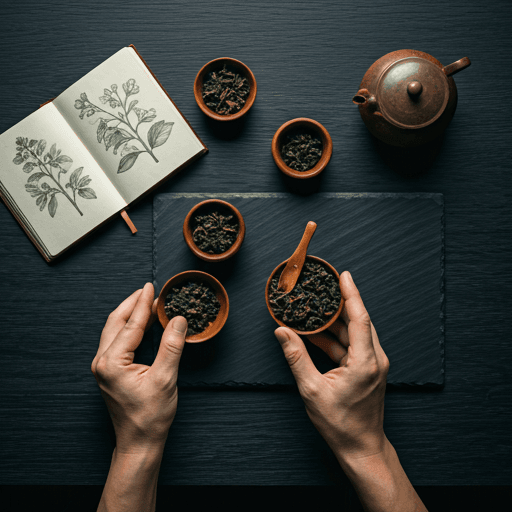
The quickest way to settle green tea vs herbal tea is to remember one fact: only one of them is technically tea. Green tea comes from the tea plant, Camellia sinensis, so it naturally carries caffeine and the plant's antioxidants. Herbal tea is a catch-all name for infusions made from almost anything else — flowers, leaves, roots, seeds, spices or fruit — and most of them are naturally caffeine-free.
Green tea vs herbal tea: the short answer
Put simply, green tea is a true tea and herbal tea usually is not. Green tea is made from the lightly processed, unoxidized leaves of the tea plant. Because those leaves are steamed or pan-fired soon after picking rather than left to oxidize, they keep their green color, their fresh vegetal flavor and a moderate amount of caffeine. If you want the deeper story on what the leaf brings to the cup, our guide to green tea covers it.
Herbal tea, by contrast, is really a tisane — an infusion of plants other than the tea bush. Chamomile flowers, peppermint leaves, rooibos, ginger root, hibiscus and dried fruit are all common bases, and because none of them come from Camellia sinensis, most herbal teas carry no caffeine at all. For the full picture of what counts as a herbal tea, see our explainer on what herbal tea is. Whichever way you frame it — green tea vs herbal tea, or herbal tea vs green tea — the split is the same.
The source plant: Camellia sinensis vs a world of botanicals
The single biggest difference between green tea and herbal tea is where the leaves in your cup come from.
Green tea is one of the main styles of true tea, alongside black, white and oolong. All of them start with the same species, Camellia sinensis. What separates them is processing: green tea is heated quickly to halt oxidation, which is why it stays green and tastes fresh rather than malty or dark. So green, black, white and oolong are siblings from one plant, just handled differently.
Herbal tea has no single plant behind it. It is an umbrella term for whatever else people steep in hot water. A chamomile tea is dried chamomile flowers; a peppermint tea is peppermint leaves; rooibos comes from a South African shrub; ginger tea is sliced root; hibiscus is dried flower petals. Some blends stack several of these together. Because the label herbal tea describes a method — steeping a plant in hot water — rather than one specific leaf, the category is almost endless.
The caffeine difference
Caffeine is where the two part ways most clearly. Green tea naturally contains caffeine because the tea plant produces it, and a typical cup lands somewhere in the moderate range — generally less than a mug of brewed coffee. The exact figure shifts with the leaf, the water temperature and how long you steep, so treat any single number as a ballpark rather than a promise. We break the ranges down in our guide to green tea caffeine content.
Most herbal teas, on the other hand, are naturally caffeine-free, because the plants they are made from simply do not contain caffeine. Chamomile, peppermint, rooibos, ginger and fruit blends all brew a cup with essentially none. There are a couple of exceptions worth knowing — yerba mate and guayusa are often sold in the herbal aisle but do contain caffeine — so it pays to read the box. Our overview of caffeine-free tea explains where those lines fall.
That contrast is the practical reason many people keep both on the shelf: green tea for a gentle daytime lift, herbal for a cup they can drink late without it touching their sleep. Responses to caffeine vary from person to person, though, and this is general information rather than medical advice — if caffeine affects your sleep, pregnancy, medication or anxiety, ask your own healthcare provider.
Green tea vs herbal tea at a glance
| Feature | Green tea | Herbal tea (tisane) |
|---|---|---|
| Source plant | Camellia sinensis, lightly processed and unoxidized | Any other plant — flowers, leaves, roots, seeds, spices or fruit |
| Caffeine | Naturally contains a moderate amount | Usually naturally caffeine-free (a few exceptions) |
| Typical flavor | Grassy, vegetal, sometimes nutty or toasted | Hugely varied — floral, minty, spicy, fruity or earthy |
| Brew temperature | Cooler, off-boil water around 70-80 C (160-175 F) | Often a full boil, around 95-100 C (205-212 F) |
Flavor and brewing: two very different cups
Green tea tastes green in the literal sense — grassy and vegetal, sometimes with a nutty, toasted or faintly marine note depending on the origin and style. That delicacy is also its weak point at the kettle. Green tea leaves scorch easily, and boiling water pulls out harsh, bitter tannins. The usual fix is cooler water, around 70-80 C (160-175 F), and a short steep of roughly one to three minutes. Let it sit too long or brew it too hot and even good leaf turns astringent.
Herbal teas are far more forgiving, mostly because there is no delicate green leaf to scorch. Tougher material like roots, bark, dried fruit and hardy flowers actually needs heat to release its flavor, so most herbal blends are happy with water at or near a full boil, around 95-100 C (205-212 F), and a longer steep of five minutes or more. A chamomile or rooibos left to sit simply gets deeper, not bitter. Because the herbal category is so wide, though, it is always worth a glance at the packet — a delicate green-scented blend may want gentler treatment than a robust spice one.
When people reach for each
The choice often comes down to time of day and what you want from the cup. Green tea suits the morning and early afternoon, when its light caffeine gives a gentle lift without the jolt of coffee, and its clean, vegetal taste pairs well with food. It is the cup for a steady, mild pick-me-up.
Herbal teas tend to come out later. A caffeine-free chamomile, peppermint or rooibos is an easy evening or bedtime drink, and the sheer range of flavors means there is usually one to match a mood — bright hibiscus, warming ginger, cooling mint. People who are cutting back on caffeine, or who simply want more cups across the day, lean on herbal blends for exactly that flexibility.
When a blend is both
The neat green-versus-herbal line blurs once you get into blends, and that is where the caffeine picture can catch people out. A jasmine green tea, or a mint-scented green tea in the Moroccan style, is still built on green tea leaves, so it still contains caffeine even though it smells floral or herbal. The added flower or herb is there for aroma, not to replace the tea.
It runs the other way too. A sleep, calm or wellness blend sold as a herbal tea may be entirely caffeine-free, or it may quietly include green tea, white tea or added mate for a lift. The only reliable way to know is to read the ingredient list rather than trust the name on the front. When a blend lists Camellia sinensis — green, white, black or oolong — assume there is caffeine in the cup, and hedge accordingly. As before, responses vary and this is general information, not medical advice.
So the honest answer to whether green tea is a herbal tea is no. Green tea is a true tea from the Camellia sinensis plant with natural caffeine; herbal tea is a tisane made from other botanicals and is usually caffeine-free. Knowing which is which tells you what to expect in the cup, when to drink it and how hot to brew it.