
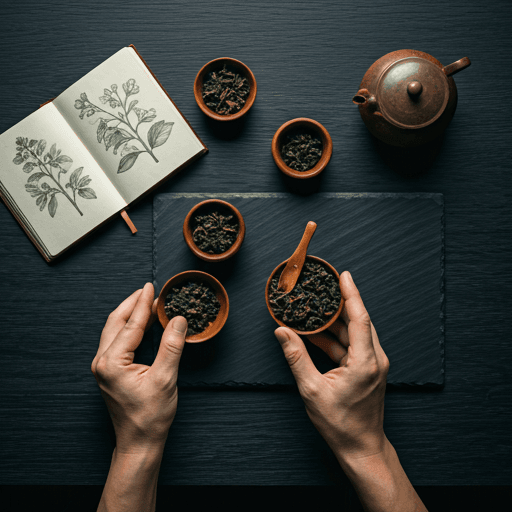
Green tea caffeine is real but gentle: a typical 8 oz (about 240 ml) cup holds roughly 20 to 45 mg of caffeine, most often somewhere around 25 to 35 mg. Depending on the tea and how you brew it, a single cup can run anywhere from about 15 mg up to roughly 70 mg. Either way, that is clearly less than a same-size cup of coffee (around 80 to 100 mg), and usually a little less than black tea.
Those are averages, not guarantees. The exact amount of caffeine in green tea depends on the type of leaf, how much you use, the water temperature, and how long you steep. Below is the full picture: a comparison table, why matcha breaks the pattern, and simple ways to nudge your cup up or down.
How much green tea caffeine is in a cup?
Green tea comes from the leaves of Camellia sinensis, the same plant behind black, white and oolong tea. Understanding green tea caffeine content starts there: all of those leaves contain caffeine naturally, so every real tea has some. Green tea just tends to sit on the lower-to-middle part of the tea range once it is in your cup.
The honest answer to "how much caffeine in green tea" is a range, not a single figure. A standard 8 oz (240 ml) cup usually lands between 20 and 45 mg, and around 25 to 35 mg is the number most often cited for an everyday sencha or a green tea bag steeped normally. Shaded and premium leaf can push higher; twiggy or roasted styles come in lower. Because the leaf, the dose and the brew all vary, treat any headline figure as a ballpark rather than a lab reading.
Green tea vs coffee caffeine, and how black tea and matcha compare
Here is the practical comparison. The green tea vs coffee caffeine gap is the one most people care about, and it is large: coffee typically carries two to four times the caffeine of a same-size cup of green tea. Matcha is the outlier that can rival black tea, and we explain why just below.
| Drink (per ~8 oz / 240 ml) | Rough caffeine | Notes |
|---|---|---|
| Green tea (brewed) | ~20-45 mg (often 25-35) | Varies with leaf, temperature and steep time |
| Matcha | ~40-70+ mg | Higher because you whisk and drink the whole powdered leaf |
| Black tea | ~40-70 mg | Usually a little higher than green |
| Oolong tea | ~30-50 mg | Sits between green and black |
| White tea | ~15-30 mg | Wide range; often on the lower side |
| Decaf green tea | ~2-5 mg | Caffeine removed, not zero |
| Herbal "tea" (chamomile, peppermint, rooibos) | ~0 mg | Not from the tea plant, so naturally caffeine-free |
| Brewed coffee (for reference) | ~80-100 mg | Clearly higher than any everyday tea |
So green tea gives you roughly a quarter to a half of coffee's caffeine, and typically a touch less than black tea. For a broader line-up that includes soda, energy drinks and espresso, see our guide to caffeine in drinks compared. For the tea family as a whole, does tea contain caffeine? covers the general picture.
Why matcha has more caffeine than steeped green tea
Matcha is still green tea, but it delivers more caffeine for a simple reason: you drink the leaf itself. With ordinary green tea you steep the leaves and pour off the liquid, so you only get the caffeine that dissolves into the water. With matcha you whisk finely ground green tea powder straight into water or milk and swallow the whole thing, so you consume far more of the leaf's caffeine per serving. That is why a bowl of matcha commonly lands around 40 to 70 mg or more, closer to black tea than to a light cup of sencha. The powdered whole-leaf format also carries plenty of L-theanine, which shapes how that caffeine feels.
What changes the caffeine in green tea
If two cups of green tea can differ by 40 mg or more, it is because a handful of factors are doing the work. These are the levers, roughly in order of impact:
- The tea itself. Shade-grown teas such as matcha and gyokuro are grown in reduced light, which raises caffeine, so they are among the strongest greens. Twiggy or roasted styles are the mildest: kukicha is made largely from stems, while hojicha and bancha are roasted or made from older leaves, all of which means less caffeine. A young, tippy leaf carries more than a coarse, mature one.
- How much leaf you use. More grams of tea per cup means more caffeine, full stop. A heaped teaspoon or a generous bag extracts more than a light pinch.
- Water temperature. Hotter water pulls out more caffeine. Green tea is best brewed cooler than black tea anyway (around 160 to 175 F / 70 to 80 C) to keep it from turning bitter, and that cooler water also happens to extract a little less caffeine.
- Steep time. The longer the leaves sit in the water, the more caffeine ends up in the cup. Most of it comes out in the first minutes, so a short steep gives you noticeably less than a long one.
- Leaf vs bag and particle size. Broken leaf and fine tea-bag dust have more surface area, so they release caffeine faster than large whole leaves. This is one reason a quick-steeped bag can feel surprisingly punchy.
L-theanine: why green tea feels calmer than coffee
Milligram for milligram, green tea's caffeine tends to feel gentler and steadier than coffee's. A big part of that is L-theanine, an amino acid found in tea leaves that is associated with a calmer, more focused kind of alertness. Paired with a modest dose of caffeine, L-theanine is linked to the "alert but relaxed" feeling many green-tea drinkers describe, without the sharp spike some people get from a strong coffee. It is not a sedative and it will not cancel the caffeine, but it does seem to smooth the ride. The antioxidants that come along for that ride are a separate story worth its own read.
How to brew a lower-caffeine cup (and when to reach for decaf)
If you love green tea but want to dial the caffeine down, you have easy options that do not mean giving it up:
- Steep shorter. Cutting a three-minute steep to one or two minutes leaves more caffeine in the leaf.
- Brew cooler. Slightly cooler water extracts less caffeine (and tastes smoother), so let just-boiled water rest before pouring.
- Use less leaf. A lighter dose is a direct, reliable way to reduce the caffeine in the cup.
- Choose a milder style. Roasted or twiggy greens like hojicha and kukicha are naturally lower in caffeine.
- Switch to decaf in the evening. Decaffeinated green tea keeps most of the flavour with only a trace of caffeine (about 2 to 5 mg), which makes it a sensible late-day choice. Our guide to decaf green tea explains how it is made and what to expect.
A general note on sensitivity, timing and pregnancy
For most people, green tea is an easy, moderate source of caffeine. A few common-sense points still apply. If you are sensitive to caffeine or drinking green tea late in the day, remember that even a mild cup counts toward your daily total alongside any coffee, tea or soda. Anyone deliberately limiting caffeine, including during pregnancy, should factor tea into that budget, since several cups add up. This is general information, not medical advice; if you have questions about how much caffeine is right for you, it is worth checking with a health professional.
The bottom line
Green tea sits comfortably in the middle of the caffeine world: enough for a real, steady lift, but well below coffee and usually a shade under black tea. Expect roughly 20 to 45 mg in a normal cup, more if it is matcha, less if it is roasted or steeped briefly. Once you know that leaf choice, water temperature and steep time are the dials, you can tune almost any cup to the strength you want. To go deeper on what else is in that cup, read on about green tea antioxidants.