
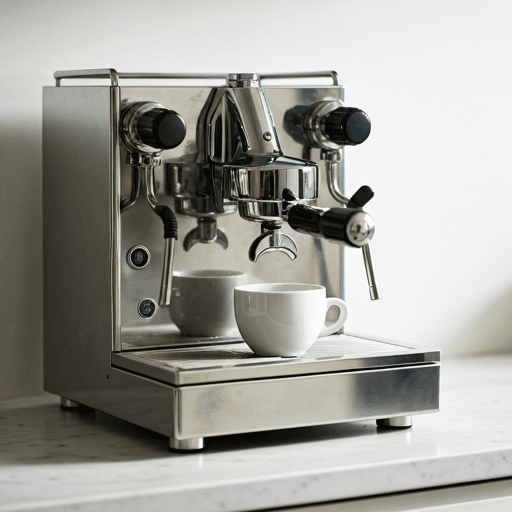
The Gaggia Classic is a much-loved, long-running semi-automatic espresso machine from the Italian brand Gaggia, and it is one of the most affordable ways to make genuine "real espresso" at home. It does not grind for you and it does not froth milk automatically. Instead it pulls a true pressurised shot through a commercial-style 58mm portafilter, and it has earned a near-cult following because it is sturdy, repairable and famously easy to upgrade. This guide explains what the Gaggia Classic is, why enthusiasts love it, where it falls short, who it suits, and how to choose between it and other kinds of machine.
A quick orientation note first. The model on sale today is the Gaggia Classic Pro (and, more recently, the Classic Evo Pro), which traces back to a machine Gaggia first launched in 1991. When people say "the Classic," they almost always mean this line. We refer to Gaggia and other brands factually here, as examples only — this is an editorial guide, not a sales pitch, and it quotes no prices.
What the Gaggia Classic actually is
The Gaggia Classic is a semi-automatic machine, which is the most common type for home enthusiasts. Semi-automatic means the machine controls the pump and the water, but you stay in charge of the craft: you grind, dose and tamp the coffee, lock in the portafilter, start and stop the shot yourself, and steam the milk by hand. There is no screen, no bean hopper and no one-touch button. That hands-on character is exactly the appeal — and also the reason it frustrates anyone expecting push-button coffee. Espresso is the concentrated shot that sits under almost every cafe drink, and the Classic exists to pull that shot well at home.
A short history
Gaggia is an Italian brand with deep espresso roots. Achille Gaggia was a Milanese cafe owner who, in the late 1930s and 1940s, patented the lever-and-piston system that forced hot water — rather than steam — through the coffee under pressure. That was the breakthrough that produced the layer of crema on top of a shot. The home Gaggia Classic arrived in 1991 and effectively defined the "prosumer" home-espresso category: a compact, metal-bodied machine that brought commercial-style parts into the kitchen. Decades of small revisions later, the Classic Pro and Classic Evo Pro keep that same basic recipe.
Key features of the Gaggia Classic, and what they mean
Most of what makes a Gaggia coffee machine like the Classic special comes down to a handful of parts that are unusually serious for an entry-level price. Here is what is inside and why each piece matters.
| Feature | What it is | Why it matters |
|---|---|---|
| 58mm portafilter | A commercial-size portafilter (the handle and basket you lock into the group head) | Takes the huge ecosystem of standard 58mm accessories; larger and more cafe-like than the 51–54mm baskets on cheaper machines |
| Single boiler | One small boiler heats water for brewing, then re-heats for steaming | Compact and quick to warm up, but you brew first and then switch to steam — never both at once |
| Three-way solenoid valve | Releases pressure from the group head the moment the shot ends | The coffee puck comes out dry and knocks out cleanly; a genuinely "commercial" touch that is rare at this tier |
| Manual steam wand | A wand you operate by hand to texture milk | You learn to make real microfoam for lattes, flat whites and cappuccinos |
| Robust metal build | Brushed metal body with serviceable internals | Durable and repairable; spare parts and repair guides are widely available |
| ~9 bar brew pressure | An over-pressure valve (OPV) sets the brewing pressure | About 9 bar is the espresso sweet spot; newer units ship tuned close to it |
Two details are worth expanding because they shift over the model's life. For most of its history the Classic used a commercial-style 58mm chrome-plated brass portafilter; the latest Classic Evo Pro switched to a solid stainless-steel portafilter (and a chrome-free, solid-brass group head), but it keeps the same 58mm size, so the vast catalogue of standard 58mm baskets, tampers and naked portafilters still fits. On pressure, some older Classic Pro units arrived tuned higher than the ideal — which is why dropping the OPV to roughly 9 bar became one of the most popular modifications — while current units generally ship set closer to 9 bar out of the box. Exact specifications vary by revision and region, so it is worth checking the unit in front of you.
Why the Gaggia Classic is so loved
In nearly every Gaggia Classic review you will read, the same three themes come up, and they explain the loyalty this machine inspires.
- It pulls real espresso. With fresh beans and a proper grind, the Classic makes a true pressurised shot with crema — the foundation for genuine cafe-style milk drinks at home, not a watery imitation.
- It is durable and serviceable. The metal body and simple, well-documented internals mean it can be cleaned, descaled and repaired for years. Few entry machines are this fixable.
- It is famously moddable. Because it uses standard 58mm parts and a simple layout, the Classic can grow with a learning barista. It is one of the most upgraded machines in home coffee.
The popular upgrades are worth knowing about even if you never touch them, because they show how much headroom the machine has:
- A PID temperature controller to hold brew temperature to a precise number instead of a drifting band.
- An OPV adjustment to set brewing pressure to around 9 bar.
- A bottomless (naked) portafilter, which exposes the bottom of the basket so you can watch the extraction and diagnose channelling.
- An upgraded steam wand and single-wall baskets for better milk texturing and more honest shots.
The honest trade-offs
The Classic is beloved, but it is not a do-everything machine, and it is fairer to know the limits before you commit.
- Single boiler means waiting. You brew, then switch the machine to steam and wait for it to come up to temperature. For one or two drinks this is a minor pause; for a crowd it is a real bottleneck.
- No PID out of the box. The stock machine uses a simpler thermostat, so brew temperature swings within a band. Many owners learn "temperature surfing" — timing the shot to the heat cycle — or fit an aftermarket PID.
- The stock steam wand and pressurised baskets are basic. They work, but they are the first things keen users tend to upgrade.
- There is a real learning curve. This is not a push-button machine. Expect a week or two of dialing in before shots are reliably good.
You will need a good grinder
This is the single most important thing to budget for, and it is easy to underestimate. A Gaggia Classic espresso machine is only as good as the grind feeding it, because espresso demands a fine, consistent, adjustable grind that cheap blade or low-end grinders simply cannot deliver. Plan to pair the Classic with a capable burr grinder from the start, not as an afterthought. Skimping here is the most common reason a good machine produces disappointing coffee.
Who the Gaggia Classic suits — and who should skip it
| Great fit if you… | Look elsewhere if you… |
|---|---|
| Want to learn real espresso and enjoy the hands-on ritual of grinding, tamping and steaming | Want one-touch coffee with no learning curve — a super-automatic or pod machine fits better |
| Like the idea of a durable machine you can repair and upgrade over many years | Want built-in milk automation or a touchscreen that does the work for you |
| Are a value-seeker who wants commercial-style parts at an entry-level price | Need to brew espresso and steam milk at the same time for several people at once |
| Are a tinkerer who likes the idea of PID, OPV and bottomless-portafilter mods | Just want quick black filter coffee — a drip maker is simpler and cheaper |
How to choose: Gaggia Classic vs the alternatives
The clearest way to decide is to compare the three broad routes into home espresso. The Classic is a semi-automatic; the other two trade either control or convenience.
| Type | What you do | Strengths | Best for |
|---|---|---|---|
| Semi-automatic (e.g. Gaggia Classic Pro) | Grind, dose, tamp, pull and steam by hand | Real control, durable, moddable, lower cost of entry into "real" espresso | Learners, tinkerers and value-seekers |
| Super-automatic / bean-to-cup | Press a button; it grinds, brews and often froths | One-touch convenience, minimal skill, fast | People who want coffee with no fuss |
| Dual-boiler prosumer | Manual control, but brew and steam at once | Temperature stability and no waiting between shot and milk | Serious enthusiasts and busy multi-drink households |
Run through this short checklist to place yourself:
- How much do you want to do by hand? If the answer is "I enjoy the craft," a semi-automatic like the Classic is ideal. If it is "as little as possible," look at a super-automatic.
- Do you need simultaneous brew and steam? If you make milk drinks for several people back to back, a dual boiler removes the single-boiler wait. If not, the Classic is plenty.
- What grinder will you pair it with? Budget for a proper burr grinder alongside the machine, not after.
- Do you want to mod and upgrade over time? Few machines reward tinkering like the Classic. If that excites you, it is a strong pick; if it sounds like a chore, a more automated machine may suit you better.
For a structured walk through these decisions, see how to choose an espresso machine, and for a wider view of the field, our overview of the best espresso machines. If you want to compare the Classic against Gaggia's other models — its bean-to-cup super-automatics included — read our guide to the full Gaggia espresso machine range, which this single-model deep dive sits alongside.
The bottom line
The Gaggia Classic earns its reputation by doing one job honestly: it turns fresh-ground beans into genuine espresso at home, in a tough, repairable, upgradeable machine, for an entry-level price — provided you are happy to learn the craft and pair it with a good grinder. It rewards patience with dialing in and curiosity with mods, which is why it remains a default first "proper" espresso machine for so many people. If a hands-on machine sounds right, the next step is reading up on how to make espresso at home. If you would rather press a button and walk away, that is worth knowing too — and it points you toward a super-automatic instead.