
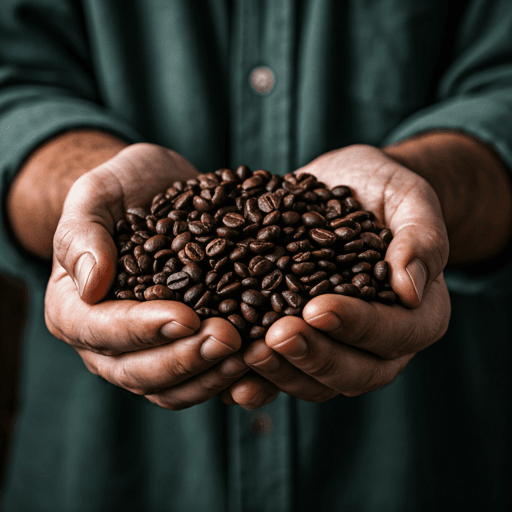
Folgers coffee is one of the best-known and best-selling mainstream ground coffee brands in the United States — an affordable, everyday, pre-ground supermarket staple rather than a specialty or third-wave coffee. If you picture a red plastic canister on a kitchen counter and hear the jingle "The best part of wakin' up...", you already know the brand. This guide explains what Folgers is, where it came from, what its lineup actually includes, and how to get a good cup out of supermarket ground coffee.
What is Folgers coffee?
Folgers coffee is a value-priced, widely available everyday coffee built around consistency rather than rotating single origins. It is sold in nearly every American grocery store and is famous for two things: the bright red canister and one of the most recognizable advertising jingles in coffee history. The flagship product is Folgers Classic Roast, a medium-roast pre-ground blend, but the brand stretches across darker roasts, decaf, instant crystals, and single-serve pods.
It helps to set expectations clearly. Folgers sits in the "value and convenience" lane of coffee — reliable, inexpensive, and easy to find. That is a different category from boutique roasters who date-stamp their bags and name the farm. Neither is "better" in the abstract; they answer different questions. Folgers answers "I want a familiar, no-fuss cup that is always on the shelf." For how roast color shapes flavor across any brand, see our guide to coffee roast levels explained.
A short history: Gold Rush San Francisco to today
The Folgers story traces back to San Francisco during the California Gold Rush era. The business that grew into Folgers began in 1850 as a coffee-and-spice mill — the Pioneer Steam Coffee and Spice Mills — and a teenage J. A. Folger, newly arrived from Nantucket, was hired to help build it. Folger worked his way up, became a full partner around 1865, and in 1872 bought out the other partners and renamed the firm J. A. Folger & Co. Retellings vary on the finer details, so we keep some dates broad, but the overall arc — Gold Rush beginnings, a family coffee company, then a national supermarket brand — is well established.
The brand grew from a regional roaster into a coast-to-coast household name over the 20th century. Procter & Gamble acquired Folgers in 1963 and built much of its modern marketing, including the long-running "The best part of wakin' up is Folgers in your cup" campaign. In 2008, ownership changed again: The J. M. Smucker Company acquired Folgers from Procter & Gamble. Smucker has owned the Folgers coffee brand ever since, alongside other coffee labels in its portfolio.
The Folgers product range
Folgers is not a single product but a family of formats and roasts. The exact lineup shifts over time and by region, but the core categories are stable. Here is how the main offerings break down.
| Product / format | What it is |
|---|---|
| Folgers Classic Roast (ground) | The flagship: a medium-roast, pre-ground blend in the iconic red canister. The default "everyday" Folgers. |
| Black Silk (ground & pods) | A darker roast aimed at drinkers who want a bolder, smoother-bitter cup. |
| Breakfast Blend | A milder, lighter roast for a more mellow morning cup. |
| Decaf | Caffeine-removed versions of mainstream roasts for evening or sensitivity needs. |
| Folgers instant coffee ("Classic Roast Instant Crystals") | Soluble crystals that dissolve in hot water — no machine needed. A different product from ground coffee. |
| K-Cup pods | Single-serve capsules for Keurig-style pod brewers, across several roasts. |
| Single-serve packets ("coffee singles") | Coffee in a filter bag you steep like tea — handy for one cup. |
| 1850 line | A more premium-positioned Folgers sub-brand named for the founding year, with its own roast profiles. |
| Flavored options | Roasts with added flavor notes such as vanilla, caramel or hazelnut, depending on availability. |
Two distinctions are worth pinning down because they confuse a lot of shoppers. Folgers instant coffee (the crystals) is brewed coffee that has been dried into a soluble powder — you just add hot water. Ground Folgers, by contrast, must be brewed through a machine or filter. If the instant format interests you, our instant coffee explained guide covers how soluble coffee is made and how to use it well.
What beans are in it?
Like most large-scale value coffees, Folgers blends are built for a consistent, accessible, classic-American flavor rather than to showcase a single farm. Big mainstream blends commonly combine Arabica and Robusta beans; Robusta adds body, a harder edge and more caffeine at lower cost, while Arabica softens the cup. Folgers does not always publish exact bean composition by product, and it varies across the range, so treat any single claim with caution. The takeaway: this is blended commodity coffee engineered for reliability, not a traceable specialty lot.
Where Folgers sits: value coffee vs. specialty
Folgers is mass-market, value-priced coffee. Its strengths are availability, familiarity, long shelf life and low cost. Its trade-off, compared with fresh specialty roasters, is that pre-ground supermarket coffee is rarely roast-dated and has usually been ground long before you open it, so it sacrifices aromatic complexity and brightness. That is the deal you make for convenience — and for many drinkers it is a perfectly good one.
It sits in the same broad category as other global supermarket names. Nescafé is the obvious worldwide peer, especially in instant; another familiar US grocery brand is Café Bustelo, known for a dark, espresso-style profile. To see how value brands stack up against mid-range and specialty options across the board, browse our roundup of the best coffee brands. We name these factually as illustration, not endorsement.
How to brew supermarket ground coffee well
The single biggest upgrade with a value coffee like Folgers Classic Roast is technique. Pre-ground coffee can taste flat, but most of the blame falls on stale storage, the wrong ratio and a dirty machine — all fixable. Here is a simple method that works for drip makers and pour-over alike.
- Keep it fresh and sealed. Reseal the canister tightly and store it somewhere cool, dark and dry — not the fridge or freezer in daily use, where moisture and odors creep in. Buy a size you will finish in a few weeks.
- Get the ratio right. Aim for roughly 1 part coffee to 15–17 parts water by weight — about 2 tablespoons of grounds per 6 ounces (180 ml) of water if you measure by volume. Too little coffee is the most common reason a cup tastes weak and watery.
- Use proper water temperature. Good extraction happens around 195–205°F (90–96°C). A drip machine should hit this on its own; for pour-over, let a boil sit about 30 seconds before pouring.
- Clean the machine. Stale coffee oils and mineral scale make every cup taste worse. Rinse the basket and carafe after each use and descale periodically. A clean brewer flatters even budget coffee.
- Brew and drink it reasonably fresh. Coffee left on a hotplate for an hour turns bitter. Brew what you will drink, and use a thermal carafe if you want it to hold.
For the instant crystals, the rules are simpler: use about a level teaspoon per cup, water just off the boil, and stir well; adjust to taste. And whatever the format, milk, a touch of sweetener or a flavored creamer can round out a value cup nicely.
The bottom line
Folgers is an American institution: a Gold-Rush-era roaster that became a national supermarket staple, passed from Procter & Gamble to J. M. Smucker, and still anchors millions of morning routines with its red canister. It is not specialty coffee and does not pretend to be — it is dependable, affordable and everywhere. If you treat the basics with care — a sensible ratio, hot water and a clean machine — even an everyday brand rewards you with a solid cup. Curious where mass-market coffee fits in the wider landscape? Explore the full coffee hub for more on brands, brewing and beans.