
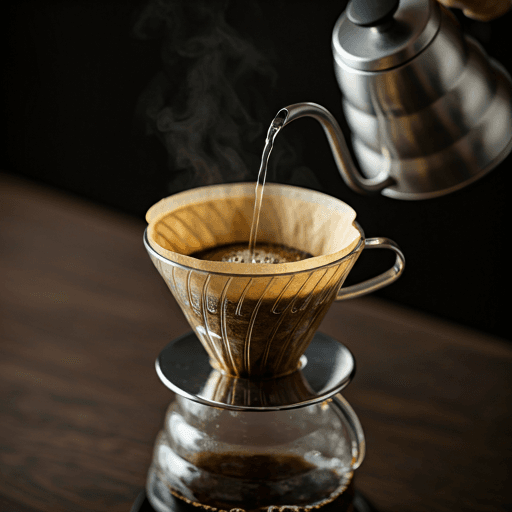
If you have ever typed espresso near me into your phone and ended up with a thin, bitter shot, the problem usually isn't your search — it's that you didn't know what to look for. This guide teaches a repeatable method you can use in any city on earth to find genuinely great espresso and cappuccino near you: how to search smartly, how to read the signals that mark a serious coffee bar, and what to order to test the place. No fixed list of cafes, because the best one near you changes with where you're standing — but the skills below travel everywhere.
Start with a smart "espresso near me" search
A map app is your fastest tool, but the default results reward popularity, not quality. Search with intent. Instead of a single generic query, try a few phrasings and compare what surfaces:
- "espresso near me" or "espresso coffee near me" — broad, good for a first sweep of what's around you.
- "cafe espresso near me" or "espresso bar" — narrows toward places that take their machine seriously rather than coffee-as-an-afterthought.
- "specialty coffee," "single origin," "third wave," or "roastery" — these words are used by cafes that treat coffee as a craft. They are a strong signal even before you read a single review.
- "cappuccino near me" or "flat white" — if you mainly want milk drinks, search the drink itself; you'll find baristas who pride themselves on steamed milk and latte art.
Open the map view and look at clustering. A neighbourhood with several independent coffee shops close together usually has a more demanding local crowd, which raises the standard for everyone. A lone chain outlet in a retail park rarely beats it.
Use filters and a brand's own locator
Most map apps let you filter by rating and by "open now." Set a floor around 4.3 to 4.5 stars, but don't stop there — a 4.7 with 40 reviews can be a hidden gem, while a 4.2 with 3,000 reviews is often a busy commuter stop that's fine, not special. If you're loyal to a particular chain, use its official store locator or app rather than guessing; brand apps show real opening hours for each specific location and often let you order ahead. Hours and availability vary by store, so always confirm on the official source for the exact branch rather than trusting a third-party snapshot.
Read reviews critically, not literally
Reviews are useful only if you read them the way a detective reads a case file — looking for patterns, not single dramatic stories. One furious one-star rant and one gushing five-star review tell you almost nothing. The signal is in the middle and in the repetition.
- Sort by most recent. A cafe that was great two years ago may have changed owners or baristas. Recent reviews reflect the coffee you'll actually get today.
- Look for recurring themes. If five separate people mention "best flat white in the area" or "they roast in-house," that's data. If complaints repeat — slow, burnt, inconsistent — believe them.
- Read the photos, not just the text. Customer photos reveal crema colour, latte art, and how drinks are actually served far better than star counts.
- Note how the owner responds. Thoughtful replies to criticism suggest a team that cares. Defensive or absent responses are their own kind of answer.
Treat the rating as a starting filter and the written reviews as the real interview.
Quality signals to spot the moment you walk in
Once you're at the door, your own eyes beat any rating. Great espresso bars share a handful of visible tells before you've even ordered.
- A clean, well-kept machine and station. A wiped group head, tidy bar, and dialled-in grinder show respect for the craft. A greasy machine or a hopper crusted with old grounds is a warning.
- Roast dates and origin on display. Bags with a visible roast date (ideally within the last few weeks) and named origins or single-origin options mean the coffee is fresh and traceable. "Best before" a year out is the opposite signal.
- A busy local trade. Regulars who get a nod from the barista usually mean consistent quality. A steady stream of locals beats a quiet, tourist-only room.
- Skilled, talkative baristas. Someone who can tell you the origin, roast level, or how they're dialling the shot today is a person who tastes their own coffee. Enthusiasm is a feature, not a bonus.
- Small, frequently changed milk pitchers. Lots of tiny, freshly rinsed pitchers suggest milk is steamed fresh per drink — better for your cappuccino than one giant jug reheated all morning.
What to order to test a cafe
The drinks themselves are the truest review. Order something that exposes both the coffee and the barista's skill.
Order a straight espresso first
A single or double espresso hides nothing — no milk, no sugar to mask it. Watch the pour: a good shot typically extracts in roughly 25 to 30 seconds and finishes with a layer of golden-to-hazelnut crema, dense and slightly elastic, making up about a tenth of the cup. A shot that gushes out in under 20 seconds is usually under-extracted (sour, thin, pale crema); one that crawls past 35 seconds is often over-extracted (harsh, bitter, dark mottled crema). Taste for sweetness and balance — great espresso is intense but rounded, not just bitter.
Order a cappuccino to judge the milk
A cappuccino tests steaming, not just the beans. The classic build is roughly equal parts espresso, steamed milk, and microfoam — the traditional 1:1:1. Look for foam that is glossy and paint-like rather than dry and bubbly; properly textured microfoam looks like wet paint or melted marshmallow and folds smoothly into the espresso. The cup should taste balanced and sweet, never scalded. If the milk is screeching-hot, separated, or topped with stiff dry foam, the steaming wasn't dialled in. Clean latte art is a fair sign the microfoam is good — though art alone isn't proof of flavour.
Order an affogato for a fun final test
If you searched affogato near me and a place actually offers one, it's a small tell that they care about coffee as a treat. An affogato — Italian for "drowned" — is a scoop of vanilla or fior di latte gelato with a hot espresso shot poured over the top, eaten with a spoon as the two melt together. A cafe that pulls a proper shot for an affogato is showing off the espresso, so it's a low-stakes, delicious way to taste their coffee at its sweetest.
Questions worth asking the staff
A short, friendly conversation tells you a lot. Genuinely good baristas love these questions:
- "What are you running on espresso today, and is it a single origin or a blend?"
- "When was this roasted?"
- "What would you recommend if I usually drink a cappuccino?"
- "Do you roast in-house, or who roasts for you?"
Confident, specific answers point to a place that cares. Blank looks aren't a dealbreaker for a quick coffee, but they tell you where the bar sits.
Quick reference: good shot vs. shot to avoid
| Signal | Great sign | Warning sign |
|---|---|---|
| Espresso pour time | About 25-30 seconds | Under 20s (sour) or over 35s (bitter) |
| Crema | Golden-hazelnut, dense, ~10% of cup | Thin and pale, or dark and bubbly |
| Cappuccino foam | Glossy microfoam, balanced and sweet | Dry, stiff foam; scalded milk |
| Bar and machine | Clean, tidy, dialled-in grinder | Greasy machine, crusted hopper |
| Beans | Recent roast date, named origins | No date, long-life "best before" |
| Staff | Knowledgeable, happy to chat | Indifferent, no detail |
A note on price and value
Cost varies enormously by country and by city, so there's no universal "right" price for an espresso. As a rule of thumb, a serious specialty cafe sits above the cheapest grab-and-go option in its area but well below a fancy restaurant markup. Don't assume the most expensive cup is the best, or that the cheapest is bad — judge by the signals above and by what's in the cup, not by the number on the board.
Keep exploring
Finding great espresso near you is a skill, not luck: search with intent, read reviews for patterns, trust the visible signals, and let a straight espresso and a cappuccino settle the question. Once you've found a place you love, become a regular — that's how you earn the barista's best work. For more on the drinks themselves, read our guides to espresso, the base of every coffee and what makes a great cappuccino. If you'd rather hunt more broadly, our guide to finding great coffee near you anywhere widens the net, and curious tasters can peek behind the bar with how to become a barista.