
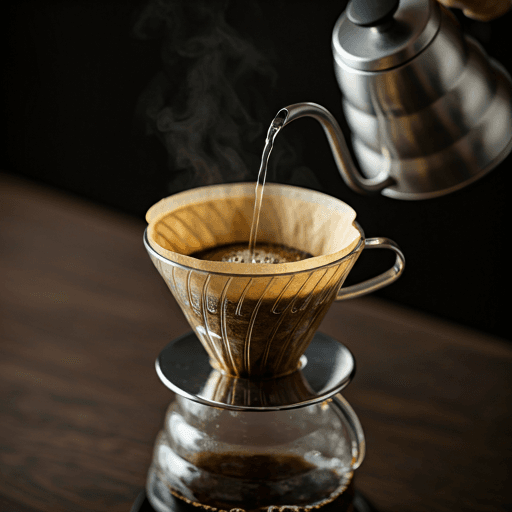
When you search "coffee near me," you get a map full of pins — but a pin is not a promise of good coffee. This guide is a practical framework for finding genuinely great coffee wherever you are in the world: how to read the signals of a serious coffee bar, how to use maps, reviews and specialty directories to surface the best place nearby, and how to tell a dialled espresso from a sad one. It works in any city, in any country, on any trip.
We are talking about coffee quality here — the cup itself. If what you actually want is a good place to sit, work, read or meet a friend, that is a different question, and our companion guide on choosing the best coffee shop or cafe near you covers vibe, seating and wifi. For landing in an unfamiliar city, see how to find a coffee shop near you. This page is about the brew.
What "coffee near me" really turns up — and why quality varies so much
A "coffee near me" search ranks results by distance, popularity and how complete a listing is — not by how good the coffee tastes. The closest, busiest, most-photographed pin is often a chain or a high-traffic spot optimised for convenience, not flavour. That is fine when you just need caffeine. But if you want the best cup within reach, you have to look past the top pin and read the signals yourself.
Coffee quality swings wildly because so many things have to go right: fresh, well-roasted beans; a grinder that produces a consistent grind; a machine kept clean and calibrated; and a person who knows how to use all of it. A great coffee bar gets every link in that chain right. A weak one can have a shiny machine and still pour something flat. The good news is that the signs of a serious place are visible from the doorway, the menu and the listing — once you know what to look for.
The signals of a serious coffee bar
Walk in, glance around, read the menu. These are the tells that a place takes coffee seriously, roughly in order of how reliable they are.
1. Visible roast dates and named beans
The single strongest signal is freshness you can verify. Serious roasters and the cafes that buy from them print a roast date on the bag, not just a distant "best before." Whole-bean coffee is at its best within roughly two to four weeks of roasting, and even sooner for espresso. If you can see bags on the shelf with recent roast dates, that is a place that cares. A bag showing only an expiry date a year out is a place that prioritises shelf life over flavour.
Look, too, at how the beans are described. A real specialty bar will name the origin — a country, a region, often a specific farm or cooperative — plus the altitude and the processing method (washed, natural or honey). That traceability is the language of quality. "Single-origin" and rotating guest coffees signal a shop that buys thoughtfully. A menu that only ever says "house blend" with no story behind it is more neutral.
2. Specialty beans and a real grinder
The term "specialty coffee" has a technical meaning: under the Specialty Coffee Association's 100-point cupping scale, coffee scoring 80 or above is graded specialty; below that is commodity coffee. You will not see the score on the wall, but shops that work with specialty beans usually say so, and it shows in a clean, vibrant cup rather than a burnt, bitter one.
Behind the counter, look for a dedicated grinder — ideally one grinding to order for each drink, not a hopper of pre-ground coffee sitting out. A good grinder producing a consistent particle size is so fundamental that even great beans on a bad grinder make mediocre espresso. Beans ground fresh, per shot, is a quiet but telling sign.
3. A dialled espresso
If you order an espresso, you can read the result. A well-pulled shot from fresh beans takes roughly 25 to 30 seconds to extract and pours with a layer of crema — the golden-brown foam on top, ideally taking up around a tenth of the cup and holding for a minute or two before fading. Thin, pale, fast-vanishing crema often points to stale beans or a coarse, careless grind.
One honest caveat: crema is a freshness and extraction clue, not a flavour guarantee. A shot can look beautiful and still taste harsh, and a modest-looking shot can taste superb. The only true test is the sip — it should be clean, balanced and layered, not scorched or sour. But crema and a sensible 25-to-30-second pour are good things to notice while you wait. To go deeper on the cup itself, see our explainer on espresso, the base of every coffee.
4. Skilled, unhurried baristas
Watch the person making your drink. Do they weigh the dose, tamp evenly, wipe the steam wand, and pour with intention? Skilled baristas treat each shot as a small process, not an assembly line. They can usually tell you what is in the hopper today and what it tastes like. A team that talks about their coffee with genuine interest is a strong sign you are in the right place.
5. The bag on the shelf — and whether they roast or partner
Retail bags by the register tell you a lot. Quality coffee is often sold in bags with a one-way valve, which lets roasting gases escape while keeping oxygen out. Bags from a respected local roaster, or a sign saying the cafe roasts its own, both point to a supply chain built around freshness. If you love the cup, buy a bag — and you can put the grounds to good use later with our guide on what to do with used coffee grounds.
Quick checklist: great vs ordinary coffee bar
Use this to size up a place in seconds, in person or from its listing photos.
| Signal | Great coffee bar | Ordinary spot |
|---|---|---|
| Beans | Roast date visible; named origin, farm, process | Only an expiry date; generic "house blend" |
| Grinder | Dedicated grinder, ground per drink | Pre-ground coffee sitting in a tub |
| Espresso | 25–30s pour, even golden crema, balanced taste | Fast, pale, thin crema; bitter or sour |
| Menu | Single-origin, rotating guest coffees, pour-over option | Mostly sugary blended drinks, no bean info |
| Staff | Can describe today's coffee; careful technique | Can't say what's brewing; rushed and rote |
| Retail bags | One-way valve, local roaster, recent date | No bags, or dusty mass-market tins |
How to find the best coffee near me using maps and reviews
You can do most of the filtering before you leave the house. The map apps everyone already has are powerful if you read them critically.
Use the map app, but read it the right way
- Filter by rating, then read recent reviews. In Google Maps you can filter to show only places rated about 4.5 stars and up, then sort the reviews by most recent. A high score with a steady stream of fresh, specific reviews is far more trustworthy than an old 5.0 with three ratings.
- Search the right terms. "Coffee near me" is broad. Try "specialty coffee," "espresso bar," "coffee roasters" or "filter coffee" to skip generic fast-food results and surface dedicated places. "Coffee nearby" and "best coffee near me" pull similar pins, so vary the phrasing.
- Read the words people use. Reviews mentioning single-origin, pour-over, flat whites, latte art, "the beans," or a roaster's name are written by people who care about coffee — exactly the crowd whose recommendations you want. Reviews that only mention the muffins or the wifi are telling you about the place, not the cup.
- Scan the photos. Customer photos reveal the setup fast: a serious espresso machine, a clean bar, bags of named beans, latte art. A wall of blended frappe photos signals a different priority.
Handling "open now" without getting it wrong
When you need coffee near me open now, lean on the map's live status — the "Open now" filter and the hours panel update from the listing, and popular-times graphs show how busy a place is right now. Two cautions. First, listed hours can be wrong on holidays or after a venue changes its schedule, so for an early-morning or late run, a quick check of the cafe's own social feed is wise. Second, the closest place that happens to be open is not automatically the best — searches like "coffee near me now open" and "coffee near me open now" optimise for availability, not flavour, so still apply the quality checklist above before you commit.
Specialty coffee directories that work anywhere
Beyond the general map apps, a handful of community and editorial tools are built specifically to surface good coffee — invaluable in a new city.
| Tool | What it does | Best for |
|---|---|---|
| European Coffee Trip | Hand-curated guide and app listing thousands of specialty cafes across dozens of countries, concentrated in Europe | Trips around Europe, big cities to small towns |
| Beanhunter | Community-driven cafe finder where users rate and review coffee specifically; originated in Australia with growing global coverage | Crowd-sourced top-rated cafes worldwide |
| Roaster / cafe-finder apps | Map-based apps that plot specialty roasters and shops near you | Finding nearby roasters in many regions |
| Local roaster "stockist" maps | A roaster you love often lists the cafes that serve its coffee | Following a brand you already trust to new cities |
A reliable trick: find one respected roaster in the area, then look at where their beans are served. If a serious roaster supplies a cafe, that cafe has already passed a quality bar. For more on tracing the supply chain to the source, see our guide to finding coffee roasters near you, and on what "third wave" actually means, read about third-wave coffee shops.
Match the place to what you want to drink
"Great coffee" depends a little on your order. A bar can be brilliant at espresso and only okay at filter, or the reverse. Quick guide:
- Espresso, flat white, cappuccino: look for a dedicated espresso machine, a grinder per shot, and baristas who weigh and time. Latte art is a fair proxy for steaming and pouring skill.
- Filter or pour-over: a place offering V60, Chemex, batch brew or AeroPress, with named single-origins, is signalling it cares about clarity and origin character.
- Decaf: a good shop carries a quality decaf and treats it with the same care — a real test of whether they respect every customer.
- Sweet, blended drinks: nothing wrong with these, but they hide the bean, so they tell you little about underlying quality.
If the names on the menu are a blur, our rundown of the main types of coffee drinks will sort the espresso family from the milk drinks in a minute.
Red flags worth noticing
- Pre-ground coffee scooped from an open tub, or a single button doing everything automatically with no grinder in sight.
- Beans with no roast date anywhere — on the bag, the menu or in conversation.
- Burnt, acrid smell rather than a sweet, roasted aroma when you walk in.
- Reviews that praise the decor and the cake but never the coffee.
- A menu that is almost entirely sugary, syrup-heavy blended drinks.
None of these is fatal on its own — plenty of beloved local cafes break a "rule" and still pour something you love. Treat them as prompts to taste critically, not as automatic disqualifiers.
Putting it together
Finding great coffee near you is a skill, not luck. Filter the map by rating, read recent reviews for the words coffee people use, cross-check a specialty directory, and then trust your own eyes at the door: a visible roast date, named beans, a real grinder, an unhurried barista and a shot that pours golden in half a minute. Do that anywhere on earth and you will find the good cup hiding behind the obvious pins. From here, if you want to choose a cafe for its atmosphere rather than its espresso, head to our guide on finding the best cafe near you as a place — and keep exploring the coffee hub for more on beans, brewing and the craft behind every great cup.