
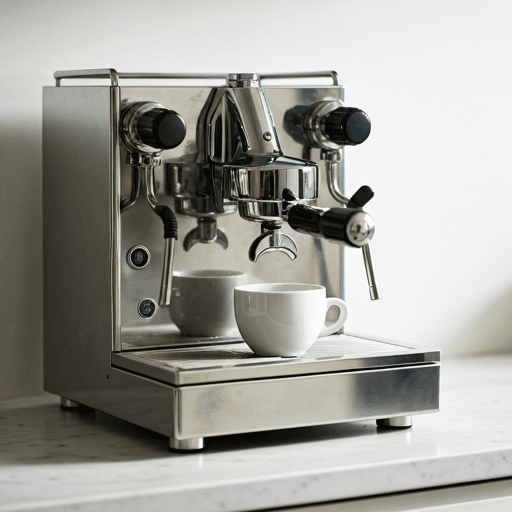
Two different things in India answer to the phrase filter coffee machine. One is an electric drip brewer: a heating element, a water tank, a showerhead and a glass jug, sold here by AGARO, Wonderchef, Morphy Richards and Philips for roughly ₹1,900 to ₹3,100. The other is the South Indian steel filter, which has no heater, no pump and no plug. They are not competitors and they do not make the same drink. This guide covers the machine, with current India prices, because that is what most people mean when they search for one. It starts with the difference, because getting that wrong is the expensive mistake.
Three things Indians call filter coffee
| What people say | What it actually is | Powered? | What you get |
|---|---|---|---|
| Filter coffee machine, filter coffee maker, drip coffee machine, drip coffee maker | One appliance under four names. Heats water, drips it through grounds in a basket, collects it in a jug on a warming plate. | Yes, 550 to 900 W | Roughly 600 ml of ready-to-drink black coffee, hands off, in about ten minutes |
| South Indian filter, kaapi filter, dabara filter | A two-chamber steel or brass dripper. Gravity only, no electricity anywhere in it. | No | Thick decoction, twenty to thirty minutes later, which you cut with hot milk and sugar |
| Pour-over, V60, Melitta cone | A hand dripper. You are the pump, the timer and the temperature control. | No | One cup at a time, as good or as bad as your technique |
The appliance and the steel filter get confused because both are honestly called filter coffee. But a drip machine cannot make decoction, and a steel filter cannot fill a jug for four people before work. If you grew up on kaapi and what you actually want is decoction, buy a steel filter and read our brass vs steel coffee filter guide instead. Nothing electric in the ₹2,000 to ₹3,000 bracket replaces it.
What a drip coffee machine actually costs in India
The figures below are the sellers' own listed prices, checked in August 2026 on brand websites rather than marketplace listings, because marketplace pricing in this category moves weekly.
| Model | Capacity | Power | Listed price (Aug 2026) | Source |
|---|---|---|---|---|
| AGARO Royal Drip | 600 ml, glass jar, warming plate | 750 W | ₹1,899 (MRP ₹2,499) | agarolifestyle.com |
| Wonderchef Regalia Brew | 700 ml, borosilicate glass, keep-warm plate | 550 W | ₹1,999 (MRP ₹4,300) | wonderchef.com |
| Philips HD7466/70 Daily Collection | 1.3 L tank, glass jug | 900 W | ₹1,895 MRP, listed as no longer available | philips.co.in |
| Philips HD7450/00 Daily Collection | 0.6 L, glass aroma jug | 650 W | ₹2,945 MRP, listed as no longer available | philips.co.in |
| Morphy Richards Europa Drip (350012) | 600 ml, removable jar, keep-warm | 600 W | ₹3,095, backordered | bajajelectricals.com |
| Moccamaster KBGT (for scale) | 1.25 L thermal carafe, SCA certified | Mains, 1.25 L batch | ₹36,737 | brewinggadgets.in |
Two things stand out. First, every machine under ₹3,100 uses a glass jug on an electric warming plate. The thermal carafe that overseas buying guides treat as the obvious upgrade is simply not sold in the Indian entry tier, so advice to prioritise one is not actionable here. Second, Philips, the brand most Indian buyers name first, currently shows its entire India drip range as no longer available on its own site. Stock on marketplaces is residual, so confirm the warranty channel before paying a premium for the badge.
The cup on the box is not a cup
These machines are all sold by cups, and the cup is never the same size twice. Divide the stated volume by the stated cup count and the marketing collapses.
| Model | Cups claimed | Actual volume | ml per claimed cup | 200 ml mugs it really makes |
|---|---|---|---|---|
| Philips HD7432/20 and HD7431/20 | 2 to 7 | 0.6 L | about 86 ml | 3 |
| Wonderchef Regalia Brew | 7 | 700 ml | 100 ml | 3.5 |
| Morphy Richards Europa Drip | 5 | 600 ml | 120 ml | 3 |
| AGARO Royal Drip | 4 | 600 ml | 150 ml | 3 |
| Philips HD7450/00 | 4 to 6 | 0.6 L | 100 to 150 ml | 3 |
Whatever the box claims, the whole Indian entry tier makes about three 200 ml mugs. A seven-cup Philips and a four-cup AGARO hold exactly the same 600 ml. Buy on millilitres and ignore the cup count entirely.
What ₹2,000 buys, and what it does not
There is a published benchmark for what a competent drip machine has to do. The Specialty Coffee Association's home brewer certification requires water to reach 92 C at the coffee within the first minute and hold there without exceeding 96 C, every ground wetted inside that first minute, four to eight minutes of contact time, under 75 mg of sediment per 100 ml, and a receiver that keeps the coffee between 80 C and 85 C for the first half hour.
No machine in the India entry table claims any of those numbers, and none appears on the SCA's certified list. The cheapest certified brewer you can buy in India is a Moccamaster at ₹36,737, roughly nineteen times the price of an AGARO Royal, and there is nothing in the gap between them. Our Moccamaster guide covers what that money is actually buying.
So be clear about the transaction at ₹2,000. You are buying unattended, repeatable, no-skill brewing: fill it, press one switch, walk away, return to 600 ml of coffee that is still warm. That is a real convenience and it is worth the money. You are not buying flavour. A cheap pour-over cone and a kettle will beat any of these machines on taste if you are willing to stand there for three minutes. Buy the machine for the mornings when you are not.
Grind: the manuals disagree, and Indian coffee powder makes it worse
Manufacturer guidance is not consistent, which is worth knowing before you blame yourself. Wonderchef's instructions for the Regalia Brew specify a coarse grind and warn that fine or instant coffee will pass straight through the filter mesh. Philips's guidance for the Daily Collection machines is relative rather than absolute: finer grind and more coffee for a stronger cup, coarser and less for a milder one, spread level in the basket and never tamped.
The India-specific trap is what sits on the shelf. Standard South Indian filter coffee powder is milled very fine, and most supermarket packs carry twenty to thirty per cent chicory, because that grind is built for the steel filter, where fines settle into a tight bed and drip slowly under nothing but gravity. Put it in a drip machine's mesh basket and one of two things happens: the bed chokes and the basket floods, or the fines wash through and you get silt in the jug. If you buy powder rather than beans, look for a medium filter grind and check our roundup of South Indian coffee powder brands for packs ground for machines. If you grind your own, Monsooned Malabar and other Indian single origins take a medium filter setting well.
Water and descaling matter more here than abroad
Philips's support documentation for its Daily Collection coffee makers asks for descaling once a month on hard water and once a quarter on soft. Much of urban India sits firmly in the first category. Treat this as a performance setting, not housekeeping. Scale builds on the heating element, the element loses efficiency, and the water arriving at the grounds gets cooler, which is precisely the variable an entry-level machine is already losing on. A drip machine that tasted acceptable in month one and thin by month six has usually not aged; it has furred up. Use a descaler labelled for coffee machines, on schedule, from the first month.
The verdict: which brewer for which person
| If this is you | Buy | What it costs | Why |
|---|---|---|---|
| You want three mugs of black coffee ready without thinking about it | An entry drip machine: AGARO Royal or Wonderchef Regalia Brew | ₹1,899 to ₹1,999 | The cheapest genuine set-and-forget brewing sold in India. Nothing above it in this tier does more. |
| You drink kaapi with milk and always have | A South Indian steel filter | A few hundred rupees | It makes decoction, which no drip machine can. Buying a machine to make kaapi is the mistake this page exists to prevent. |
| You want small, strong, concentrated coffee and you like the ritual | A stovetop moka pot | Varies widely by brand | Denser and more characterful than drip. See moka pot vs drip coffee for the trade-offs. |
| You want one cup at your desk in ninety seconds | A good instant | Well under the price of any machine | The honest answer: an entry drip machine is not far enough ahead of decent instant black coffee to justify the counter space. |
| You care about extraction and will pay for it | An SCA-certified brewer | From ₹36,737 in India | The only way to buy a guaranteed brew temperature here. There is no middle rung. |
If this is your first filter coffee machine, buy the cheapest competent one and put the difference into coffee. The AGARO Royal at ₹1,899 and the Wonderchef Regalia Brew at ₹1,999 do everything the ₹3,095 Morphy Richards Europa Drip does, with the same glass jug on the same warming plate. Because there is no meaningful upgrade path between ₹2,000 and ₹36,000 in this market, paying ₹3,100 buys a badge and 100 ml. The saved ₹1,100 spent on fresh, correctly ground beans will change the cup far more than any of these machines will.
The bottom line
A filter coffee machine and a drip coffee maker are the same appliance, and neither one is a South Indian steel filter. In India that appliance costs about ₹1,900 to ₹3,100, holds around 600 ml however many cups the box claims, always uses a glass jug on a hotplate, and makes no promise whatsoever about brew temperature. Judged as a convenience, it is good value at the bottom of the range and poor value at the top. Judged as a route to better coffee, the grind you feed it and the descaling you remember to do will matter more than which of these boxes you choose.