
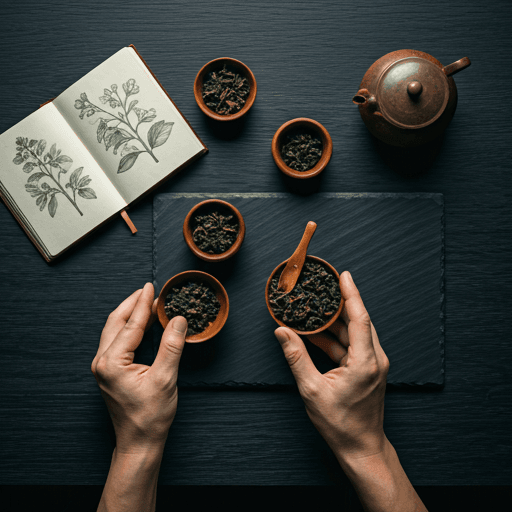
Does thyme tea have caffeine? No — pure thyme tea is naturally caffeine-free. It is a herbal tisane brewed from the leaves of common thyme (Thymus vulgaris), a savoury mint-family herb, not the tea plant Camellia sinensis, so a plain cup carries no caffeine at all. The only way caffeine sneaks in is a blend or bottled product that adds real tea — so it is always worth a glance at the label.
Does thyme tea have caffeine? The short answer is no
A cup steeped from thyme sprigs or dried thyme is a tisane, or herbal infusion, rather than "tea" in the botanical sense. Because it never touches the caffeinated tea plant, thyme tea is caffeine free by default. If you have wondered "is thyme tea caffeine free," the practical answer is yes: brew thyme on its own and you are looking at essentially zero milligrams.
This is the same reason chamomile, peppermint and rooibos are caffeine-free. For the wider picture of which cups keep you awake and which do not, our companions on caffeine-free tea explained and whether tea contains caffeine cover the true-tea contrast in more depth.
Why thyme tea has no caffeine
Caffeine in the drinks we casually call "tea" comes from one source: the leaves of Camellia sinensis, the plant behind green, black, white, oolong and pu-erh tea. That single species produces caffeine naturally. Thyme is a completely different plant — a woody, aromatic herb from the mint (Lamiaceae) family, the same one you reach for in the kitchen. Steep any part of it and you get flavour and aroma compounds, but no caffeine, because the plant simply does not make the molecule.
That is what makes a thyme infusion a tisane rather than a true tea. Any herbal cup brewed from a plant other than Camellia sinensis follows the same rule, which is why the thyme tea caffeine content sits at zero. If the distinction between "tea" and "herbal infusion" is new to you, what herbal tea is lays out the whole category, and our dedicated page on thyme tea covers the herb itself.
The exceptions: when thyme tea is not caffeine free
Here is the one caveat, and it matters. Some products marketed around thyme are not pure thyme. A "thyme and green tea" blend, a wellness bag that lists thyme alongside black or green tea, or a bottled/canned drink with added tea extract will contain caffeine — because the tea part brings it. So if you ask "does thyme herbal tea have caffeine," the honest answer is: pure thyme, no; a thyme-plus-tea blend, yes, in an amount that varies by how much true tea is inside.
The fix is simple. Check the ingredient list. If it names only thyme (or thyme with other herbs, lemon peel and the like), it is caffeine-free. If you spot green tea, black tea, matcha or "tea extract" among the ingredients, treat it as a caffeinated drink and let the amount stay a rough estimate rather than a precise figure.
| Drink | Source plant | Approx. caffeine per cup |
|---|---|---|
| Pure thyme tea | Thyme (herb, not true tea) | 0 mg — caffeine-free |
| Green tea | Camellia sinensis | ~20-45 mg |
| Black tea | Camellia sinensis | ~40-70 mg |
| Thyme + green/black tea blend | Herb plus true tea | Some — check the label |
Figures are rough and vary by leaf, amount and steep time; the point of the table is the pattern, not exact numbers.
What thyme tea tastes like
Thyme tea tastes the way the herb smells: warm, savoury and green, with a gentle peppery edge and a soft floral, almost lemony lift at the finish. It is more herbal and aromatic than sweet, closer in spirit to a garden infusion than to a dessert. Many people round it out with a squeeze of lemon and a little honey, which softens the savoury note and gives the cup a comforting, cordial-like character. A shorter steep keeps it light and grassy; a longer one draws out more of the resinous, thyme-forward punch.
Why the caffeine-free part matters
The obvious upside of a caffeine-free cup is timing. Because thyme tea has no caffeine, you can sip it in the evening, after dinner or right before bed without the wakeful nudge that green or black tea can bring. That flexibility is exactly why so many people keep thyme tea in their evening rotation alongside chamomile or peppermint — a warm, soothing drink that will not tug at your sleep.
Traditionally, thyme has been enjoyed as a warming, comforting herbal, and many people simply find a mug of it calming at the end of the day. Keep that framing light: a pleasant, aromatic ritual rather than a remedy. Responses vary from person to person, and this is general information, not medical advice.
How to brew thyme tea
Brewing is forgiving. Use a few fresh thyme sprigs or roughly a teaspoon of dried thyme per cup, pour over just-off-the-boil water, cover, and let it steep for several minutes — longer for a stronger, more savoury cup. Strain out the sprigs or leaves, then add lemon and honey to taste if you like. Fresh thyme gives a brighter, greener result; dried thyme brews deeper and more concentrated. There is no crema, froth or fussy ratio to chase here — it is one of the easiest infusions to get right.
Who should be cautious
Thyme is an everyday culinary herb, and a normal cup is a mild, food-level amount for most people. Even so, a few readers should check before making it a habit. If you are pregnant or breastfeeding, if you have a known allergy to thyme or other mint-family herbs, or if you take any regular medication, it is worth asking your own doctor or pharmacist before drinking it often or in strong, frequent amounts. The same goes for giving herbal infusions to young children. As always with anything you drink for how it makes you feel, responses vary and this is not medical advice — a healthcare provider who knows your history is the right person to ask.
The bottom line
Pure thyme tea is a caffeine-free herbal tisane, full stop — a warm, savoury, faintly peppery cup you can enjoy any time of day, including last thing at night. The only asterisk is a blend or bottled product that adds real tea, which is easily settled by reading the ingredients. Brew a few sprigs, add lemon and honey if the mood takes you, and let it be exactly what it is: a gentle, aromatic infusion with no caffeine to keep you up.