
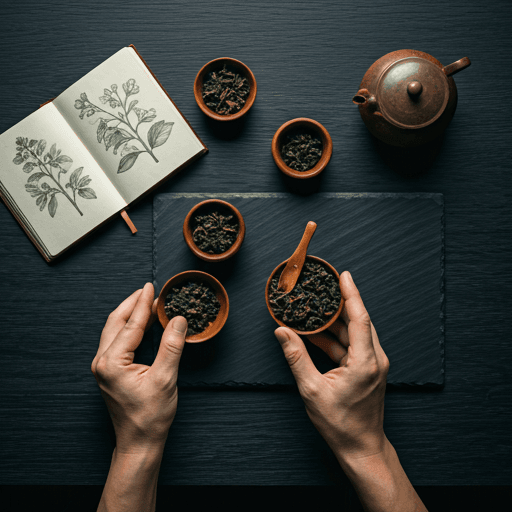
Does rosemary tea have caffeine? No — pure rosemary tea is naturally caffeine-free. It is a herbal tisane made from the needle-like leaves of rosemary (Salvia rosmarinus, formerly Rosmarinus officinalis), a woody mint-family herb rather than the tea plant Camellia sinensis, so there is no caffeine in the cup unless something else has been added. That makes rosemary tea an easy, aromatic choice for any hour of the day, including the evening.
Does rosemary tea have caffeine? The short answer
No. A cup brewed only from rosemary contains zero caffeine because rosemary is a culinary herb, not a true tea leaf. The word "tea" here is doing double duty: in everyday language we call almost any leaf-in-hot-water drink a "tea," but botanically a caffeinated tea has to come from Camellia sinensis. Rosemary does not, so it belongs to the broad family of caffeine-free infusions. If you are mapping out which of your favourite brews are stimulant-free, our overview of caffeine-free tea lays out the wider group, and our explainer on whether tea contains caffeine spells out the true-tea contrast in more detail.
So if you have been wondering is rosemary tea caffeine free, the answer is a clean yes for the pure herb. The only way caffeine sneaks in is through a blend or a bottled product, which we cover below.
Why rosemary tea has no caffeine
Caffeine is a compound the tea plant produces naturally in its leaves, buds and stems. Green tea, black tea, white tea, oolong and pu-erh are all just different processing styles of that one plant, Camellia sinensis, which is why they all carry caffeine to varying degrees. Rosemary is a completely different species from a completely different plant family — the mint family, Lamiaceae, the same broad group as sage, thyme, mint and lavender. None of those culinary herbs make caffeine, and neither does rosemary.
Because a rosemary infusion is simply hot water drawing flavour and aroma out of the herb, there is nothing in the leaf to contribute caffeine in the first place. This is the same reason a herbal tisane like chamomile or peppermint is naturally free of it. If the whole category of leaf-and-flower brews is new to you, our guide to what herbal tea is explains how tisanes differ from true teas and why the caffeine question comes down to one plant.
The exceptions: when a rosemary drink might have caffeine
Pure rosemary tea is caffeine-free, but a few products blur the line, so it is worth a quick label check:
- Rosemary-and-tea blends. Some loose-leaf or bagged blends pair rosemary with green tea, black tea or matcha for flavour. As soon as any Camellia sinensis is in the mix, the drink carries caffeine — how much depends on the ratio.
- Bottled or canned "rosemary tea" drinks. Ready-to-drink beverages sometimes use rosemary as a flavour note on top of a brewed tea base or add caffeine directly. The ingredients list will tell you.
- Herbal "energy" or wellness blends. A rosemary blend marketed for a lift may include guarana, yerba mate or green tea extract, all of which contribute caffeine.
In short, the herb itself never brings caffeine to the party — but a co-star can. When in doubt, read the ingredients before you assume a rosemary tea is caffeine-free.
Rosemary tea vs true tea: a caffeine comparison
Here is roughly where a pure rosemary infusion sits next to the two most common true teas. Treat the ranges as ballpark figures — actual caffeine content varies a lot with leaf, cut, water temperature and steep time.
| Drink | Plant source | Typical caffeine per 8 oz (240 ml) cup |
|---|---|---|
| Rosemary tea (pure) | Rosemary herb (Salvia rosmarinus) | 0 mg — caffeine-free |
| Green tea | Camellia sinensis | ~25–45 mg |
| Black tea | Camellia sinensis | ~40–70 mg |
The gap is the whole story: rosemary's rosemary tea caffeine content is a flat zero, while even a modest cup of green or black tea delivers a real dose. If you are comparing brews to manage your daily intake, that zero is what makes rosemary such a flexible option.
How rosemary tea tastes
Rosemary tea leans savoury rather than sweet. Expect a piney, resinous, distinctly woody aroma with a slight camphor edge and a whisper of citrus and pepper — much like the scent of the fresh herb in the kitchen, softened by hot water. It is bracing and green, closer to a garden herb infusion than to a dessert-style tisane.
Because the flavour is bold and a little astringent, many people brew it lightly and round it off. A slice of lemon brightens the citrus notes, a spoon of honey tames the resinous edge, and a sprig of mint or a few thyme leaves make an easy herb-garden blend. It also works well half-and-half with a milder tisane if the straight version tastes too intense for you.
Why caffeine-free rosemary tea matters
The practical upside of a caffeine-free brew is timing: you can enjoy rosemary tea in the afternoon or as a warm, aromatic wind-down without the alertness a cup of coffee or black tea can bring. Plenty of people reach for rosemary tea before bed precisely because it will not keep them up, and it makes a comforting swap when you have already hit your caffeine limit for the day but still want something warm in the mug.
Rosemary has a long history as a warming, fragrant kitchen-garden herb, and many people simply find its scent grounding and pleasant to sip. We are keeping the wellness talk light here on purpose — for a fuller look at how the herb is traditionally used, see our guide to rosemary tea benefits. Responses vary from person to person, and none of this is medical advice.
How to brew rosemary tea
Rosemary tea is forgiving and quick. Use one small fresh sprig, or about a teaspoon of dried rosemary needles, per cup. Pour over just-off-the-boil water — a brief rest after the kettle clicks keeps the delicate top notes from scorching — and let it steep for around five minutes, longer if you want it stronger and more resinous. Strain, then add lemon or honey to taste.
Fresh rosemary gives a brighter, greener cup; dried needles brew a rounder, more concentrated one. If you grow the herb, lightly bruising the leaves before steeping helps release the aromatic oils. Because the flavour is potent, it is easy to over-steep, so taste as you go and pull the herb once the strength suits you.
Who should be cautious
Rosemary is a familiar kitchen herb, and a normal cup of rosemary tea is a mild, everyday drink. That said, concentrated or very frequent medicinal-strength amounts are a different matter, and a few groups should check in with a professional before making it a regular habit. If you are pregnant or trying to conceive, live with epilepsy, manage high blood pressure, or take prescription medication, it is worth asking your own healthcare provider whether regular or strong rosemary tea is a good fit for you. The same goes for anyone with a known allergy to plants in the mint family.
As a general rule, keep it to ordinary culinary-strength brewing rather than large, repeated medicinal doses, and listen to your own tolerance. Responses vary, and this is general information, not medical advice.
The bottom line
Pure rosemary tea has no caffeine — it is a herbal tisane from a garden herb, not the tea plant, so the cup starts and ends at zero milligrams unless it is blended with true tea or a caffeinated botanical. That makes it a genuinely any-time drink: bright, piney and aromatic, easy to lift with lemon or honey, and calm enough for the evening. Check the label on blends and bottled versions, brew it to a strength you enjoy, and you have a fragrant, stimulant-free brew to round out a coffee- or tea-heavy day.