
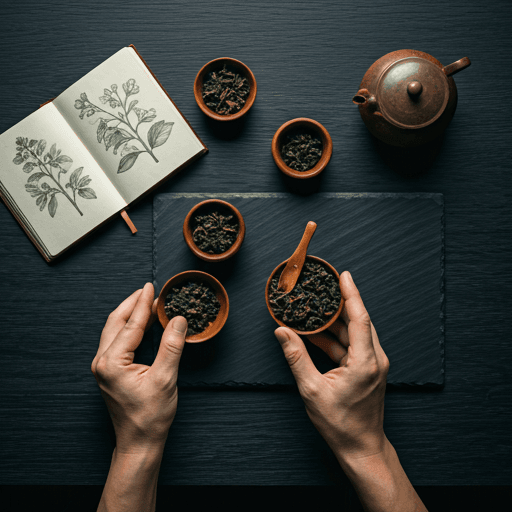
Does rooibos tea have caffeine? No. Rooibos tea is naturally caffeine-free, because it is not a true tea at all. It is a herbal tisane brewed from the leaves of the South African rooibos, or "red bush," plant — a completely different species from the caffeine-containing tea plant, Camellia sinensis. That is exactly why rooibos has become such a popular any-time and evening cup.
So if you are cutting back on caffeine, looking for something to drink after dinner, or pouring a mug for someone caffeine-sensitive, rooibos is one of the easiest choices out there. Below is why it contains none, the single label detail worth checking, and how it stacks up against green, black and white tea and coffee.
Does rooibos tea have caffeine? The direct answer
Straight up: pure rooibos tea has no caffeine. Unlike green, black, white and oolong tea — which all come from the same caffeinated plant — rooibos never contained caffeine in the first place. There is nothing to remove and nothing to "steep out." A long or strong brew will make your cup darker and more robust, but it will not add any caffeine, because the plant simply does not produce it.
Rooibos is often sold as "red tea" or "red bush tea," and the same answer applies there: does red tea have caffeine? No — "red tea" is just another name for rooibos, so the rooibos caffeine content stays at zero. (Be aware that a few unrelated drinks also get nicknamed "red tea," such as hibiscus, which is likewise caffeine-free, or certain dark Chinese teas that are true Camellia sinensis and do contain caffeine. When in doubt, read the ingredients.)
Why rooibos has no caffeine at all
The reason comes down to botany. Rooibos is made from Aspalathus linearis, a needle-leaved shrub that grows almost exclusively in the Cederberg region of South Africa. It belongs to the legume family — a closer relative of peas and beans than of the tea plant. When the leaves are harvested, bruised and left to oxidize, they turn the deep red-brown color that gives the drink its name and its naturally sweet, woody flavor.
That plant is completely unrelated to Camellia sinensis, the evergreen shrub behind every true tea. Caffeine is a compound the tea plant produces; the rooibos bush does not. So while green, black, white and oolong teas all carry caffeine in varying amounts, rooibos carries none — the same way a cup of chamomile, peppermint or hibiscus infusion does not. If you want the bigger picture on which leaves are and aren't caffeinated, our guide to whether tea contains caffeine breaks it down by type, and what rooibos actually is covers the plant and its history in more depth.
Rooibos vs true teas vs coffee: a caffeine table
Here is a quick side-by-side so you can see where rooibos sits. All caffeine figures are rough, hedged ranges — the real number in your cup depends on the leaf, the amount and how long you steep.
| Drink | Made from | Caffeine? | Rough amount per cup |
|---|---|---|---|
| Rooibos (red) tea | Aspalathus linearis (rooibos bush) | None — caffeine-free | 0 mg |
| Green rooibos | Aspalathus linearis (unoxidized) | None — caffeine-free | 0 mg |
| Green tea | Camellia sinensis | Yes | ~20–45 mg |
| Black tea | Camellia sinensis | Yes | ~40–70 mg |
| White / oolong tea | Camellia sinensis | Yes | ~15–60 mg |
| Coffee | Coffea (roasted beans) | Yes | ~80–100 mg |
| Rooibos blended with tea | Rooibos + Camellia sinensis | Some — check the label | Varies |
The takeaway: on its own, rooibos is the outlier in the table — the one drink with a flat zero. Numbers vary by brand and brew, so treat them as a guide rather than a precise measurement.
Why people choose caffeine-free rooibos
Because there is no caffeine to worry about, rooibos is an easy pour when you want warmth and flavor without a stimulant. It is naturally a little sweet and low in tannins, so it tends to taste smooth rather than bitter even if you forget it while it steeps — and it takes milk or a slice of lemon happily.
Many people find it a comfortable evening drink, a good option when they are caffeine-sensitive, and a mild cup that suits older kids too (as always, use your own judgment there). It also slots neatly into a caffeine-free rotation alongside herbal infusions — our overview of caffeine-free teas and tisanes puts rooibos in that wider family. Responses to any drink vary from person to person, and none of this is medical advice; if you have specific concerns, ask your own healthcare provider.
The one thing to check: rooibos blends
Here is the single caveat. Plain rooibos is caffeine-free, but rooibos is a popular base for blends — and if a product mixes it with green or black tea, that added true tea brings caffeine with it. A "rooibos chai," a "green rooibos energy" blend, or some bottled and ready-to-drink products can contain a modest amount of caffeine even though rooibos is on the front of the pack.
So the rule is simple: read the ingredient list. If it says only rooibos (or rooibos plus other herbs, fruit and spices like vanilla, orange peel, cinnamon or ginger), your cup is caffeine-free. If it lists green tea, black tea, Camellia sinensis, yerba mate or guarana, expect some caffeine. When a label specifically says "is rooibos tea caffeine free," it is almost always referring to the pure, single-ingredient version.
Green rooibos vs red rooibos — still zero
You may see "green rooibos" sold alongside the familiar red kind. The difference is processing, not caffeine. Traditional red rooibos is oxidized after harvest, which develops its rusty color and sweeter, fuller taste. Green rooibos skips most of that oxidation, staying closer to the fresh leaf, so it brews paler with a lighter, grassier, slightly more delicate flavor.
Crucially, both come from the same Aspalathus linearis plant, and both are completely caffeine-free. Whether you reach for red or green rooibos, the rooibos tea caffeine answer stays at zero — the choice is purely about taste and color.
A quick word on antioxidants
Rooibos gets talked about for more than just being caffeine-free — it contains its own set of plant antioxidants, including compounds like aspalathin that you won't find in true tea. We are keeping the health side light here, because caffeine is the question of the day; if you want the fuller story, studies associate rooibos with a handful of possible perks worth reading up on in our guide to rooibos tea benefits. As with any wellness claim, effects vary and this is not medical advice.
The bottom line
Does rooibos tea have caffeine? For a plain, single-ingredient rooibos, the answer is a clean no — it is a naturally caffeine-free herbal tisane from a South African bush, not a leaf off the tea plant. That makes it a reliable pick for evenings, for anyone dialing back their caffeine, and for a mellow, naturally sweet cup any hour of the day. Just glance at the label before you buy a blend, and pour with confidence.