
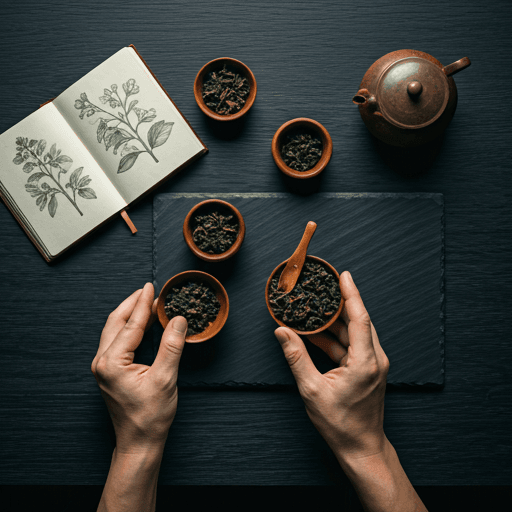
Does chamomile tea have caffeine? No — pure chamomile tea is naturally caffeine-free. Despite the word "tea" in its name, chamomile isn't a true tea at all: it's a herbal tisane made by steeping dried chamomile flowers, not the leaves of the tea plant (Camellia sinensis) that actually contain caffeine. That is exactly why a warm cup of chamomile is such a popular choice for winding down in the evening or before bed.
Below we explain why there's no caffeine to begin with, the one product exception worth checking on the label, and where chamomile sits among the wider caffeine-free family. For the plant's calming reputation and the finer points of the herbal category, we point you to the dedicated guides so this page can stay focused on a single question: caffeine.
Does chamomile tea have caffeine? Why it's naturally caffeine-free
Caffeine is a natural compound produced by only a handful of plants, and in the world of hot drinks it comes overwhelmingly from two sources: the coffee plant and the tea plant, Camellia sinensis. Every true tea — green, black, white and oolong — is made from the leaves of that single evergreen shrub, and those leaves naturally contain caffeine. Chamomile is a completely different plant. It's a small, daisy-like flowering herb, and the drink we call chamomile "tea" is really an infusion of its dried flower heads.
Because chamomile has nothing to do with Camellia sinensis, there is simply no caffeine in the flower to extract in the first place. This is different from decaf tea or decaf coffee, where caffeine is present and then removed by a process that can still leave a small trace behind. With chamomile there is nothing to strip out, so a pure chamomile infusion is caffeine-free by nature rather than by processing. If you want the full picture of which drinks carry caffeine and which don't, our guide on whether tea contains caffeine breaks it down leaf by leaf.
Chamomile tea caffeine content: effectively zero
When people ask about chamomile tea caffeine content, they're usually expecting a small number — the way you'd say a cup of green tea has "about 30 milligrams." There is no equivalent figure for pure chamomile, because the value is effectively zero. With no true-tea leaf in the cup, there is no caffeine to measure. So the honest answer to "does chamomile have caffeine" and "is chamomile tea caffeine free" points the same way in both directions: none, and yes. Any caffeine you find in a chamomile drink has been added to it — it did not come from the chamomile.
The one exception: chamomile blends and flavored products
There is a single catch worth knowing. While pure chamomile is caffeine-free, some products sold under a chamomile name are actually blends. A tea bag labeled something like "green tea and chamomile" or "chamomile with black tea" mixes chamomile flowers with real Camellia sinensis leaves — and that added true tea brings caffeine along with it. Bottled, sweetened or flavored ready-to-drink products can do the same.
The fix is simple: read the label. If the ingredient list shows only chamomile — sometimes alongside other herbs such as lavender, mint or lemon balm — your cup is caffeine-free. If it lists green tea, black tea, white tea, oolong or just "tea," expect some caffeine in the cup. When a box is marketed specifically as a caffeine-free or herbal blend, it usually is, but the ingredient panel is always the final word. For more on how that category is defined, see our explainer on caffeine-free tea.
How to tell if your chamomile has caffeine
A quick scan of the packaging settles it almost every time. Here's what to look for:
- Only chamomile and other herbs: caffeine-free. Herbs like lavender, lemon balm, mint or valerian don't add caffeine.
- Any true tea in the list — green, black, white or oolong: expect some caffeine from that ingredient.
- The words "herbal," "tisane" or "caffeine-free": a strong sign the blend carries no caffeine, though the ingredient list is the real proof.
- Bottled or flavored drinks: check for added tea or "brewed tea," which can slip caffeine into an otherwise herbal-sounding product.
Chamomile vs true tea vs coffee: a caffeine comparison
Here is roughly how chamomile stacks up against the true teas and coffee. Treat the caffeine levels below as broad guides rather than exact figures — the amount in any given cup varies with the leaf, how much you use, the water temperature and how long you steep.
| Drink | Made from | Caffeine? |
|---|---|---|
| Pure chamomile tea | Dried chamomile flowers (a tisane) | None — caffeine-free |
| Peppermint, rooibos, hibiscus | Other herbs, leaves or flowers (tisanes) | None — caffeine-free |
| White tea | Camellia sinensis | Low to moderate |
| Green tea | Camellia sinensis | Low to moderate |
| Oolong tea | Camellia sinensis | Moderate |
| Black tea | Camellia sinensis | Moderate to high |
| Chamomile blended with green or black tea | Chamomile + Camellia sinensis | Some (from the added tea) |
| Brewed coffee | Coffee beans | High |
The pattern is easy to read off the table. Chamomile and the other herbal tisanes are the only entries with no caffeine at all, while everything made from the tea plant or the coffee bean lands somewhere on the caffeine scale. If you're choosing a drink specifically to avoid caffeine late in the day, the herbal row is where you want to be, and chamomile is one of its most familiar members.
Why people choose caffeine-free chamomile
The absence of caffeine is the main reason chamomile has become such a classic evening drink. Because it won't add a stimulant to your system late in the day, many people reach for it as a wind-down ritual — a warm, mellow, faintly apple-scented cup to sip while the day slows down. It is also a common pick for anyone who is sensitive to caffeine, who wants to cut back in the afternoon and evening, or who simply likes a hot drink that won't get in the way of sleep.
Chamomile is frequently offered to children for the same reason, and it shows up in plenty of bedtime and "sleepy"-style blends. Many people find it soothing and calming, though responses vary from person to person, and this isn't medical advice. Our focus here is only the caffeine question — for the herb's traditional uses and what the research does and doesn't support, see our guide to chamomile tea benefits.
None of this makes chamomile a substitute for anything or a remedy — it is simply a caffeine-free option that suits the moments when you don't want a stimulant. Plenty of people drink it purely because they like the gentle, honeyed flavor and the ritual of a warm mug, caffeine aside entirely.
A note on pregnancy and herbal teas
One quick, non-medical note before you brew. "Caffeine-free" is not the same as "anything goes." Some people choose to avoid or limit certain herbal teas during pregnancy or while nursing, or when they are taking particular medications, regardless of caffeine content. If any of that applies to you, the sensible move is to ask your own doctor or midwife which herbs are right for you. Recommendations vary from person to person, and this article is general information rather than medical advice.
How chamomile fits the caffeine-free family
Chamomile is one member of a large group of caffeine-free infusions known as tisanes — drinks brewed from herbs, flowers, roots, spices or fruit rather than from the tea plant. Peppermint, rooibos, hibiscus, lemongrass and fresh ginger all belong to the same family, and none of them contain caffeine on their own. That makes them natural companions to chamomile in an evening rotation, or for anyone steering clear of stimulants around the clock. If you're new to the category, our overview of what herbal tea is is a good place to start.
So the bottom line stays refreshingly simple. A cup made from pure chamomile flowers has no caffeine, full stop — the only thing that changes that is a blend with real tea leaves tucked into the ingredient list. Glance at the label once, and you can enjoy your chamomile at any hour, from a mid-afternoon lull to the last cup before bed, without giving caffeine a second thought.