
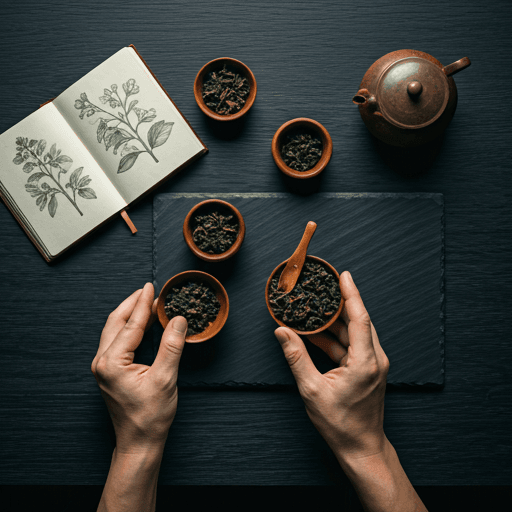
Does holy basil tea have caffeine? No — pure holy basil tea, better known as tulsi, is naturally caffeine-free. It is an herbal tisane made from the leaves of holy basil (Ocimum tenuiflorum, the plant most people call tulsi), a fragrant mint-family herb long revered in South Asian tradition. Because it comes from a completely different plant than true tea, a cup of pure tulsi carries no caffeine of its own.
Does holy basil tea have caffeine? The short answer
The short answer is no. A plain tulsi infusion is caffeine-free the same way peppermint, chamomile or rooibos infusions are: the "tea" in its name is a loose, everyday label for a hot herbal drink, not a sign that the leaf actually belongs to the tea plant. Only leaves from Camellia sinensis — the shrub behind green, black, white and oolong tea — naturally contain caffeine. Tulsi is an herb, so on its own it delivers aroma and flavor without any of the stimulant.
That makes tulsi a reliable choice when you are counting your caffeine for the day or simply want a warm drink that won't keep you awake. If you want the wider picture of drinks with no stimulant at all, our guide to caffeine-free tea covers the whole category, and whether tea contains caffeine explains where the line sits between true teas and herbal tisanes.
Why holy basil tea has no caffeine
Caffeine in the tea world comes from one place: the leaves of Camellia sinensis. Whether that leaf is processed into a brisk black tea or a grassy green tea, that single plant is what carries the caffeine. Holy basil is botanically unrelated — it sits in the mint (Lamiaceae) family alongside peppermint, sweet basil and lemon balm, and none of those herbs produce caffeine.
So when you steep tulsi leaves, you are making an herbal tea (a tisane) rather than a true tea. There is no caffeine to extract, no matter how long or how hot you brew it. Steeping harder just pulls out more of the herb's aromatic oils and flavor, not a hidden dose of stimulant.
Tulsi tea caffeine content at a glance
Here is how a pure tulsi tisane compares with the true teas people often drink alongside it. Caffeine figures for true tea vary widely by leaf, amount and steep time, so treat them as rough ranges rather than exact numbers.
| Drink | Plant source | Caffeine per cup |
|---|---|---|
| Holy basil (tulsi) tea | Ocimum tenuiflorum — a mint-family herb | None (caffeine-free) |
| Green tea | Camellia sinensis | ~20–45 mg (varies) |
| Black tea | Camellia sinensis | ~40–70 mg (varies) |
| Tulsi "green tea" blend | Tulsi + Camellia sinensis | Some caffeine — check the label |
The exceptions: when a "tulsi tea" does contain caffeine
The one thing that turns the answer from "no" to "it depends" is a blend. Does tulsi tea have caffeine if it has been mixed with real tea? Yes. Two common cases are worth watching for:
- Tulsi green tea (or tulsi black tea) blends. Many popular products combine tulsi with actual green or black tea leaves for a fusion flavor. Those absolutely contain caffeine, because the Camellia sinensis leaves in the mix bring it along.
- Bottled or flavoured drinks. A ready-to-drink "tulsi" iced tea or wellness beverage may be built on a tea base or have caffeine added. The label is the only reliable guide.
So is holy basil tea caffeine free? Pure, single-herb tulsi is. A blend that lists green tea, black tea, matcha or "caffeine" among its ingredients is not. When in doubt, read the ingredient list and look for the words Camellia sinensis, green tea or black tea — if none of those appear, you are almost certainly holding a caffeine-free cup.
How holy basil (tulsi) tea tastes
Tulsi has a distinctive, savory-sweet aroma that sets it apart from other herbal cups. Expect something warm and peppery, with a clove-like spice, a cooling minty edge and a green, almost herbaceous finish. Different varieties lean in different directions — some are more peppery and clove-forward, others softer and more lemony — but the overall impression is aromatic and a little spicy rather than fruity or floral. It takes well to a slice of lemon, a little honey or a pinch of ginger if you want to round it out, which is one reason it turns up so often in caffeine-free evening blends.
The name: holy basil, tulsi and where it comes from
Holy basil and tulsi are two names for the same plant. "Tulsi" is the traditional name for Ocimum tenuiflorum (also written Ocimum sanctum), an herb held sacred and grown in home courtyards across South Asia for centuries. English speakers usually call it holy basil because it is a close cousin of the sweet basil used in cooking, though the two taste quite different. You will see both names on tea packaging, sometimes together as "tulsi (holy basil)".
You may also spot specific varieties named on a label — Rama (green-leaved), Krishna (purple-tinged) and Vana (a wild type) tulsi are the common ones, and many blends mix them. None of them contain caffeine; the differences are in aroma, color and pungency, not stimulant content. For more on the herb itself and how people use it, see our guide to holy basil (tulsi) tea.
Why caffeine-free matters: drink tulsi any time
Being caffeine-free is the whole appeal for a lot of tulsi drinkers. You can enjoy it in the afternoon or wind down with holy basil tea before bed without worrying that it will keep you up, and it is an easy swap once you have already had your coffee or true tea for the day. Many people reach for a warm, aromatic cup precisely because it feels calming and grounding in the evening, which makes it a natural fit for a bedtime routine.
Tulsi is often described as an "adaptogen-style" herb in traditional wellness, and many people simply find it soothing to sip. Keep expectations grounded, though: pleasant and relaxing is not the same as a medical effect, and responses vary from person to person. This is general information, not medical advice.
How to brew holy basil tea
Brewing tulsi is forgiving. Use a rounded teaspoon of dried tulsi leaves (or a small handful of fresh ones) per cup, pour over water that has just come off the boil, cover to trap the aromatic oils, and let it steep for around five minutes — longer if you like it stronger and more fragrant. Strain and drink it plain, or add lemon, honey or ginger. Because there is no caffeine and no tannin bite from true tea, you cannot really over-steep it into bitterness, so feel free to leave the leaves in and adjust to taste.
Who should be cautious
For most people a cup of tulsi is an easy, everyday drink. A few situations call for a quick word with a professional first: if you are pregnant or trying to conceive, or if you take blood-thinning or diabetes medication, it is worth asking your own healthcare provider before making tulsi a daily habit, since concentrated or frequent herbal amounts can interact with some medications. As always, responses vary from person to person, and this is general information rather than medical advice.
The bottom line: reach for pure holy basil (tulsi) and you have a genuinely caffeine-free cup you can enjoy morning, noon or night. The only time to slow down and check is when tulsi shares a bag with real green or black tea — then the caffeine comes from the tea leaf, not the herb.