
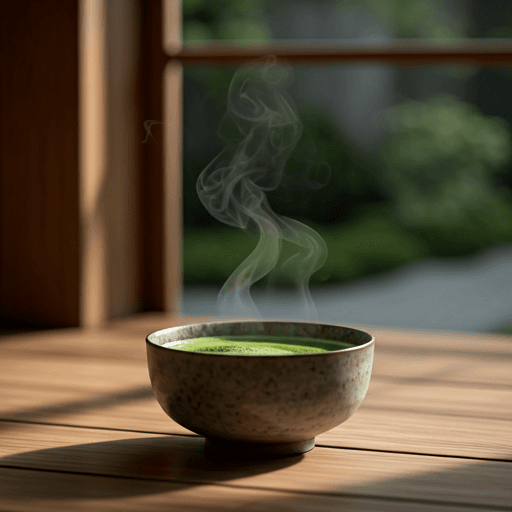
Decaf tea is real tea — black, green, oolong, or white from the Camellia sinensis plant — that has had most of its caffeine removed. The word that trips people up is most: decaf tea is low in caffeine, not caffeine-free. A small trace always remains. This guide explains what decaffeinated tea is, how it is made, how much caffeine is left, and how decaf differs from drinks that never had caffeine in the first place.
What decaf tea actually is
Decaf tea starts life as ordinary tea. The leaves are grown, plucked, and processed exactly like any black, green, oolong, or white tea — and they all contain caffeine naturally, because the tea plant makes it. Decaffeination is an extra step at the end: the finished (or sometimes still-green) leaves are treated to pull most of the caffeine out before they are packed and sold.
That is the crucial point. Because the leaf is genuine tea, decaf still carries the same family of compounds that make tea tea — the polyphenols, the L-theanine, the flavour. It just arrives with far less of the stimulant. The catch is that no commercial process strips caffeine to absolute zero. A cup of decaf tea keeps a small residue, typically a few milligrams. "Decaf" is a low-caffeine label, never a no-caffeine guarantee.
Decaf vs caffeine-free tea: the key distinction
This is the single thing most people get wrong, so it is worth being precise. The decaf vs caffeine-free tea question comes down to where the drink started:
- Decaf (decaffeinated) tea is real tea that had caffeine, then had most of it removed. A trace stays behind. Think decaf black, decaf green, or decaf Earl Grey.
- Caffeine-free tea never contained caffeine at all. These are herbal infusions and tisanes — chamomile, peppermint, rooibos, hibiscus, fruit blends — brewed from plants other than Camellia sinensis. There is nothing to remove because there was nothing there.
So "decaf" and "caffeine-free" are not interchangeable. If you need to avoid caffeine entirely, a naturally caffeine-free herbal is the safer pick than a decaf. For the full picture of those zero-caffeine drinks, see our guide to caffeine-free tea; for the wider tea family, the types of tea explained guide maps how true teas and herbals fit together.
How is tea decaffeinated?
When people ask how is tea decaffeinated, the honest answer is: with one of a few industrial methods, most of which use a solvent to bind to caffeine and carry it away. The flavour molecules in tea are larger than caffeine, so a well-run process can lift most of the caffeine while leaving much of the taste intact. Residual caffeine and any solvent traces are regulated and kept very small. The main methods are:
Supercritical CO2 (carbon dioxide)
Pressurised carbon dioxide is pushed into a "supercritical" state — part gas, part liquid — at high pressure. In that state CO2 behaves like a gentle solvent: its small, non-polar molecules grab the small caffeine molecules and leave the larger flavour and antioxidant compounds behind. It is widely regarded as one of the best methods for preserving taste, removes a large share of the caffeine selectively, and leaves no chemical residue, since the CO2 simply evaporates. It is also among the most expensive to run.
Ethyl acetate (often labelled "naturally decaffeinated")
Ethyl acetate is a compound found naturally in some fruits, which is why tea decaffeinated this way is sometimes called "naturally decaffeinated." The leaves are treated so the caffeine bonds to the ethyl acetate and is washed out. It is a common, lower-cost method, but the solvent is hard to remove completely and can leave a faint chemical edge to delicate teas.
Water process
The water method soaks the leaves to draw caffeine out, then passes the liquid through a carbon filter that traps caffeine while letting flavour compounds pass back. It is used far more for coffee than for tea, but a small share of tea is decaffeinated this way. It is solvent-free, though it can be gentler on flavour than the leaf's caffeine deserves and may soften the cup.
Methylene chloride (solvent)
An older chemical-solvent method that binds caffeine efficiently. Residual limits are tightly regulated where it is permitted, and the solvent is driven off during processing, but some markets and brands avoid it on principle in favour of CO2 or water.
Decaf vs caffeine-free vs regular tea at a glance
| Type | Caffeine per cup (approx.) | What it is |
|---|---|---|
| Regular true tea (black, green, oolong, white) | ~20-60 mg | Camellia sinensis leaf, full natural caffeine |
| Decaf (decaffeinated) tea | ~1-5 mg | True tea with most caffeine removed; a trace remains |
| Caffeine-free tea (herbal/tisane, rooibos, fruit) | 0 mg | Plants other than tea; never contained caffeine |
Figures are rough and vary with leaf, cut, water temperature, and steep time. They are a guide to scale, not a fixed value for any one cup.
How much caffeine is left in decaf tea?
A common standard for "decaf" is that the leaf has had the large majority of its caffeine removed — frequently cited as around 96-97% gone. In practical terms, a cup of decaffeinated tea usually lands somewhere around 1 to 5 mg of caffeine, against roughly 20-60 mg for the same tea brewed normally. That residue is widely treated as negligible for most people, but "negligible" is not "none." Anyone who is highly caffeine-sensitive, or who has been told to avoid caffeine, should remember the trace is real and small rather than absent — and choose a naturally caffeine-free herbal if they need a true zero.
The first-steep "rinse" myth
A popular kitchen claim says you can decaffeinate your own tea by steeping it for 30 seconds, tipping out that first "rinse," and brewing the rest caffeine-free. It is a tidy idea and it is largely wrong.
Caffeine is highly water-soluble, but it does not all rush out in the first few seconds. Tests of quick rinses suggest a 30-second steep removes only on the order of 10% of the caffeine — leaving roughly 90% still in the leaf. To pull out even half the caffeine you would need to steep for several minutes and discard that liquor, by which point you have also thrown away most of the flavour, aroma, and character you were brewing for. Extraction depends on time and temperature together, not on a magic first dunk.
The takeaway: you cannot reliably home-decaffeinate tea. A short rinse pours good tea down the drain for very little caffeine saving. If low caffeine genuinely matters to you, buy tea that has been properly decaffeinated, or reach for a caffeine-free herbal.
Does decaf tea taste different?
Often, slightly. Decaffeination is a physical and chemical process, and even the gentlest method touches the leaf. Decaf can taste a touch milder, softer, or flatter than the full-caffeine original — a little less brisk in a black tea, a little less grassy-bright in a green. The CO2 method tends to preserve the most flavour; solvent methods can leave the faintest extra note. Good blenders compensate, and many decafs are very pleasant, but a side-by-side with the caffeinated version will usually reveal a small gap.
Types of decaf tea you'll find
Because decaf starts from real tea, you can find it across the true-tea spectrum:
- Decaf black tea — breakfast blends and everyday black, the most widely available decaf, good with or without milk.
- Decaf green tea — lighter and more delicate; the process can trim some of the catechins and antioxidants greens are prized for. See our spoke guide to decaf green tea.
- Decaf Earl Grey — black tea scented with bergamot, kept as the classic flavour minus most of the caffeine. Our decaf Earl Grey guide goes deeper.
- Decaf oolong and white — less common but available from specialist sellers.
- Decaf chai — spiced black-tea blends in a low-caffeine version, handy for an evening cup.
The bottom line
Decaf tea is the real thing with the stimulant turned down: genuine Camellia sinensis leaf, most of its caffeine removed by CO2, water, or a solvent, with a small trace always left behind. It is not the same as caffeine-free herbal tea, you cannot make it at home with a quick rinse, and it may taste a shade gentler than the original. If you want the ritual and flavour of tea late in the day without much caffeine, decaf is made for you — and if you need a flat zero, head to a naturally caffeine-free infusion instead.