
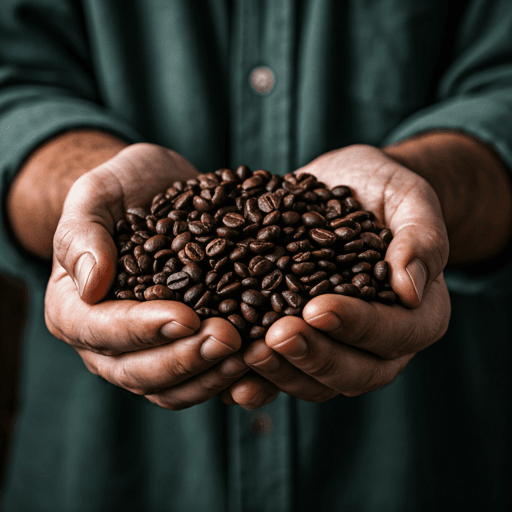
Death Wish Coffee is an American coffee company famous for one bold promise: it bills itself as the world's strongest coffee. Founded in upstate New York and wrapped in skull-and-crossbones branding, the brand built its name on a genuinely high-caffeine, dark-roast cup that sits well above an average mug. This guide explains what it actually is, how it gets so strong, what it tastes like, and how to drink it sensibly.
What is Death Wish Coffee?
Death Wish Coffee started in 2012 in Saratoga Springs, New York, where founder Mike Brown was running a small coffee shop and kept getting asked for the strongest cup in the house. He set out to roast and blend something that would genuinely deliver, and the brand grew from a single storefront into a nationally distributed name. The coffee is roasted in upstate New York and sold online, through major marketplaces, and on grocery shelves.
The look is deliberately loud: a black bag, a skull-and-crossbones logo, and the slogan "the world's strongest coffee." That identity went mainstream in 2016, when Death Wish won Intuit QuickBooks' "Small Business Big Game" contest, beating thousands of other entrants in a public vote to earn a free Super Bowl 50 commercial. The 30-second spot, featuring a tribe of Vikings sailing a sea of black coffee, put the brand in front of more than 100 million viewers at once and sent a wave of traffic to its website. It is one of the better-known small-business marketing stories in the coffee world, and it cemented the brand's high-octane reputation.
The coffee is also certified USDA Organic and Fair Trade, with beans sourced from growing regions across South and Central America and Asia. So the proposition is not just "strong" for its own sake; it is a bold, ethically sourced dark roast that happens to be unusually caffeinated.
Is it really the world's strongest coffee?
On caffeine, the claim has real substance. Independent lab testing the company commissioned (at the EMSL Food Chemistry Lab) put brewed Death Wish at roughly 200 to 210 mg of caffeine per 100 ml. Brewed at the brand's recommended strength, that works out to several hundred milligrams in a single mug, far above a typical cup of drip coffee. Consumer Reports' own testing measured about 472 mg of caffeine in an 8 oz (about 240 ml) cup. For context, an ordinary 8 oz cup of brewed coffee usually lands somewhere around 95 to 120 mg of caffeine.
Whether it is literally the single strongest coffee on Earth is harder to pin down, because "strongest" is a marketing phrase rather than a regulated measurement, and a few rival brands chase the same title. What is fair to say is that this is a genuinely high caffeine coffee, comfortably stronger than the supermarket norm and most cafe house blends. If you brew it the way the bag suggests, expect a noticeable jolt.
How Death Wish Coffee gets so strong
Three levers do the work, and none of them is a gimmick.
1. A robusta-led blend
The single biggest factor is the bean. Death Wish blends robusta with arabica, and it leans on robusta far more than a typical specialty roaster would. Robusta beans naturally carry roughly twice the caffeine of arabica, so a blend weighted toward robusta starts out far more caffeinated before anything else happens. If you want the full picture on why one species hits harder than the other, see our arabica vs robusta coffee beans explainer. The arabica in the mix is there to round out the cup and keep it drinkable.
2. A dark roast
The brand is built on a dark roast, which gives the coffee its heavy, low-acid, almost smoky character. Roast level changes flavor more than it changes caffeine, but a dark roast is part of the brand's intensity and a big reason the cup tastes as bold as it does. Our guide to coffee roast levels walks through what light, medium and dark roasting actually do to the bean.
3. A generous dose and a finer grind
Strength in the cup is also about ratio. Use more coffee per cup, grind it a little finer, and brew it fully, and you extract more caffeine and more flavor. Death Wish's brewing guidance points toward a strong ratio, which is how its single-serve pods and bagged coffee deliver such a punch. Pull the dose back and you get a milder, more everyday cup from the very same beans.
What it tastes like
For a coffee marketed on raw power, the flavor is surprisingly approachable. Expect a bold, full-bodied, dark-roast profile with low acidity and notes that reviewers often describe as chocolatey with a hint of cherry. It is not the sharp, sour bitterness some people fear from "extreme" coffee; the arabica share and careful roasting keep it fairly smooth for its strength. It stands up well to milk and holds its own as a black coffee, an iced coffee, or the base of a cold brew.
The Death Wish Coffee product range
The brand has grown well beyond a single bag. In general terms, you will find:
- Whole bean and ground - the classic dark roast in a range of pack sizes, plus a milder medium roast for people who want the flavor with a bit less intensity.
- Single-serve pods - Keurig-compatible capsules (sold as "Death Cups") for K-Cup style brewers, the easiest way to get a strong cup with no measuring.
- Instant coffee - a freeze-dried version of the dark roast for travel, the office, or camping, when you want strength without equipment.
- Canned cold brew and flavored options - ready-to-drink cold brew and a handful of flavored coffees such as vanilla and chocolate hazelnut, mostly in pods or ground form.
Death Wish sits firmly at the bold, high-caffeine end of a crowded market; our wider coffee brands roundup gives useful context on how the big names compare and where a brand like this fits in.
Quick facts and how it compares
| Quick facts | Death Wish Coffee |
|---|---|
| Origin | American brand, founded 2012, Saratoga Springs, New York |
| Claim to fame | "The world's strongest coffee"; 2016 Super Bowl 50 ad |
| Bean blend | Robusta-led, blended with arabica |
| Roast | Dark roast (a medium roast also exists) |
| Flavor | Bold, low-acid, chocolate and cherry notes, smooth for its strength |
| Formats | Whole bean, ground, instant, K-Cup pods, canned cold brew |
| Certifications | USDA Organic, Fair Trade |
Roughly how the caffeine stacks up, per cup:
| Coffee | Approx. caffeine | Notes |
|---|---|---|
| Average drip coffee (8 oz) | ~95-120 mg | Typical supermarket or cafe house blend |
| Strong dark roast (8 oz) | ~150-200 mg | A robust everyday cup |
| Death Wish brewed (8 oz) | ~472 mg | Consumer Reports figure; roughly four to five times an average cup |
| Death Wish brewed (12 oz) | ~700+ mg | Near or above a full day's caffeine in one mug |
Figures are approximate and depend on how you brew. For the underlying science, see our explainers on caffeine and how much caffeine is in a cup of coffee.
A responsible note on a very high-caffeine coffee
Because the caffeine is so concentrated, treat this coffee with respect rather than as a dare. A few general points worth keeping in mind:
- Mind your daily total. Health authorities generally consider up to about 400 mg of caffeine a day reasonable for most healthy adults. A single mug brewed at full strength can approach or exceed that on its own, so one cup may be plenty.
- Go gently if you are sensitive. If caffeine makes you jittery, anxious, or affects your sleep, this is not the coffee to start your experiments with. Brew it weaker, drink a smaller serving, or stick to a milder roast.
- Skip it late in the day. Caffeine lingers for hours, and a cup this strong in the afternoon or evening can disrupt sleep well into the night.
- Some people should avoid high-caffeine coffee. Pregnant readers, anyone advised to limit caffeine, and people with certain heart or anxiety conditions are usually told to keep intake low. This guide is general information, not medical advice, so check with a doctor if you are unsure.
Used sensibly, a strong coffee can be a genuine pleasure. Just remember that "the world's strongest coffee" is not a challenge to finish a pot of.
The bottom line
Death Wish Coffee is exactly what it says on the bag: a bold, robusta-led, dark-roast brand that delivers far more caffeine than an ordinary cup, dressed up in memorable skull-and-crossbones marketing. The flavor is smoother and more approachable than the name suggests, and the range now stretches from whole bean to instant to pods and cold brew. Enjoy it for the intensity, lean on a smaller dose if you are caffeine-sensitive, and keep a close eye on your daily total.