
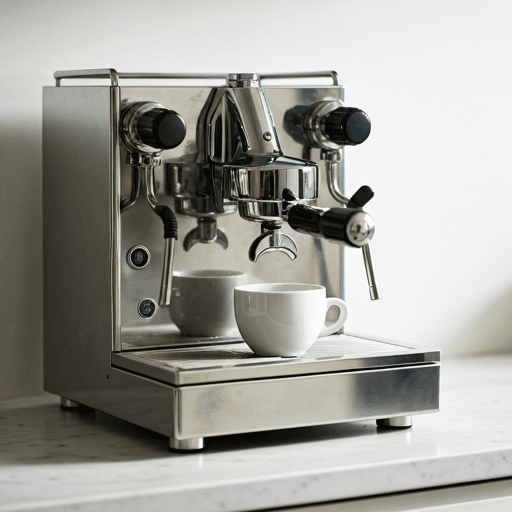
A commercial coffee machine is coffee equipment built for high-volume, all-day service in a cafe, restaurant, office, hotel or event venue. It is sturdier, faster to recover between drinks and far more serviceable than a home model. Choosing one comes down to honest numbers rather than brochure shine: how many cups you pour at the busiest hour, which drinks you actually sell, who is making them, and what your space, water and power supply can support. This guide maps the main types of commercial coffee machines and gives you a plain checklist so you buy for the work in front of you.
What makes a coffee machine "commercial"?
The label is about duty cycle, not just size. A home machine is designed to make a handful of drinks a day and rest in between. A commercial coffee brewer is engineered to run flat out through a morning rush, recover its temperature quickly, and keep doing that for years. The practical differences show up in a few places:
- Build and boilers. Heavier stainless construction, larger boilers and stronger pumps so the machine holds temperature and pressure when several drinks go out back to back.
- Throughput. Rated for hundreds of cups a day rather than dozens, with steam power to texture milk continuously.
- Utilities. Many models plumb into a mains water line and a higher-powered electrical supply instead of a small tank and a wall plug.
- Serviceability. Parts are standardized and replaceable, and most volume operators run a service contract. A machine that can be fixed on-site beats one you have to box up and ship away.
If you are kitting out a home kitchen instead of a counter, the trade-offs are different and our guide to choosing a coffee maker is the better starting point. Everything below assumes real volume and, usually, paying customers.
The main types of commercial coffee machines
There is no single best cafe coffee machine. There are categories, each suited to a different mix of volume, menu and staffing. Here are the five families you will choose between.
Traditional, semi-automatic espresso machines
This is the classic espresso bar machine: one, two or three group heads where a barista locks in a portafilter, pulls a shot and steams milk on a wand. It offers the highest quality ceiling and the most control, which is exactly why specialty cafes use it. The catch is that it needs a trained person and disciplined cleaning. The number of group heads is your throughput dial, and the boiler design (single boiler, heat exchanger or dual boiler) and PID temperature control decide how stable it stays under pressure. A heat exchanger lets one boiler brew and steam at once and suits most independent cafes, while a dual boiler holds brew and steam temperatures separately for the steadiest shots at high volume. Because this category runs deep, we cover it in detail in the commercial espresso machines guide.
Bean-to-cup super-automatics
A super-automatic, or bean-to-cup, machine grinds, doses, brews and often froths milk at the push of a button. There is no portafilter and no barista skill required, which makes it ideal for self-serve offices, hotel breakfasts, convenience counters and any busy spot where you cannot guarantee a trained operator. Quality is consistent and respectable, if rarely at the very top of what a skilled hand can pull. The milk system is the part that demands attention: automatic frothers and fresh-milk fridges must be cleaned daily or they fail fast. For a deeper look at this category, see the bean-to-cup coffee machine guide.
Batch brewers and commercial filter coffee
When the job is large volumes of straightforward drip coffee, a batch brewer is the workhorse. It brews into a thermal urn, airpot or satellite server by the liter, at a low cost per cup and with almost no skill needed. Offices, diners, canteens and catering lean on these because they can fill a meeting room or a breakfast service without a queue. They do not make espresso, so they pair well with a small espresso or bean-to-cup machine for milk drinks. Airpot brewers, urns and percolators sit in the same family for events and conferences where you simply need a lot of coffee held hot and ready to pour.
Pod and capsule systems
Commercial pod or capsule machines trade flexibility for simplicity. They suit small offices, waiting rooms, showrooms and low-volume corners where a handful of varied drinks a day is the reality and nobody wants to clean a steam wand. The cost per cup is higher and the menu is fixed to whatever pods you buy, but the fuss is close to zero. Think of them as the lowest-effort end of the commercial spectrum rather than a cafe coffee machine.
Vending: fresh-brew and instant
Self-serve vending sits slightly apart because it runs unattended. Fresh-brew vending grinds and brews per cup for noticeably better flavor, while instant vending reconstitutes soluble powder for the lowest cost and simplest upkeep. Lobbies, factories, hospitals and 24/7 spaces use these for cashless or coin self-service with no staff at all. If unattended service is your need, start with the coffee vending machines guide.
Commercial coffee machine types compared
Use this table to narrow the field before you talk specs. Match the row to your menu, your volume and whoever will be standing at the machine.
| Type | Best for | Who runs it | Throughput | Notes |
|---|---|---|---|---|
| Traditional espresso (1-3 groups) | Specialty cafes, espresso bars | Trained barista | Medium to high, scales with groups | Highest quality ceiling; needs skill and daily cleaning |
| Bean-to-cup super-automatic | Offices, hotels, self-serve counters | Anyone (one button) | Medium | Consistent and low-skill; milk system needs daily care |
| Batch brewer / filter | Offices, diners, catering | Anyone | High, by the pot or airpot | Big volumes of drip coffee; no espresso |
| Airpot / urn / percolator | Events, conferences, breakfast service | Anyone | Very high | Holds and serves large volumes hot; not espresso |
| Pod / capsule | Small offices, waiting rooms | Anyone | Low | Lowest fuss; higher cost per cup, fixed menu |
| Vending (fresh-brew or instant) | Lobbies, factories, 24/7 spaces | No staff | Variable | Unattended self-service; see the vending guide |
How to choose a commercial coffee machine: the checklist
Once you know the category, these are the factors that decide which specific machine fits. Work through them in order.
- Realistic cups per day and peak throughput. Be honest about the busiest 60 minutes, not the daily average. A machine that copes with your total volume but stalls during the morning rush will lose you customers. Size up for peak.
- Group heads or brew capacity. For espresso, one group suits a slow counter, two covers most cafes, and three or more is for high-traffic bars. For batch and bean-to-cup, the equivalent question is liters or cups per hour.
- Power supply. Smaller machines run on a standard single-phase outlet; larger multi-group and high-output machines often need a dedicated circuit or three-phase power. Confirm what your premises can deliver before you commit.
- Plumbing. Decide between a plumbed-in machine (mains water plus a drain) and a pour-over tank model. Plumbing is essential at volume so nobody is refilling a tank mid-rush, but it needs the right connections and a drain nearby.
- Milk workflow. A steam wand gives the best texture but needs a barista; an automatic frother trades a little quality for speed and consistency; a fresh-milk fridge automates everything but adds cleaning. Pick the one that matches your staff and your milk-drink share.
- Water treatment. This is the single biggest factor in reliability. Hard water scales boilers and valves and is the leading cause of breakdowns, so a proper filter or softener sized to your water is not optional at volume.
- Footprint and ergonomics. Measure the counter, the height under any shelf, and the workflow around the machine, grinder and cups. A machine that does not fit the bench or the bar flow slows every drink.
- Serviceability and support. Check parts availability, warranty terms and whether on-site service is available locally. At real volume a service contract is worth more than a flashy spec sheet.
Water, power and plumbing: the boring stuff that keeps you open
The features that decide whether a coffee machine for a coffee shop is still working in three years are rarely the ones on the front of the box. Water quality leads the list. Scale from hard water clogs boilers, jams solenoid valves and ruins flavor, and most service callouts trace back to it. Test your water, then fit filtration or softening matched to its hardness, and keep to a descaling and cleaning routine.
Power and plumbing come next. A multi-group espresso machine or a high-output brewer can draw more than a standard socket supplies, so verify the circuit and whether three-phase is needed early, before delivery day. Plumbed water with a drain removes the refill bottleneck that quietly caps a tank machine's throughput. None of this is glamorous, but it is what separates a machine that earns its keep from one that becomes a daily headache.
Matching the machine to the setting
The same machine is right or wrong depending on where it lands:
- Specialty cafe or espresso bar: a traditional two- or three-group espresso machine with a skilled barista, backed by good water treatment.
- Restaurant or hotel: often a bean-to-cup for consistency and speed, sometimes alongside a small espresso machine for the bar.
- Busy office: bean-to-cup for self-serve quality, or a batch brewer plus a pod machine for variety without a barista.
- Events and catering: batch brewers, airpots and urns that hold large volumes hot and ready.
- Unattended lobby or factory floor: fresh-brew or instant vending that runs without staff.
The short version
Start with your peak-hour volume and your menu, pick the category that fits your staffing, then pressure-test the practical details: power, plumbing, milk workflow and above all water treatment. A commercial coffee machine bought to match the real work will pour better coffee, break down less and pay for itself faster than one chosen on looks. If espresso is your focus, go deeper with the commercial espresso machines guide; if you want one-button service, the bean-to-cup guide is your next read.