
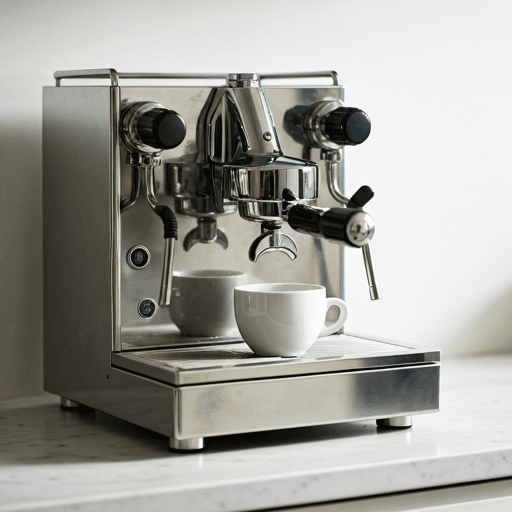
A coffee vending machine is a self-service appliance that makes a hot drink on demand: you choose a drink, it brews or mixes a cup, and it pours straight into a cup or your own mug. You meet them in offices, hospitals, factories, train stations, hotel lobbies and other public spaces, and they fall into a few clearly different families that taste and cost very differently. This guide explains what the machine is, how it works, and how to tell the main types apart.
What a coffee vending machine is
At its simplest, a coffee vending machine is an automated drinks station. Behind the front panel sit ingredient hoppers, a water boiler, a mixing or brewing unit, a cup and lid dispenser, and a control board that ties it all together. You make a selection, the machine doses the right ingredients, heats water, makes the drink and delivers it, usually in well under a minute. The point is speed, volume and walk-up convenience rather than a barista's flourish.
The category is broad. The same cabinet that brews coffee will often pour tea, hot chocolate and sometimes soup, because all of those are just a measured ingredient meeting hot water. That flexibility is why a single machine can keep a busy floor of people happy. It is also worth saying what these machines are not: a freestanding hot-drinks vendor is a different animal from the countertop bean-to-cup unit you might put in a small home kitchen, which our bean-to-cup coffee machine guide covers.
How a coffee vending machine works
Once you press a button, the sequence is roughly the same across types. The control board reads your selection and any extras you asked for, such as more milk, extra strength or added sugar. It then doses the first ingredient into an internal mixing bowl or brew chamber, draws hot water from the boiler, combines them, and channels the finished drink down to the cup. A second ingredient, such as a milk topping or chocolate, can be layered in during the same cycle.
The differences between machines come down to one question: where does the coffee itself come from? A machine can dissolve a pre-made powder, brew real grounds, or grind whole beans to order. That single choice drives quality, upkeep and the kind of drinks the machine can offer. Everything else, including the boiler, the cup drop and the payment system, is broadly shared.
The main types of coffee vending machine
There are three coffee-making approaches, plus the older world of canned and bottled drinks. Here is how they compare.
| Type | How it makes the coffee | Cup quality | Best for |
|---|---|---|---|
| Instant (freeze-dried) | Doses instant coffee powder and mixes it with hot water | Basic but consistent | High volume, tight budgets, simple needs |
| Fresh-brew / filter | Brews real ground coffee per cup through a filter | A clear step up | Offices and venues that want better coffee without espresso |
| Bean-to-cup | Grinds whole beans per cup and makes espresso-based drinks | Highest, cafe-style | Sites that want lattes and cappuccinos on tap |
| Can / bottle vending | Drops a sealed cold or pre-heated can or bottle | Fixed, brand-dependent | Cold ready-to-drink coffee, no brewing |
Instant coffee machines
The simplest and cheapest machines dose freeze-dried instant coffee and dissolve it in hot water. They are quick, reliable and need the least upkeep, and because the ingredient is dry powder, one refill can serve a very large number of cups. The trade-off is the drink itself: it is instant coffee, so it tastes like instant coffee. If you want to understand what that means in the cup, our explainer on instant coffee walks through how freeze-dried granules are made and why they taste the way they do. For a busy corridor where speed and cost matter most, an instant machine is hard to beat.
Fresh-brew (filter) machines
Fresh-brew machines hold real ground coffee and brew it per cup, or in small batches, through a filter, much like a drip coffee maker. The result is noticeably better than instant: rounder, more coffee-like, with real aroma. Some models even grind the coffee to order. They sit in the middle on cost and maintenance, because there are real grounds to load and spent grounds to clear. For an office that wants a genuine improvement on instant without the cost and care of espresso, fresh-brew is the sensible middle path.
Bean-to-cup machines
Bean-to-cup machines are the top of the range. Whole beans sit in a sealed hopper, an integrated grinder mills a fresh dose for every cup, and the machine brews espresso under pressure, then builds espresso-based drinks: espresso, americano, cappuccino, latte and more. The coffee is the freshest a vending machine can offer, and the menu is the widest. In exchange, these machines cost the most, demand the most cleaning, and rely on a milk system to make the milky drinks. They are the choice when a workplace or venue wants something close to a coffee bar on demand.
Canned and bottled vending
Traditional can and bottle machines do not brew at all. They store sealed ready-to-drink coffee, hot or cold, and simply drop your choice into the tray. Quality is fixed by the brand inside, and the appeal is zero preparation and zero cleaning. Chilled canned coffee from machines is a long-running fixture of vending culture, especially in Japan, where hot and cold cans often share the same cabinet.
How vending machines make milk drinks
If a machine offers a cappuccino or latte, it makes the milk one of two ways. The simpler route is granulated or powdered milk topping: a dry milk product is dosed and whisked with hot water into a foam. It keeps well, needs no fridge and is low-maintenance, but the texture is lighter than dairy. The premium route is a fresh-milk module, a small refrigerated unit that draws real milk and steams or froths it for each drink. Fresh milk tastes and feels far closer to a cafe latte, but it needs refrigeration and disciplined daily cleaning of the milk lines to stay safe and sweet.
Who each machine suits, including the coffee vending machine for office
Match the machine to the traffic. A coffee vending machine for office use is usually sized by headcount: a small team may be well served by a compact countertop bean-to-cup unit, while a large floor or a public space with heavy footfall needs a freestanding machine built for volume and quick recovery between cups. The other half of the decision is taste expectation. If people just want hot, dependable caffeine, instant or fresh-brew does the job. If your culture leans on the coffee run and the daily coffee break, bean-to-cup with fresh milk earns its keep. A commercial coffee vending machine in a station or hospital lobby, where strangers pass through all day, is judged on reliability and throughput above all.
Paying for a cup
Payment is independent of how the coffee is made. Public machines typically take coins, notes, contactless cards and increasingly app or QR payments, while many workplace machines are set to free-vend, so staff just press and pour. Some commercial coffee vending machine setups run a hybrid: free for employees, paid for visitors. The payment hardware is a module bolted onto the cabinet, so the same machine can be configured either way.
The practical side: water, hygiene and maintenance
Two things decide how smoothly a machine runs day to day. The first is water. A mains-plumbed machine connects to the water supply and refills itself, which suits high-volume and unattended sites; a tank-fill machine carries its own reservoir that someone tops up, which suits places with no easy plumbing. The second is upkeep. Every machine needs regular cleaning, periodic descaling to clear mineral scale from the boiler and lines, and, crucially, sanitising of any fresh-milk circuit. Milk left in warm tubing is the main hygiene risk in vending, so fresh-milk machines should be cleaned to a strict daily routine. Powder and instant machines are far more forgiving, which is part of their appeal.
Owning a machine: buy, rent or a managed service
There are three common ways to run a machine, described here in general terms rather than as a recommendation. You can buy it outright and handle the restocking and cleaning yourself, which gives the most control and the lowest long-run cost once the upfront outlay is covered. You can rent or lease it, spreading the cost and usually folding in servicing. Or you can use an operator or managed service, where a vending company owns and maintains the machine, restocks it and handles repairs, sometimes in exchange for a share of takings on a paid machine. Larger or public sites often prefer a managed service so that a broken machine is someone else's problem to fix fast.
How to choose a coffee vending machine
- Volume: count realistic daily cups and peak demand, then size up rather than down.
- Quality expectation: instant for basic, fresh-brew for better, bean-to-cup for cafe-style.
- Milk: powdered topping for low upkeep, a fresh-milk module for true lattes (and stricter cleaning).
- Water: mains-plumbed for hands-off volume, tank-fill where plumbing is awkward.
- Payment: free-vend, coin, card, contactless or app, set to the site.
- Upkeep model: who cleans, descales and restocks, and whether a managed service makes that simpler.
If you are weighing a vending machine against a manual setup or a countertop brewer, our guide on how to choose a coffee maker covers the home and small-office side of that decision.
The bottom line
A coffee vending machine earns its place by turning a button press into a hot drink with no barista and no waiting. The single biggest choice is how it makes the coffee: instant for speed and thrift, fresh-brew for a real step up, or bean-to-cup for genuine espresso drinks, with milk handled either by powder or by a fresh-milk fridge. Get the volume, water and cleaning right, decide whether to buy, rent or hand the machine to an operator, and it quietly does its job for years.